
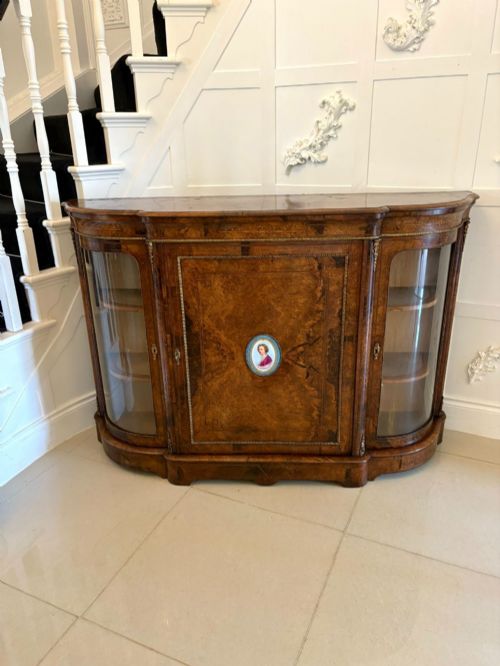
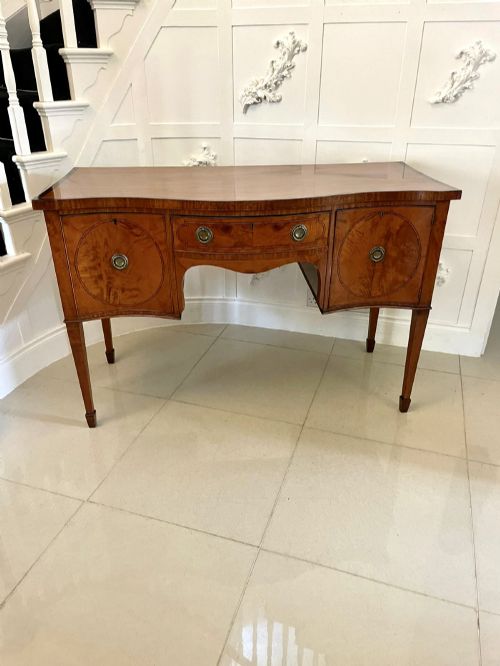
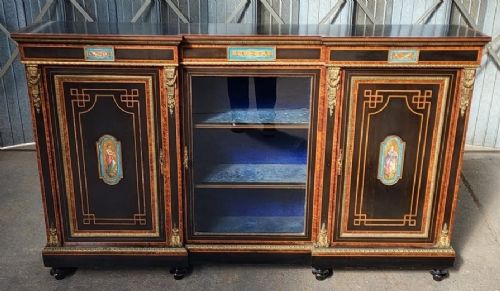
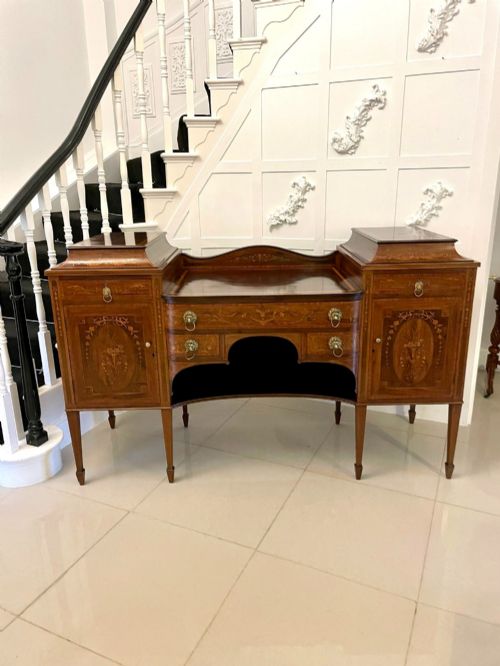

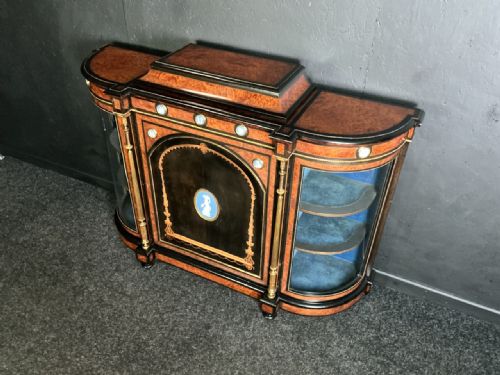
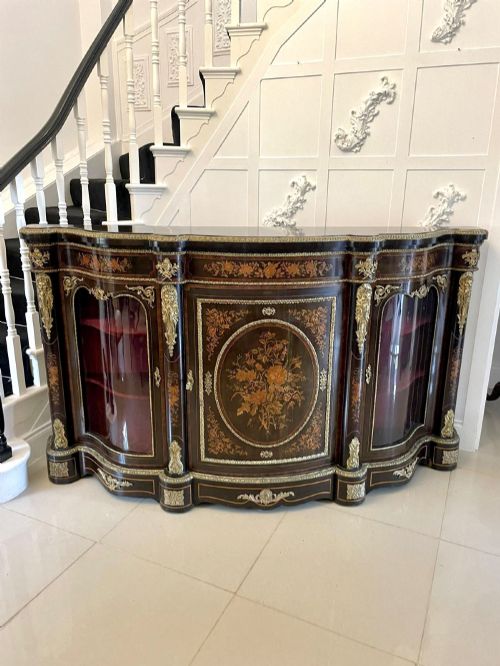
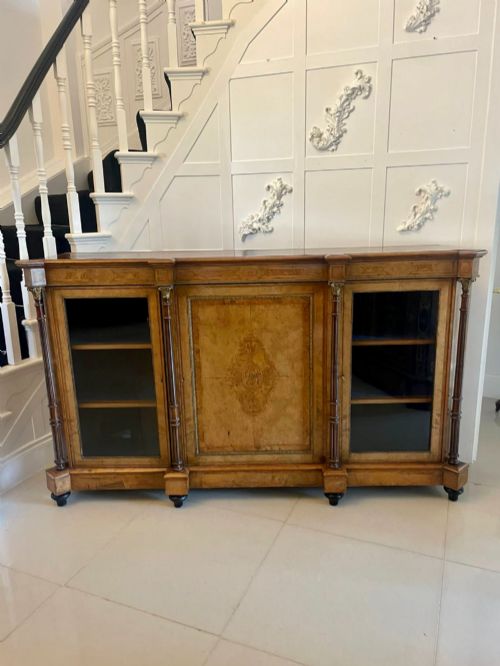
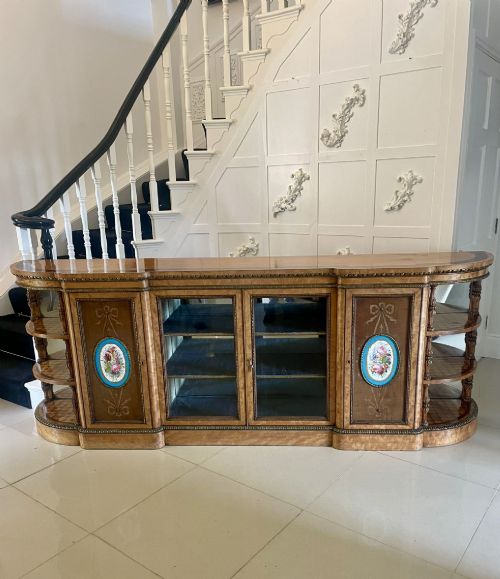
Victorian Inlaid Sideboard
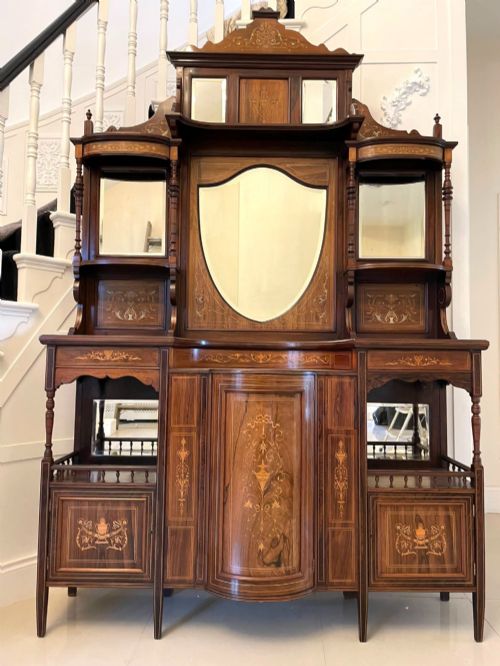
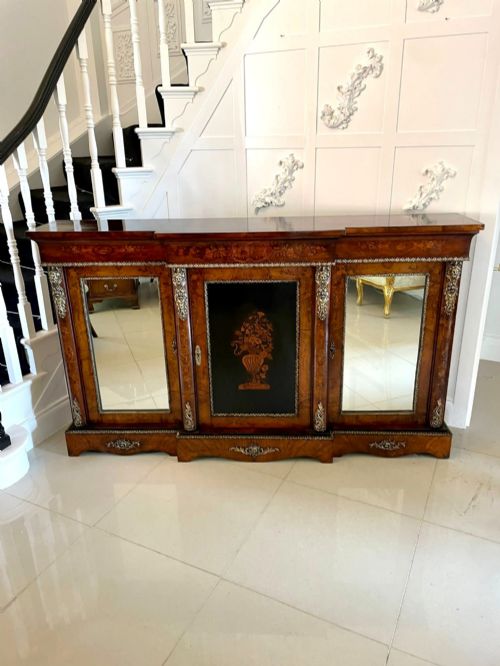
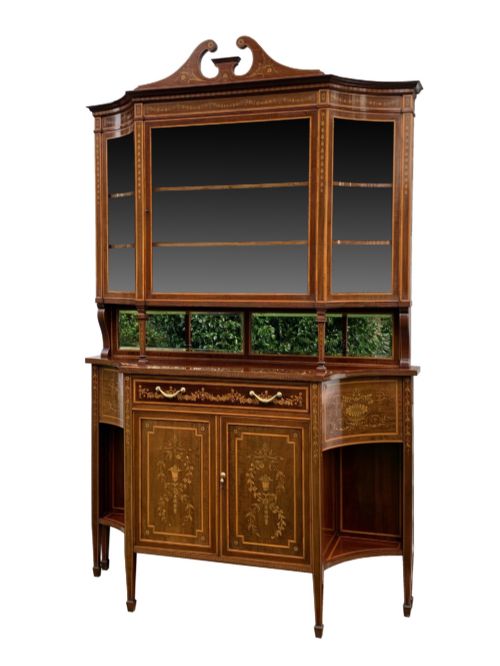
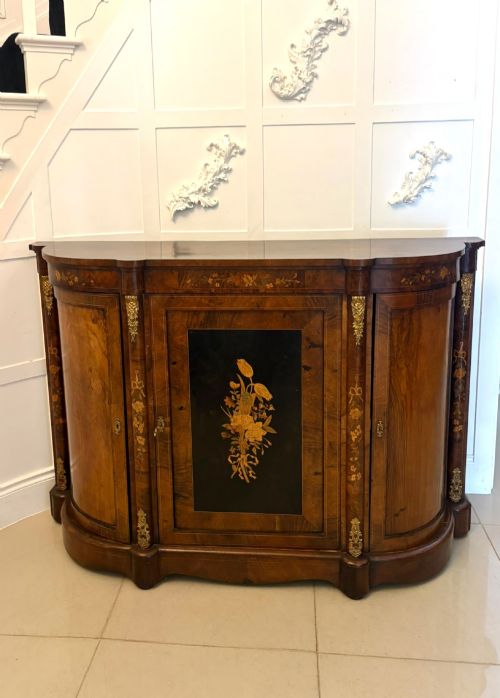
A victorian inlaid sideboard brings together polished burr walnut and delicate marquetry to anchor a formal dining room or drawing room.
What the pieces are
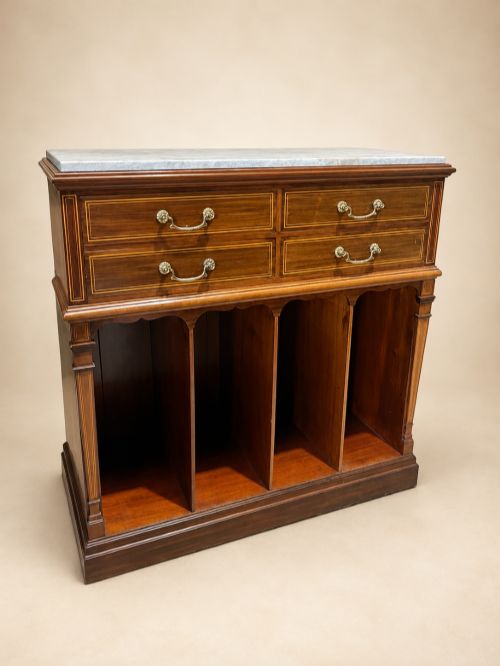
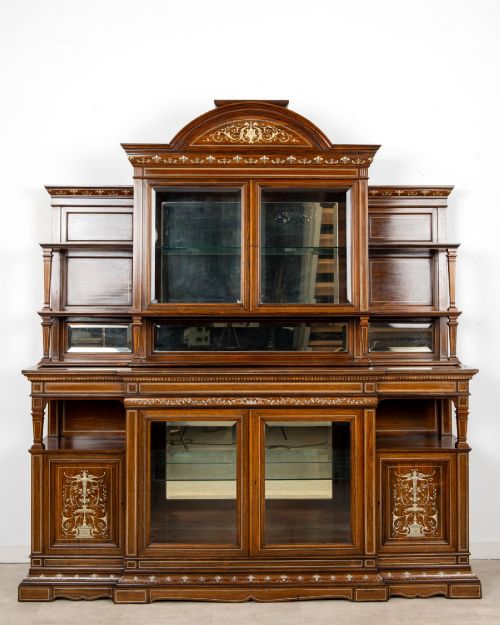
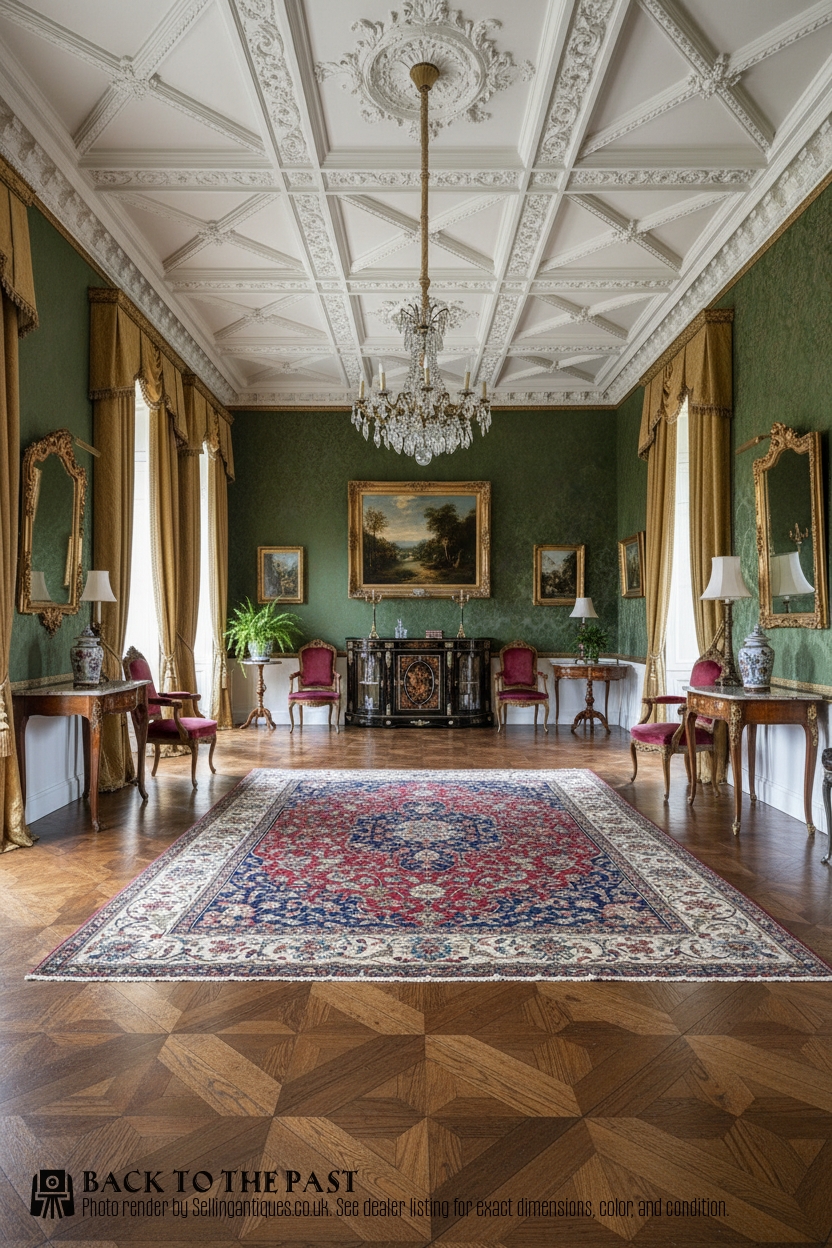
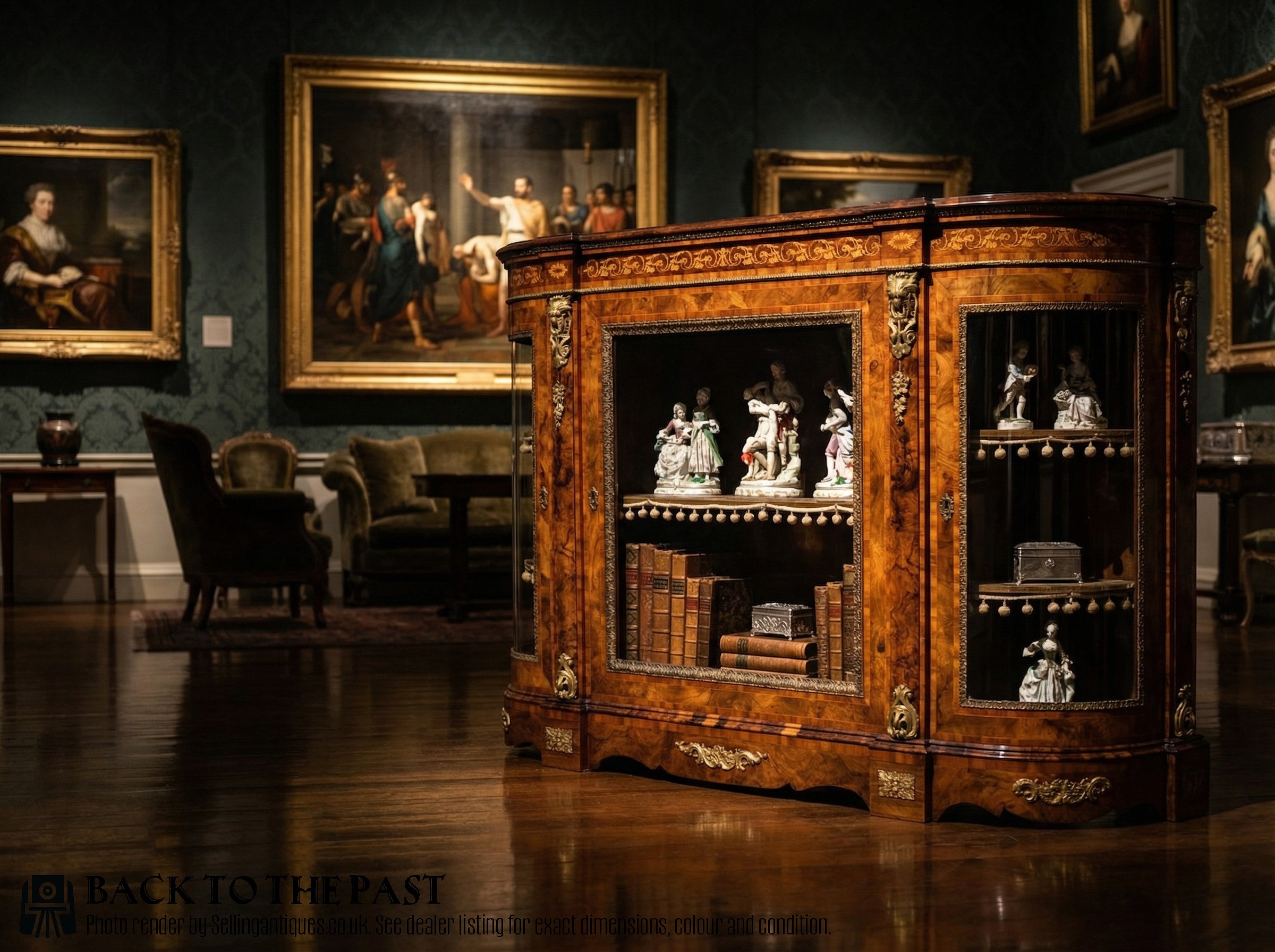
A victorian inlaid sideboard typically manifests as a credenza or cabinet originating from the nineteenth century. These items serve primarily as display and storage furniture within principal reception rooms.
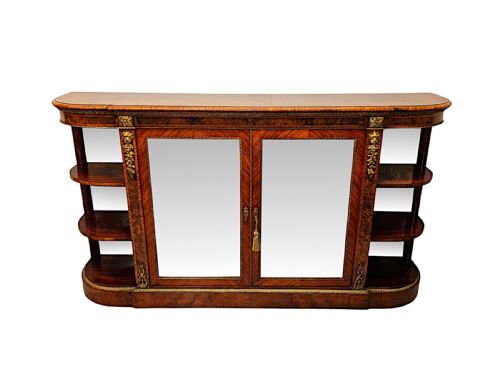
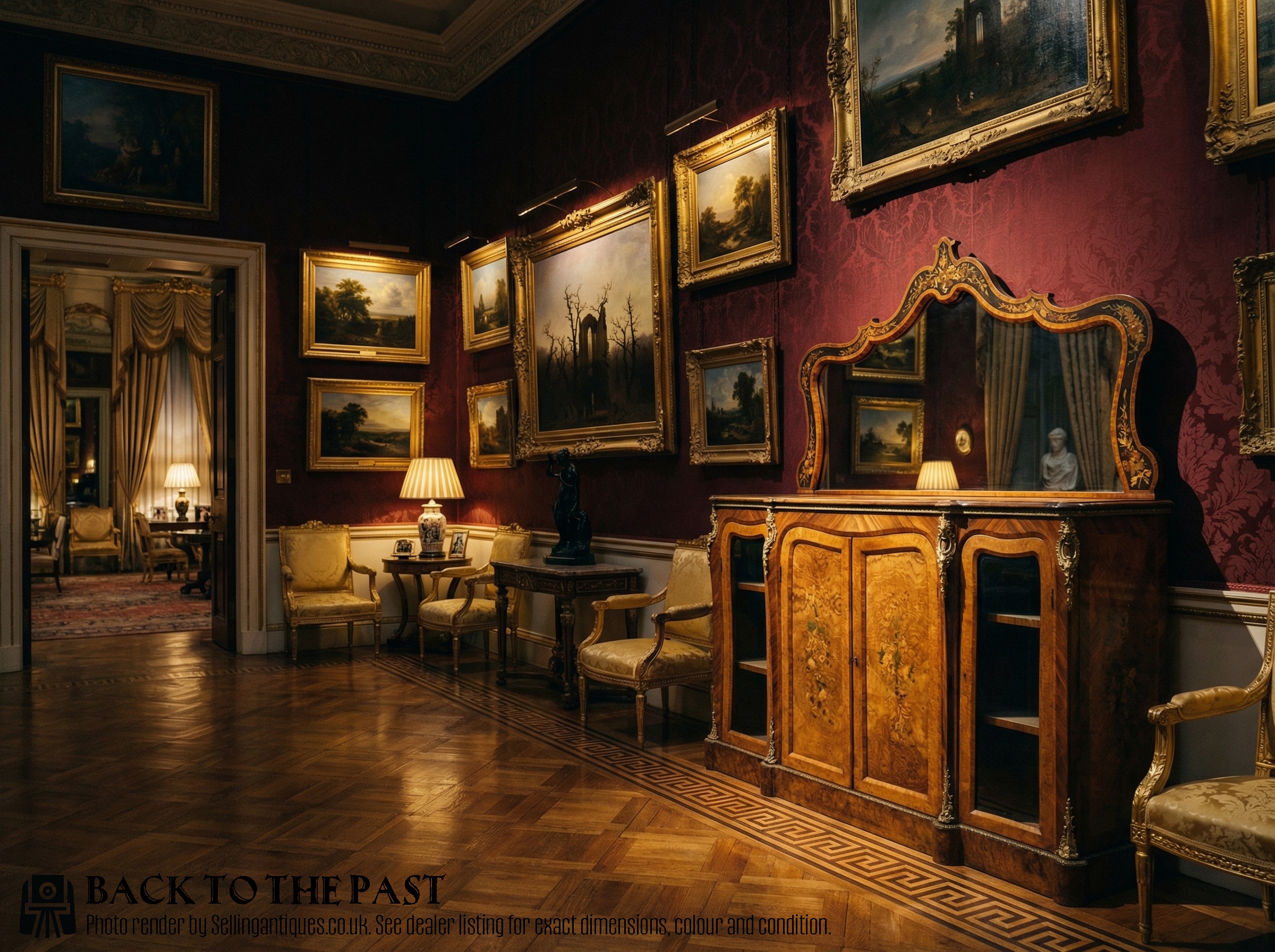
Burr walnut dominates the examples found here, often paired with ebonised finishes or mahogany. Many pieces combine the form of a credenza with mirror backs or gilt metal mounts.
Makers such as Hewetsons and Edwards and Roberts appear among the nineteenth century records, representing high workshop standards of the period.
How they were made
Cabinet makers applied fine veneers of burr walnut, mahogany, and satinwood over robust structural timbers. They incorporated boxwood inlay and floral marquetry to create intricate surface patterns across doors and panels.
Ornaments of ormolu, brass, and gilt metal mount the edges and columns of the cabinets, while glass panels often front display sections. Craftsmen combined these varied materials with traditional joinery to build substantial credenzas.
Retail Price Guide 2026
Typical UK retail prices for victorian inlaid sideboard, calculated from the Sellingantiques database of over a million retail prices indexed since 2003. This retail price guide relies exclusively on Sellingantiques data; no external sources or auction records are used, so the figures do not describe the wider market.
Listings feature burr walnut, mahogany, and ebonised finishes paired with boxwood inlay and ormolu mounts.
What varies in quality
The refinement of the floral marquetry and the choice of burl timber separate standard production from master workshop output. Elaborate brass inlay and Boulle work indicate a higher grade of nineteenth century craftsmanship.
Integration of ormolu mounts and heavy cast bronze details reflects the original cost of commission. Hewetsons and Edwards and Roberts pieces demonstrate superior execution in timber selection and veneer matching.
Hewetsons London·Edwards and Roberts
The Victorian Inlaid Sideboard Glossary
- Credenza
- A sideboard or low cabinet for dining rooms and drawing rooms, frequently fitted with glass doors for display.
- Marquetry
- Decorative veneer work forming pictures or patterns from different woods, often floral in nineteenth century pieces.
- Ormolu
- Gilded bronze applied as decorative mounts on furniture, popular in high status Victorian cabinet making.
- Boulle
- Inlay work utilising brass and tortoiseshell, seen on select ebonised credenzas from the period.
- Burr walnut
- Timber taken from walnut tree growths, valued for its swirling grain patterns on cabinet doors.
Frequently Asked Questions
What is a credenza sideboard?
A credenza sideboard is a low nineteenth century cabinet designed for display and storage in principal rooms. Many examples incorporate glass doors and interior shelving.
Craftsmen built these pieces to display porcelain and silver behind locked doors while providing surface space for serving.
How do I identify burr walnut?
Burr walnut displays distinctive swirling grain patterns created by tree growths. Cabinet makers sliced this timber into thin veneers for door panels.
This figured wood contrasts with straight grained mahogany or ebonised surrounds on Victorian cabinets.
Where were these sideboards used?
Original placement was typically in formal dining rooms or drawing rooms of large Victorian houses. They held tableware, glassware, and documents.
Today, collectors use them in living spaces as media units or statement storage cabinets.
What is Sheraton Revival style?
Sheraton Revival furniture draws inspiration from eighteenth century neoclassical designs. Pieces incorporate satinwood, boxwood inlay, and balanced geometric proportions.
Victorian makers reinterpreted these lighter forms within nineteenth century sideboard production.