
Victorian Inkstand Accessory
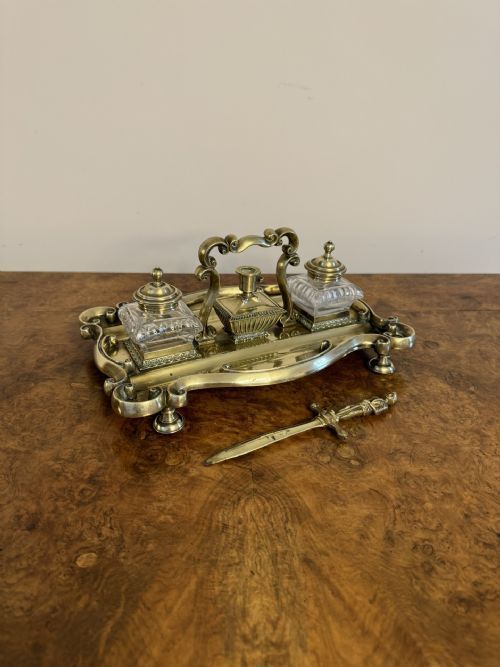
A victorian inkstand accessory brings absolute desktop order through brass, glass, and polished timber.
Victorian Inkstand Accessory
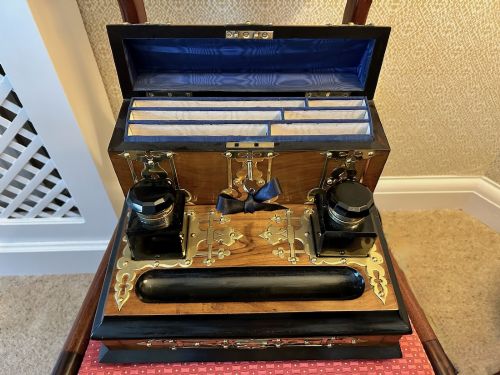
A victorian inkstand accessory encompasses desk sets, inkwells, and writing stands designed for nineteenth-century correspondence. These pieces range from simple glass vessels to elaborate double stands fitted with pen rests and match holders.
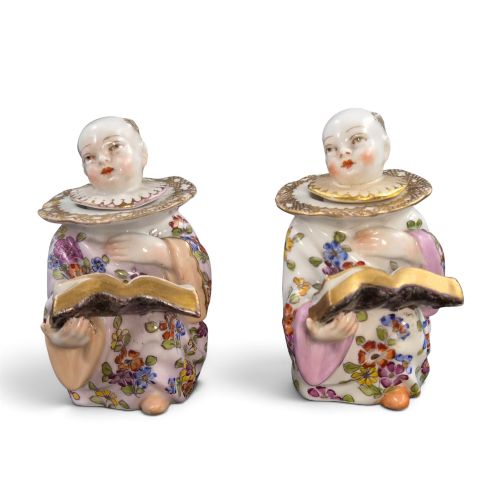
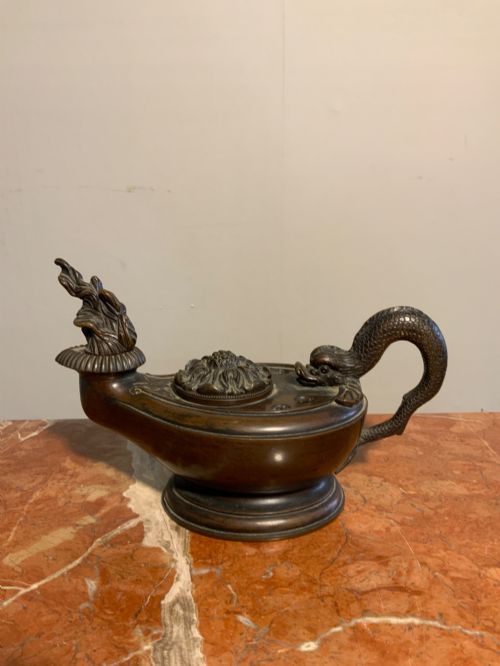
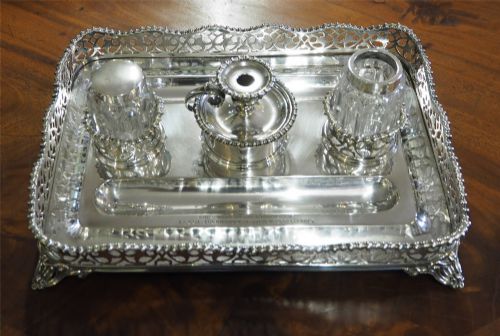
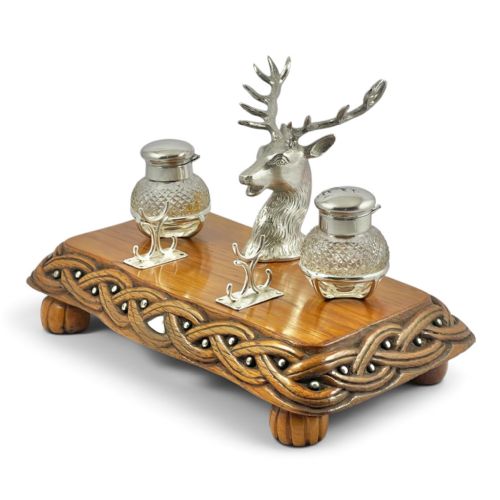
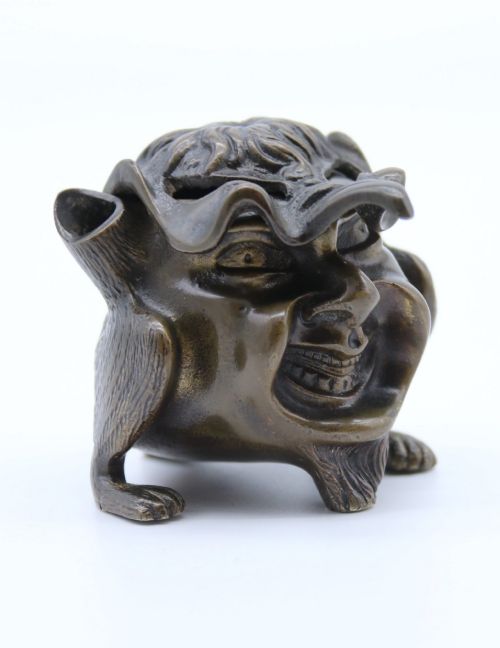
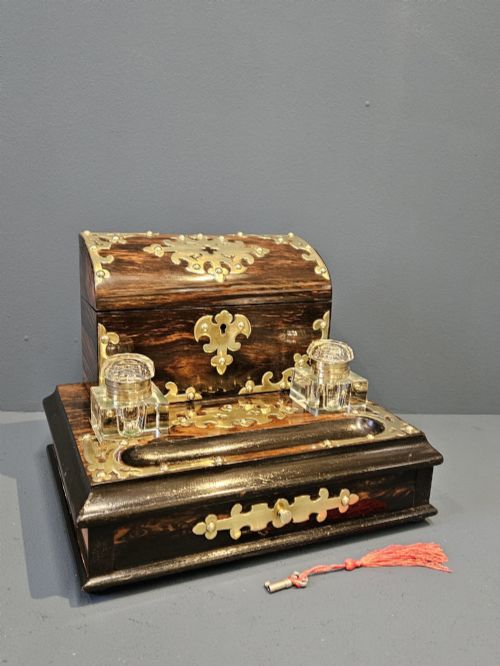
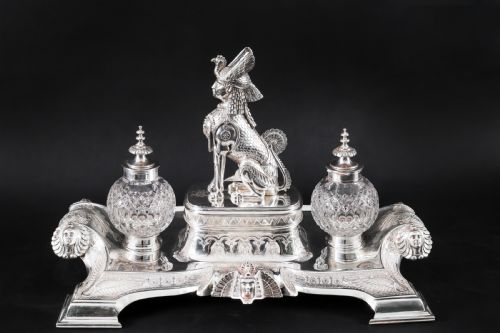
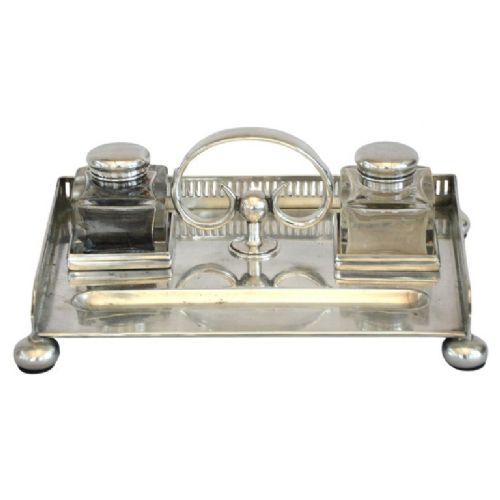
Buyers meet both English and Continental pieces on this page, spanning the Victorian and Edwardian periods. Common variations include walnut and coromandel timber trays, bronze figural designs, and heavy silver-plated assemblies.
Functional items often include companion pieces such as chambersticks, stamp boxes, and quill holders. The primary form remains the fitted base holding one or two glass ink inserts.
How They Were Made
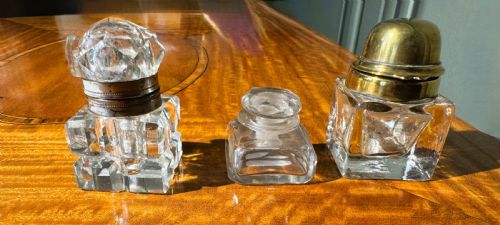
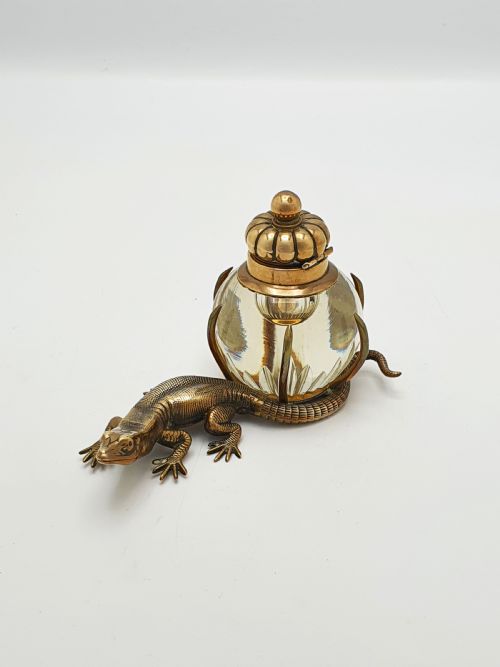
Maker workshops combined cast metals like ormolu, brass, and bronze with carved natural materials including oak, walnut, marble, and tortoiseshell. Glass components feature heavy cut patterns or moulded shapes designed to fit securely into metal collars.
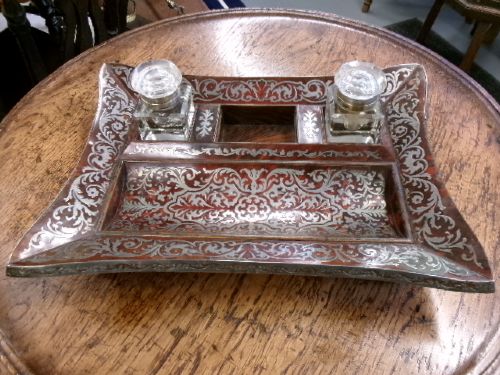
Decorative surfaces utilise specialised techniques such as Boulle brass inlay, champlevé enamel, papier-mâché painting, and taxidermy mounting. Silver plating and gilt finishes were applied over base metal foundations to imitate solid precious metal.
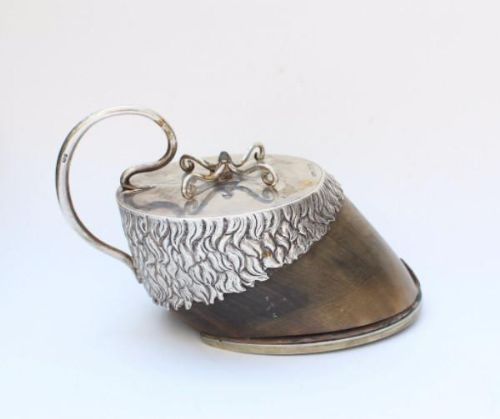
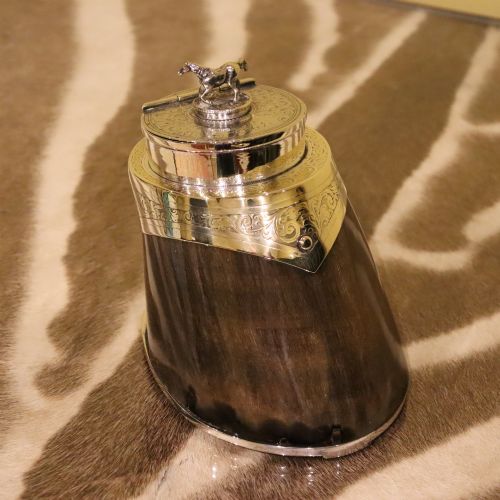
A Victorian horse hoof desk tidy provides a striking reminder of nineteenth-century equestrian devotion.
What Varies in Quality
Quality shows in the weight of the metal cast and the precision of the joinery on wooden bases. Superior pieces display crisp hand-chasing on bronze mounts and flawless fit between glass inserts and their metal collars.
Material selection divides standard utility items from luxury productions. Rich exotic timbers like coromandel and burr walnut, paired with genuine tortoiseshell or hand-carved details, mark the higher tier of desk equipment.
Edmé Samson·Elkington·Wilkinson & Co·Walker And Hall·Harrods
The Victorian Inkstand Accessory Glossary
- Inkstand
- A portable desk tray holding inkwells, pen trays, and sometimes sanders or taper sticks. These fixtures anchored nineteenth-century writing desks.
- Ormolu
- Gilt bronze decoration applied to furniture and desk accessories. This technique involved coating a brass or bronze base with gold amalgam.
- Boulle work
- Marquetry technique utilising tortoiseshell and brass inlay developed in France. The contrasting materials create intricate scrolling patterns across wooden surfaces.
- Champlevé
- Enamelling method where troughs are gouged into a metal surface and filled with vitreous paste before firing. This adds bright colour to bronze desk stands.
- Ashford marble
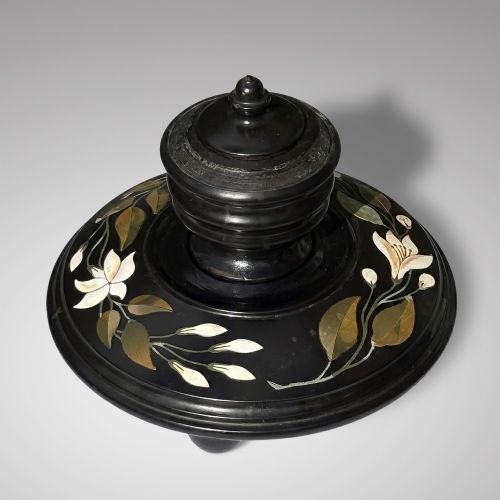
- Local Derbyshire black limestone inlaid with coloured mineral specimens in floral patterns. It frequently forms the heavy base of nineteenth-century desk pieces.
Victorian Inkstand Accessory: Frequently Asked Questions
How do I clean antique brass desk stands?
Dust gently with a dry, soft brush to protect patinated surfaces.
Avoid aggressive metal polishes that remove historic finishes and wear down engraved details.
What is the difference between an inkstand and an inkwell?
An inkstand is the complete tray assembly holding one or more inkwells alongside pen rests.
An inkwell is simply the individual lidded vessel that contains the liquid ink.
Are travel inkwells safe to carry?
Period travel versions utilised screw-down glass caps or inner seals designed to prevent leaks during transit.
Modern handling requires caution because historical rubber or cork gaskets often dry out over time.
How do I date a Victorian desk accessory?
Examine the style signatures, such as heavy rococo revival curves, French Napoleon III Boulle work, or later Edwardian simplicity.
Maker marks, registration lozenges, and metal plating types help narrow down the decade of production.