


Victorian Hunting Dog Art
When you search for victorian hunting dog art, you meet oil paintings, watercolours and lithographs capturing spaniels, pointers and hounds in landscapes.
Victorian Hunting Dog Art
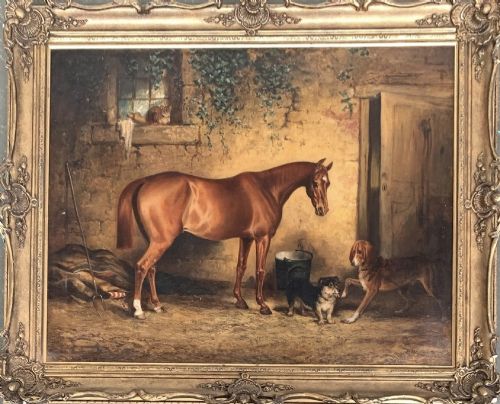
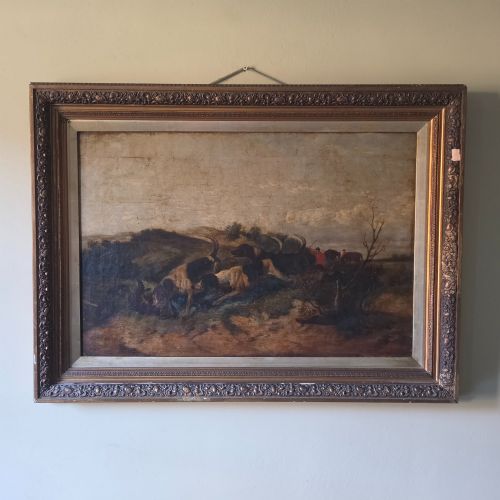
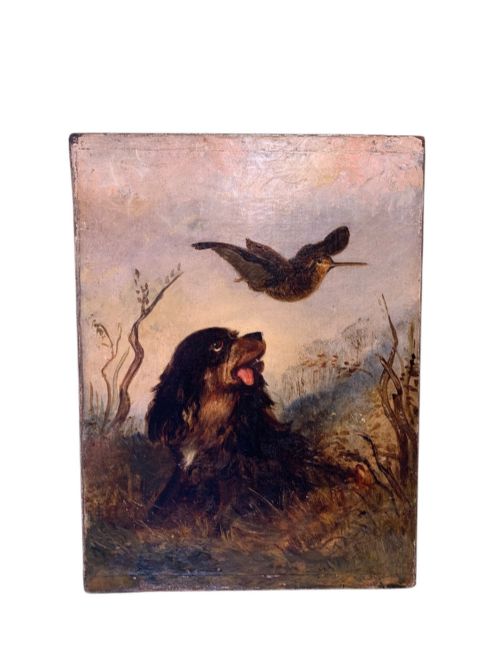
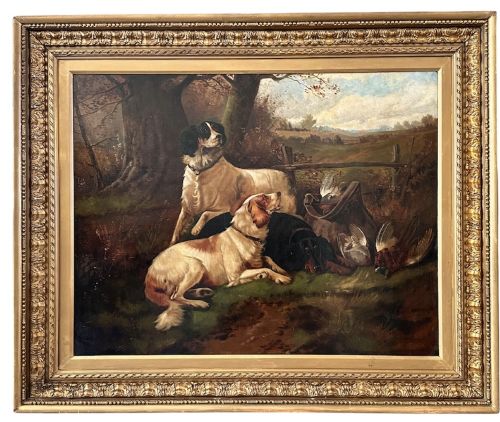
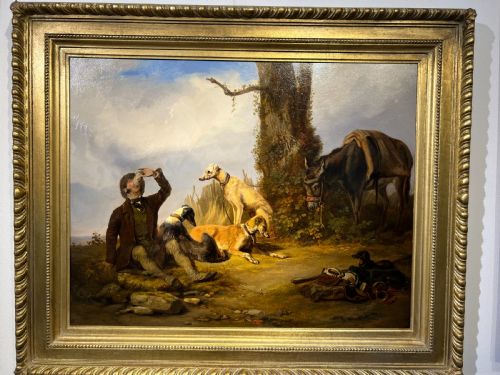
Victorian hunting dog art encompasses oil paintings on canvas and board, watercolours, lithographs and carved wood panels depicting gun dogs, hounds and terriers. These works record sporting life, field pursuits and canine portraits within landscapes across the nineteenth century.
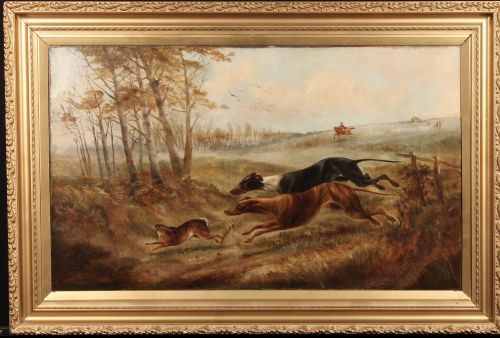
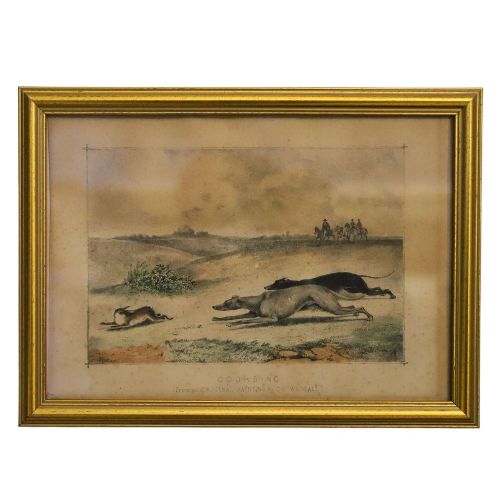
The pieces you encounter most frequently on this page are nineteenth-century oil paintings and framed prints portraying setters, pointers and spaniels. Subjects range from solitary portraits of bloodhounds and black pointers to dynamic scenes of hare coursing, hunt packs and gun dogs with the day's bag.
Materials and methods
Artists relied primarily on oil paint applied to canvas or wood board, alongside watercolour on paper and occasional lithographic printing. Gilt wood frames frequently house these paintings, complementing the traditional compositions.
Carved walnut panels represent an alternative technique, utilising wood to render sculptural hunting scenes in high relief. Canvas preparation and pigment layering allowed painters to capture the distinct textures of canine coats and moorland landscapes.
Listings feature oil on canvas, watercolour on paper, and carved walnut panels from the 19th century.
Distinctions in quality
Quality rests upon the artist's ability to render canine anatomy convincingly and capture the observant posture of working dogs in the field. Finer works display precise brushwork in the rendering of fur, muscle definition and expressive eyes.
Compositional depth and the integration of the animal within a natural landscape distinguish superior pieces from standard workshop output. The handling of atmospheric light and weather conditions in moorland scenes further separates exceptional artistic execution.
George Armfield·John Sargent Noble·Sir Edwin Henry Landseer·C. H. Weigall·John Frederick Herring Senior·Arthur Wardle·Colin Graeme Roe·Fannie Moody·Robert Cleminson·John Charles Tunnard·Jules Chardigny·Alfred Duke·Thomas Blinks·Henry Frederick Lucas-Lucas·William Albert Clark·Frank Dadd·Samuel John Egbert Jones·Charles Hunt Jnr
The Victorian Hunting Dog Art Glossary
- Hare coursing
- The pursuit of hares with greyhounds or lurchers by sight rather than scent. This traditional field sport appears frequently in nineteenth-century paintings and lithographs.
- Gun dog
- A type of hunting dog trained to find, flush or retrieve game for shooters. Breeds such as pointers, setters and spaniels dominate sporting art.
- Pack
- A group of hounds kept and hunted together, commonly depicted in dynamic landscape scenes. Hunt packs formed a central element of British field sports.
- Board
- A rigid wooden or artist's panel used as a painting support instead of stretched canvas. Many nineteenth-century oil paintings utilise this sturdy base.
- Lithograph
- A print made from a design drawn on limestone or metal plate. This technique allowed the reproduction of original sporting illustrations.
Victorian Hunting Dog Art: Frequently Asked Questions
What breeds appear most often?
Setters, pointers, spaniels and various hounds dominate the available artwork. Terriers and greyhounds also appear frequently in rural and sporting contexts.
Artists favoured these specific working breeds for their distinctive forms and associations with nineteenth-century field sports.
How do I care for these paintings?
Keep oil paintings and watercolours away from direct sunlight and excessive moisture to protect the canvas and paper. Dust frames gently with a dry cloth.
Stable indoor temperatures prevent cracking in both the oil paint layers and the wooden or gilt frames.
Where were these scenes set?
Most compositions feature British and Welsh moorlands, fields and country estates. Winter snow scenes and open countryside provide the backdrop for hunts.
Landscape backgrounds reflect the actual terrain where sporting pursuits took place during the Victorian era.
Are these works signed by the artist?
Many pieces carry visible signatures or attributions to recognised nineteenth-century animal painters. Unsigned works also appear, attributed through stylistic comparisons.
Documentation on the reverse or framing often provides additional clues regarding the origin of unsigned paintings.