


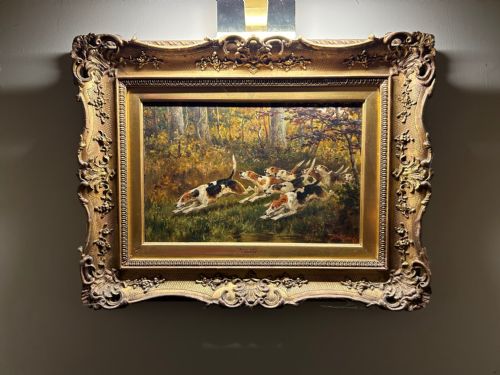


Antique Foxhound Painting
An antique foxhound painting brings the traditional British hunting field indoors, capturing the energy and form of the pack in oil or watercolour.
Antique Foxhound Painting
An antique foxhound painting depicts working hounds either in kennels, during the chase, or resting in a landscape, reflecting the long heritage of traditional British sporting art. These works range from intimate watercolours to large oil paintings on canvas, board, or wood panels.
Buyers browsing this selection will most frequently encounter nineteenth-century pieces alongside mid-century examples. The imagery spans detailed individual hound portraits to dynamic full-cry scenes across winter snow or open fields.
How they were made
Artists typically worked with oil paint on canvas or wood, building up rich coats and landscapes with traditional brushwork. Watercolours on paper also appear, often finished with fine detail to capture the texture of the coat and the intensity of the hunt.
Many of these works are housed in period frames finished in gold leaf, gesso, and giltwood. These frames complement the traditional subject matter and protect the edges of the canvas or board over time.
Some hounds are named directly in the title, ensuring individual dogs achieve lasting fame centuries after leaving the kennel.
What varies in quality
Quality in an antique foxhound painting rests on the anatomical accuracy of the dogs and the dynamism of the composition. Master artists capture the distinct bone structure, musculature, and alert expression of the hound rather than simply rendering a generic animal.
The handling of the surrounding landscape and atmosphere also divides standard works from exceptional ones. Skilled brushwork in depicting winter snow, stable interiors, or distant hunting fields elevates the entire piece.
Fannie Moody·Alfred Duke·Charles Clifford Turner·Tom Carr·Heywood Hardy·Thomas Blinks·Henry Frederick Lucas-Lucas
The Antique Foxhound Painting Glossary
- Full Cry
- A hunting term describing the moment when the entire pack gives tongue together upon finding the scent. In art, it denotes a fast-paced scene of high activity.
- Gesso
- A plaster-like material applied to wooden frames before gilding. It provides a smooth surface for laying down gold leaf.
- Giltwood
- Wood carved and covered with a thin layer of gold leaf or gold paint. It is standard for traditional sporting art frames.
- Sporting Art
- A genre of art depicting blood sports, racing, and animals. It forms the primary category for hound and hunt portraits.
Antique Foxhound Painting: Frequently Asked Questions
How do I identify a 19th-century hound painting?
Nineteenth-century paintings often feature heavier canvas weaves, traditional stretchers, and characteristic artist signatures or framing styles typical of the period.
The subject matter also reflects the Victorian enthusiasm for sporting art, depicting specific hunts and identifiable hounds in detailed landscapes.
What is the difference between oil and watercolour paintings here?
Oil paintings utilise thick pigments on canvas, board, or wood, allowing for rich textures and deep colour blending. Watercolours use translucent washes on paper, offering a lighter and more immediate feel.
Both mediums were favoured by sporting artists, though oils generally commanded larger, more formal portrait commissions.
Where were these paintings traditionally displayed?
Historically, portraits of hounds and hunting scenes hung in country houses, estate libraries, and sporting lodges. They celebrated specific packs, prized animals, and memorable days in the field.
Today, they suit traditional interiors, studies, and hallways, pairing well with wood panelling and heritage decor.
How should I care for an antique canvas painting?
Keep oil paintings away from direct sunlight and dramatic shifts in temperature and humidity to prevent the canvas from sagging or cracking. Dust the surface gently with a soft, dry brush without applying pressure.
Avoid using water or chemical cleaners on the paint or the giltwood frame.