



Traditional English Hunting Scene
A traditional english hunting scene brings the energy of the nineteenth-century countryside directly into your room through oil, canvas, and ink.
Traditional English Hunting Scene
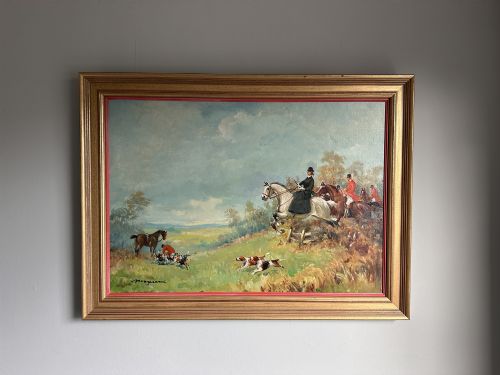
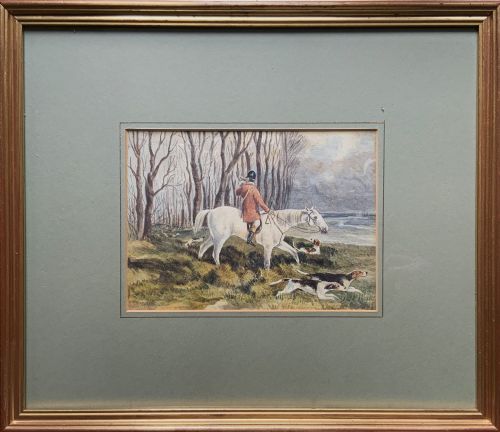
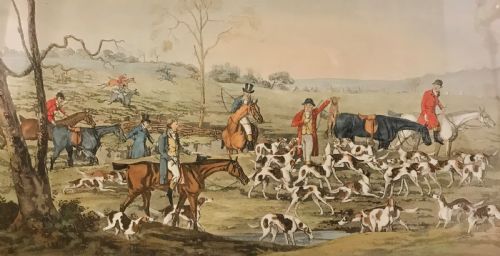
A traditional english hunting scene captures the pursuit, the hounds, and the riders across nineteenth-century and early twentieth-century formats. You will find oil paintings on canvas alongside watercolours, drawings in pencil and chalk, hand-coloured engravings, and stoneware pottery vessels.
The subjects range from expansive meets and full cry gallops to quiet studies of sporting dogs and individual hunters in rural landscapes. Most pieces originate from the Victorian and Edwardian eras, reflecting a rich heritage of British sporting art.
How they were made
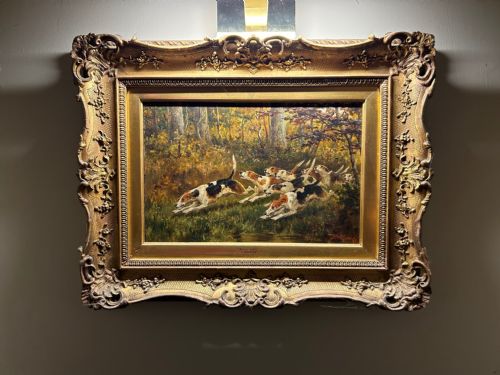
Artists worked primarily in oil paint on canvas or board, capturing dramatic equestrian moments with layered pigments and fine brushwork. Others utilised watercolour, pencil, and chalk on paper, while printmakers produced hand-coloured engravings derived from original compositions.
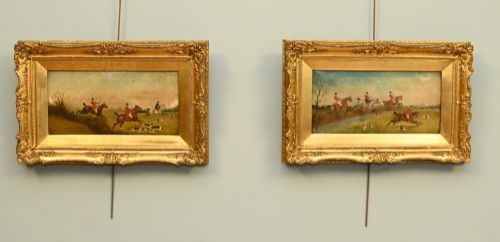
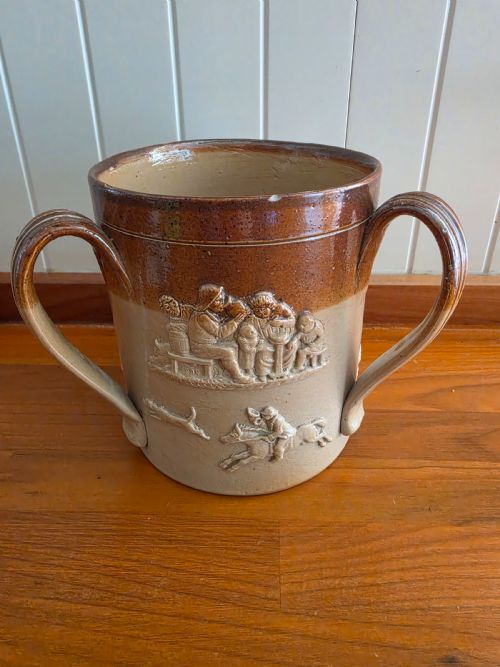
Framing often involved giltwood surrounds to house canvases and works on paper, while ceramic pieces took the form of stoneware pottery vessels such as multi-handled tygs.
Traditional English Hunting Scene Retail Price Guide 2026
Typical asking prices for traditional english hunting scene among the pieces listed under this phrase on Sellingantiques today, from the lower quarter to the upper quarter. They describe what is for sale here now, not the wider market.
Listings feature works spanning the nineteenth and twentieth centuries, utilising oil paint, canvas, watercolour, paper, wood, and glass.
What varies in quality
The vitality of the brushwork and the anatomical accuracy of horses, hounds, and riders distinguish the finest works from ordinary decorative pictures. Master sporting painters captured movement and light with precision, whereas lesser examples rely on stiff postures and flat backgrounds.
The depth of the palette and the preservation of the medium, whether oil on canvas or delicate watercolour on paper, dictate the enduring visual strength of the piece.
John Arthur Lomax·Michael Lyne·Charles Faulkner·John Frederick Herring Jnr·Henri Schouten·Thomas Ivester Lloyd·George Goodwin Kilburne·Edgar Hunt·Thomas Blinks·Charles Hunt·Francis Calcroft Turner·Edward B Herberte·Samuel John Egbert Jones·Dean Wolstenholme
The Traditional English Hunting Scene Glossary
- Tyg
- A large pottery vessel featuring three or more handles, used for communal drinking during rural gatherings. Early nineteenth-century stoneware examples often display robust utilitarian forms.
- Sporting Art
- Depictions of field sports, horses, hounds, and countryside pursuits that gained immense popularity during the Victorian period. Artists recorded the specifics of the hunt with documentary fidelity.
- Engraving
- A printmaking technique where an image is incised onto a metal plate and transferred to paper. Hand-coloured versions received washes of tint after printing to heighten visual detail.
- Giltwood
- Wood carved and coated with gold leaf to create ornate picture frames. These surrounds complement the traditional subjects housed within them.
Traditional English Hunting Scene: Frequently Asked Questions
What is a traditional english hunting scene?
These works depict nineteenth-century field sports, featuring mounted riders, packs of hounds, and expansive rural landscapes.
They appear as oil paintings, watercolours, and hand-coloured engravings created during the Victorian and Edwardian eras.
How were these artworks displayed?
Period pictures typically hang in formal reception rooms, libraries, and hallways to reflect rural sporting traditions.
Original giltwood frames complement the oil canvases and works on paper, maintaining the historical context of the interior.
How do I identify the period?
Signatures, clothing styles, and framing materials often point to the nineteenth or early twentieth century.
Mediums such as oil on canvas, stoneware tygs, and antique engravings correspond directly to Victorian and Edwardian production methods.
Are these pieces original?
The selection comprises period oil paintings, drawings, and vintage engravings created by historical sporting artists.
Each item originates from the era it depicts, rather than being a modern reproduction.