


Victorian Horse Figurine
A victorian horse figurine captures nineteenth-century equine spirit in bronze, brass or earthenware, bringing distinct character and history into a room.
Victorian Horse Figurine
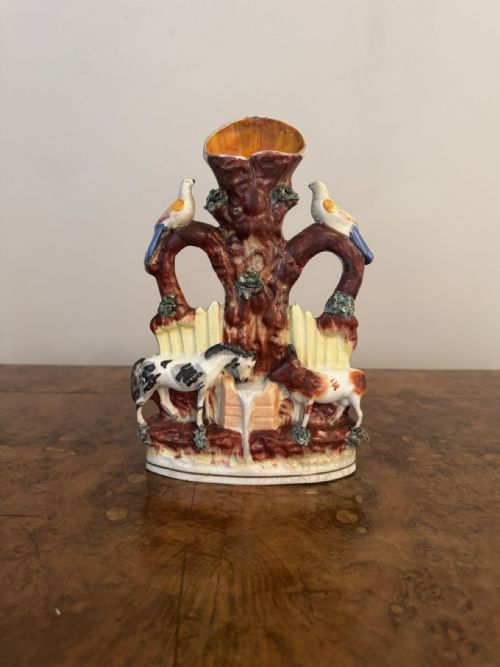
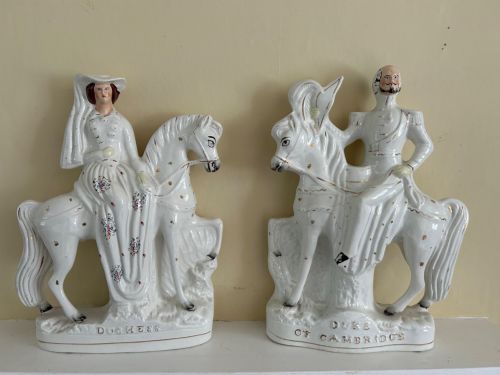
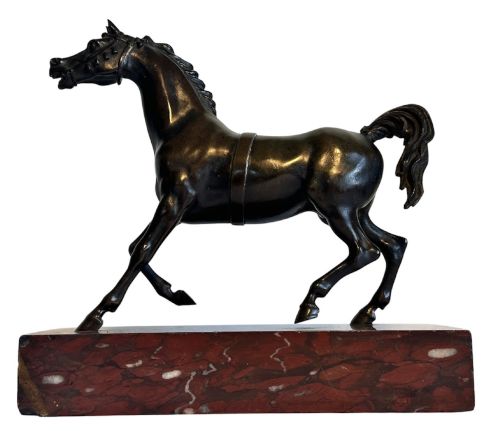
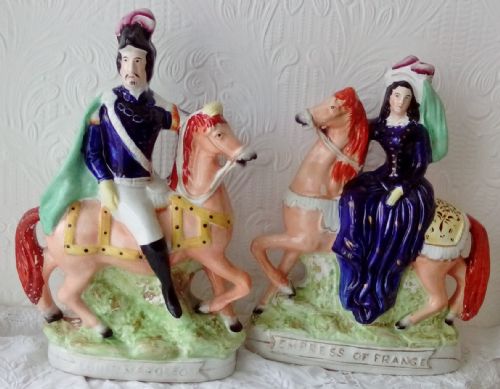
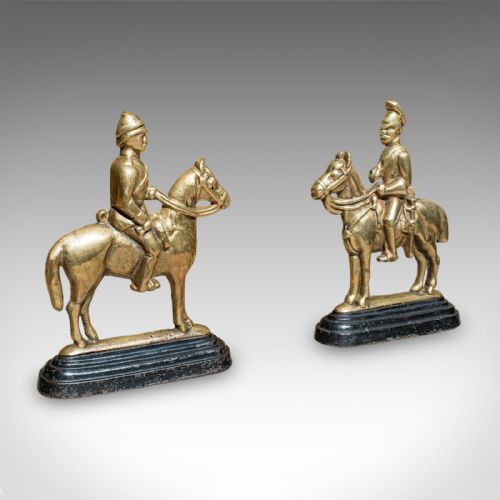
A victorian horse figurine encompasses earthenware pottery figures, flatbacks, and heavy metal castings designed as doorstops, bookends, or cabinet sculptures. These pieces portray famous figures on horseback, jockeys, hunters, and untamed stallions from various international workshops.
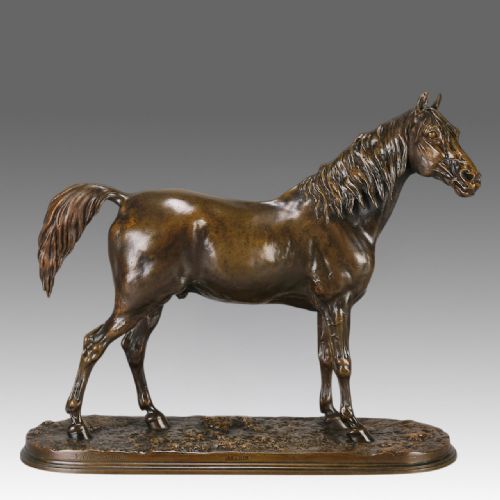
Staffordshire flatback pottery figures dominate the selection, often depicting historical personages, Scottish highlanders, or royal children mounted on horseback. Buyers also encounter French and English animalier bronzes alongside utilitarian brass and cast iron doorstoppers.
The objects range from naive folk art productions to sophisticated salon bronzes cast by known nineteenth-century sculptors. Each format reflects the period's intense fascination with horses, whether intended for mantelpiece display or practical household use.
Assessing Quality and Execution
Quality rests upon the crispness of the modelling and the accuracy of the equine anatomy, separating spirited artistic renderings from stiff, generic productions. In bronzes and brasses, sharp chiselling of the musculature and mane dictates the piece's success.
For ceramic and earthenware examples, the precision of the hand-painted enamel work and the preservation of the lead glaze determine desirability. Finer Staffordshire figures retain vibrant colouration and clean moulding lines without excessive kiln distortion.
The selection spans earthenware, bronze, brass, and cast iron, incorporating both decorative sculptures and utilitarian doorstops.
P J Mêne·John Willis Good·Pierre Jules·Franz Bergman
The Victorian Horse Figurine Glossary
- Flatback
- A ceramic figure moulded with a finished front and sides while the reverse remains unglazed and flat, designed specifically to stand flush against a wall or mantelpiece. This method saved time and materials during nineteenth-century production.
- Animalier
- A nineteenth-century artistic movement dedicated to the realistic and dynamic depiction of animals, particularly horses and hounds. Sculptors in this school focused on capturing raw muscular tension and natural movement.
- Spill vase
- A hollow ceramic figure incorporating a small cylindrical holder meant to contain wooden spill sticks for lighting fires or pipes. These dual-purpose objects are frequently found among Staffordshire pottery groups.
- Lead glaze
- A glossy ceramic coating containing lead oxide that produces a smooth, reflective surface when fired in a kiln. It gives early earthenware figures their characteristic shiny finish and deep colour depth.
Victorian Horse Figurine: Frequently Asked Questions
What is a flatback figure?
A flatback figure is a ceramic ornament moulded with a detailed front view and a flat, unadorned reverse side.
These pieces sat securely against cottage mantelpieces where only the front profile mattered to the viewer.
How were brass doorstops used?
Cast brass doorstops served the practical household purpose of keeping heavy interior doors propped open against drafts.
Their substantial weight and decorative equine designs allowed them to function as both tools and ornaments in Victorian hallways.
What distinguishes animalier bronzes?
Animalier bronzes focus intently on realistic anatomical detail and captured motion, particularly the power of horses and hounds.
Sculptors utilised lost-wax casting to preserve fine surface textures representing muscle, sinew, and wind-blown manes.
Are pottery figures hand painted?
Staffordshire pottery figures received hand-applied enamel colours over a white slip and lead glaze before a final low-temperature firing.
This accounts for the slight variations in tint and brushwork found between seemingly identical ceramic pieces.