



Victorian Bronze Animal Statuette
A victorian bronze animal statuette brings the fierce energy and delicate detail of the natural world directly onto a mantelpiece.
Victorian Bronze Animal Statuette
A victorian bronze animal statuette captures fauna with remarkable precision, ranging from domestic hounds and horses to exotic antelopes and birds. These pieces draw heavily on the French Animalier movement and Austrian cold-painted traditions, capturing creatures in motion or repose.
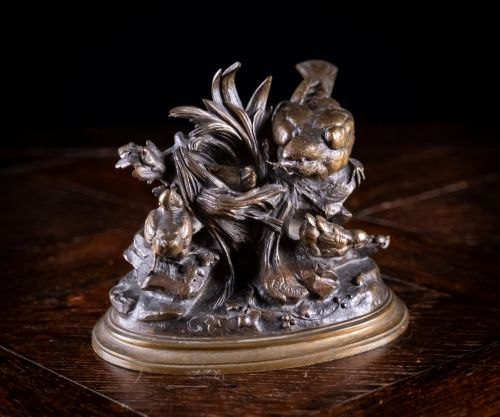
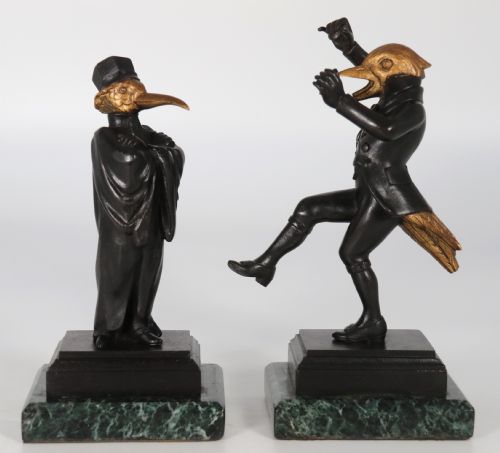
The most common examples on this page are small-scale sculptures and figurines cast in patinated or cold-painted bronze, often mounted on marble bases. Subjects span from charging bulls and stags to comical theatrical birds and nesting fledglings.
Originating predominantly from nineteenth-century workshops in France and Austria, these statuettes reflect the era's intense fascination with naturalism and exoticism. Collectors encounter everything from naturalistic hounds to whimsical novelty figures.
How they were made
The primary material is cast bronze, handled through traditional foundry methods to capture intricate fur, feather, and muscle textures. Many figures receive a chemical patination to create rich dark tones, or feature parcel-gilt highlights.
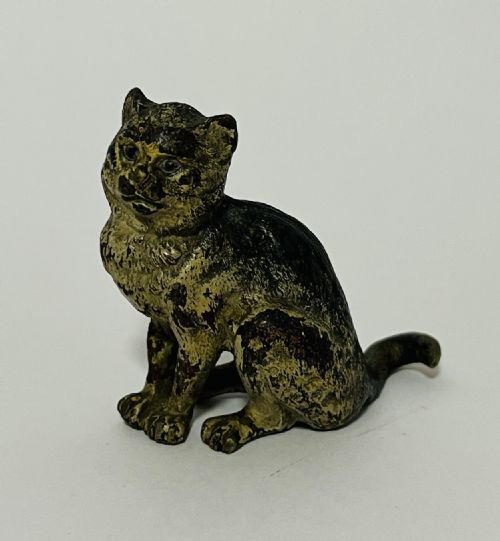
Austrian pieces frequently utilise cold-painting techniques, where vibrant enamel or paint is applied over the cured bronze base rather than fired in a kiln. Some statuettes are mounted directly onto contrasting marble plinths to add weight and presence.
Listings feature nineteenth-century and early twentieth-century works, utilising bronze, marble, and cold paint across French and Austrian styles.
What varies in quality
The finesse of the chasing and finishing separates ordinary casts from exceptional works. Superior pieces retain crisp detail in feathers and musculature without obscuring the texture beneath the patina or paint.
The survival of original cold-painted surfaces heavily dictates the desirability of Austrian works. Intricate anatomical accuracy and the dynamic tension in subjects like charging bulls or leaping hares also separate master founders from standard commercial production.
Louis Emile Cana·Franz Bergman·Isadore Bonheur·Alfred Dubucand·Jules Moigniez
The Victorian Bronze Animal Statuette Glossary
- Animalier
- A nineteenth-century artistic movement focused on the realistic portrayal of animals, particularly in sculpture. French artists popularised this dynamic style across Europe.
- Cold-Painted Bronze
- Bronze sculpture decorated with paint applied after casting, without kiln firing. This technique was especially popular in Austrian workshops for vibrant bird and animal figures.
- Patinated Bronze
- Metal treated with chemical solutions to produce a specific surface colour and finish. This process protects the metal while highlighting sculptural depth.
- Parcel-Gilt
- Metalwork decorated with applied gold leaf or gilt on specific highlighted areas. It creates a striking contrast against darker patinated bronze.
- Vienna Bronze
- Small, highly detailed bronze sculptures produced in Austrian foundries during the late nineteenth and early twentieth centuries. They are renowned for whimsical subjects and meticulous cold-painted finishes.
Victorian Bronze Animal Statuette: Frequently Asked Questions
What is an animalier sculpture?
An animalier sculpture is a nineteenth-century work dedicated to the realistic and dynamic portrayal of animals in action or repose. These pieces often focus on the raw power or natural habits of wildlife.
French and Austrian foundries mastered this genre, producing everything from massive charging bulls to delicate birds with extraordinary anatomical accuracy.
How do I care for cold-painted bronze?
Cold-painted bronze requires gentle handling because the pigment is applied directly to the metal rather than fired. Keep these pieces away from direct sunlight and moisture to preserve the delicate painted surfaces.
Dust them very softly with a dry, lint-free cloth and avoid using any liquid cleaners, polishes, or abrasive materials that might strip the original colour.
What is the difference between French and Austrian bronzes?
French bronze animaliers of the nineteenth century typically emphasise sculptural form, naturalistic patination, and muscular tension. Foundries in Paris focused heavily on realistic anatomy and texture.
Austrian makers, conversely, specialised in whimsical novelty subjects and vibrant cold-painted finishes. These pieces often depict exotic birds, cats, or theatrical animals with bright enamel colours.
Why are some figures mounted on marble?
Marble bases provide structural stability and visual weight to smaller bronze statuettes. They were commonly utilised by nineteenth-century founders to elevate the sculpture and create a finished presentation.
The contrasting stone complements the dark patina or bright paint of the bronze animal mounted upon it.