
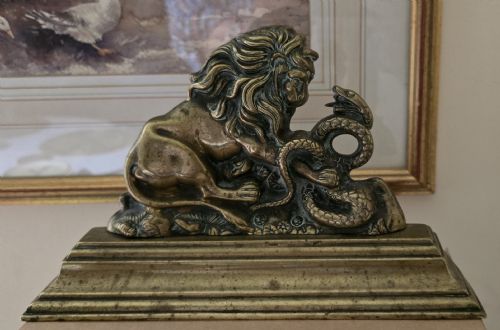


English Brass Doorstop
These heavy english brass doorstop pieces keep heavy timber doors open with architectural presence.
English Brass Doorstop
An english brass doorstop serves to prop open heavy interior doors whilst adding decorative weight to a room. Buyers seek these pieces for their sculptural forms and practical utility in period hallways.
The selections span georgian, regency, victorian, and edwardian periods, alongside later nineteen-twenties designs. Animal figures, human portraits, and traditional chimney horses dominate the available forms.
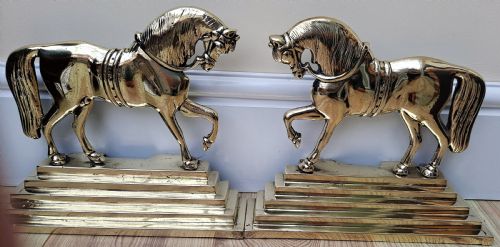
Most examples function as single door porters or paired chimney horses, often incorporating weighted bases made of lead or iron. These objects bridge the gap between utilitarian hardware and fireside ornamentation.
Materials and construction
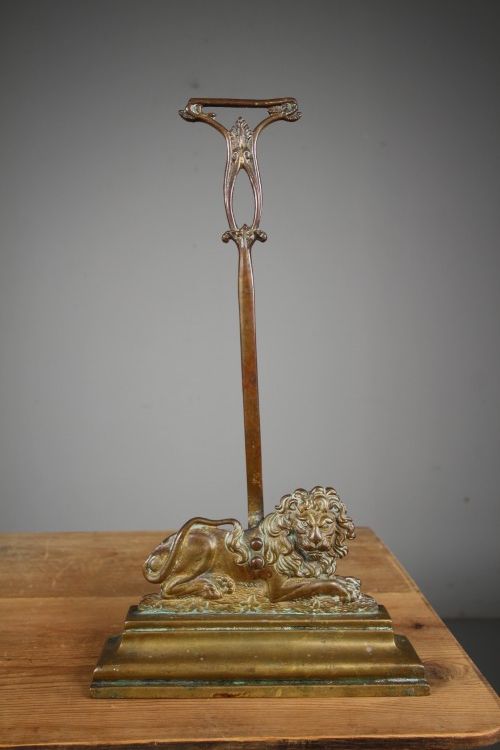
Foundry workers utilised sand casting techniques to pour molten brass into intricate moulds, capturing fine details in lions, foxes, and human figures. Cast iron and lead frequently supplement the brass construction to provide necessary weight at the base.
Makers finished these metal surfaces with polishing, burnishing, or painted highlights to accentuate the sculptural relief. Selected pieces combine brass shells with heavy iron cores or lead weighting concealed beneath the base.
English Brass Doorstop Retail Price Guide 2026
Typical asking prices for english brass doorstop among the pieces listed under this phrase on Sellingantiques today, from the lower quarter to the upper quarter. They describe what is for sale here now, not the wider market.
Certain foxes wear watchful expressions, standing guard by doors long after country house fires have turned to ash.
Distinctions in quality
The integrity of the weighted base and the retention of original surface patination distinguish superior specimens from later reproductions or heavily polished examples. Complete pairs and unusual figural subjects command greater attention from collectors.
William Tonks·William Tonks and Sons
The English Brass Doorstop Glossary
- Door porter
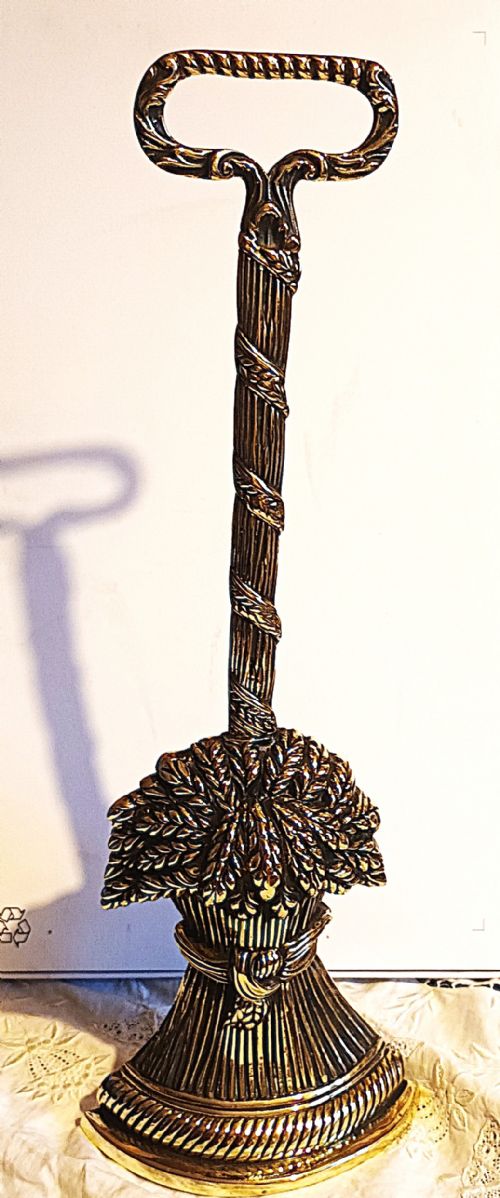
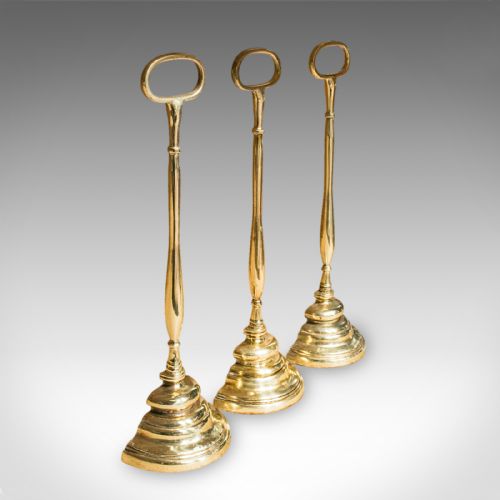
- An alternative term for a heavy doorstop designed to be lifted and moved easily by an integrated handle. These pieces traditionally stood beside the hearth when not propping open a heavy timber door.
- Chimney horse
- A specific nineteenth-century doorstop shape modelled after horse equipment or equestrian themes. They often appear as pairs flanking a fireplace.
- Sand casting
- A traditional manufacturing method where an impression is pressed into compacted sand to receive molten metal. This technique leaves subtle surface textures characteristic of period foundry work.
- Patina
- The natural surface finish and oxidation developed on brass over decades of exposure and handling. Collectors value original patination for its historical depth.
- Weighted base
- The heavy interior filling of lead, iron, or sand that keeps the hollow brass shell stable. This ballast ensures the object successfully holds open heavy interior doors.
English Brass Doorstop: Frequently Asked Questions
How heavy is an english brass doorstop?
Most examples weigh several kilograms to ensure they can hold open heavy interior timber doors without sliding.
The weight typically comes from a dense internal filling of lead or cast iron housed inside the hollow brass shell.
Are these pieces supplied as pairs?
Some designs, particularly chimney horses, were originally produced and utilised as matching pairs to flank a fireplace or double doors.
Many other subjects, such as lions or foxes, appear as single door porters intended for individual doorways.
How do I clean the brass?
Maintenance generally requires only a soft cloth to remove dust, preserving the historical surface oxidation that collectors appreciate.
Aggressive metal polishes can strip away decades of accumulated patina and reduce the character of older pieces.
What periods do these pieces date from?
The selection includes items spanning the georgian, regency, victorian, and edwardian eras up to the nineteen-twenties.
Stylistic details like neoclassical motifs or art deco lines help indicate the specific decade of manufacture.