


Equestrian Brass Ornament
These equestrian brass ornament examples bring sturdy Victorian weight and neoclassical design to any hearth.
Equestrian Brass Ornament
An equestrian brass ornament functions primarily as a heavy door stop, chimney ornament, or mantle sculpture, capturing horse figures in cast brass, bronze, and gilt metal. Buyers browsing this selection typically encounter Victorian and Edwardian examples cast in England during the nineteenth and early twentieth centuries.
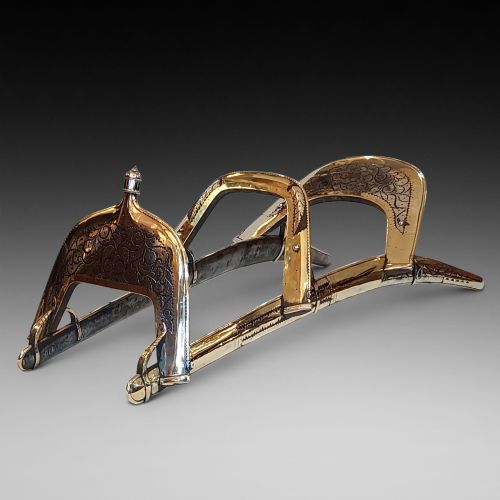
The assortment spans utilitarian door porters alongside decorative statuettes, including Grand Tour pieces and international subjects such as Chinese bronze horses and Ottoman camel saddles. These heavy metal works served practical duties in period homes while displaying prominent equine subjects.
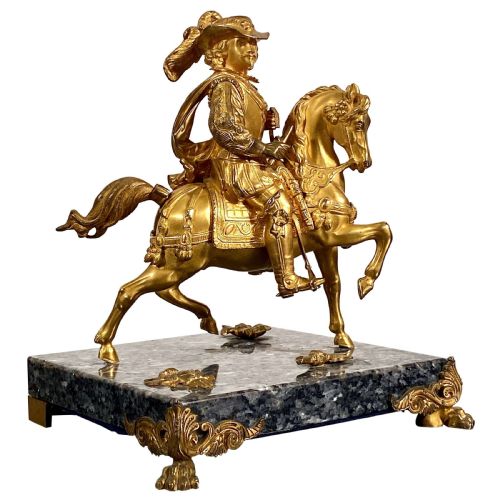
Surviving items range from utilitarian pairs meant to hold heavy doors to finely chased cabinet statuettes depicting historical figures like Charles the First on horseback. Most pieces rely on solid metal construction designed to withstand daily domestic use.
Materials and construction methods
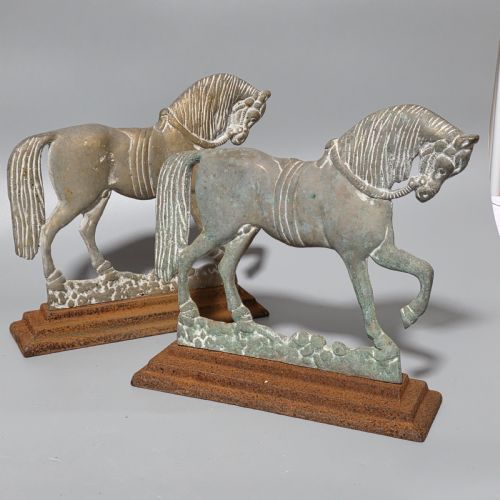
Foundries utilised traditional sand-casting techniques to form the heavy brass and cast iron bodies of these horse figures, pouring molten metal into custom moulds. This method produced thick, durable walls capable of supporting heavy doors or standing securely upon marble bases.
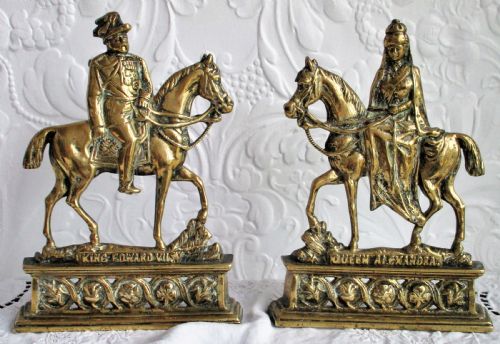
King Edward VII and Queen Alexandra once stared down dust from a mantelpiece.
Distinctions in quality and execution
Superior examples display crisp casting detail in the musculature of the horse and the ornamentation of the base, whereas lesser items show softer contours and simpler finishing. The depth of the hand-chasing and the precision of the joints separate utilitarian door stops from high-status cabinet bronzes.
The choice of base materials also shifts the character of the object, with solid gilt bronze and ormolu sitting at the upper end of refinement compared to standard brass or heavier cast iron combinations.
The Equestrian Brass Ornament Glossary
- Door stop
- A heavy object placed against a door to keep it open. These items frequently utilise solid brass and cast iron weights shaped as horses.
- Ormolu
- Ground metallic gold applied to a bronze or brass object. This technique creates a rich golden finish common on finer nineteenth-century statuettes.
- Grand Tour
- A cultural trip through Europe undertaken by wealthy young men in the eighteenth and nineteenth centuries. Souvenirs included small bronze and brass sculptures.
- Chimney ornament
- A decorative object displayed on the mantelpiece above a fireplace. Pairs of brass horses often filled this role in period rooms.
Equestrian Brass Ornament: Frequently Asked Questions
What are equestrian brass ornaments?
These pieces comprise heavy metal sculptures, door stops, and chimney ornaments shaped as horses or equestrian figures. Foundries cast them primarily in brass, bronze, and iron during the Victorian and Edwardian eras.
They combine utilitarian weight with decorative animal forms, reflecting nineteenth-century tastes for domestic metalware and historical subjects.
How were brass horse door stops used?
Households placed these heavy items on the floor to hold interior doors open against drafts. Their substantial metal mass prevented doors from swinging shut in busy hallways.
Beyond utility, their prominent placement near hearths and entryways made them decorative fixtures of period interiors.
How do I date a brass horse sculpture?
Dating relies on stylistic clues, casting marks, and material combinations typical of nineteenth-century manufacturing methods. Victorian pieces often exhibit robust sand-casting and specific patination.
Comparing the base design and subject matter to dated examples from the Edwardian or Georgian periods helps narrow the origin.
Where were these metal ornaments made?
English workshops produced many of the brass door stops and chimney ornaments found in this category. International examples also appear, including Grand Tour bronzes and Asian cast pieces.
Foundries across Europe and Britain supplied these utilitarian and decorative metal goods to period homes.