


Victorian Horse Engravings
Victorian horse engravings are framed nineteenth-century prints depicting equestrian subjects that bring character and history to any interior wall.
Victorian Horse Engravings
When you search for Victorian horse engravings, you are looking at nineteenth-century works on paper that capture equestrian scenes, racing moments, and individual horses. These framed prints reflect the period's intense fascination with racing, sport, and animal painting.
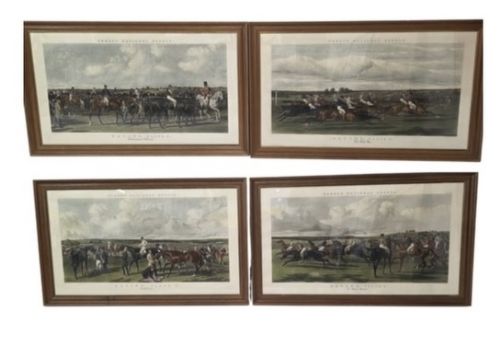
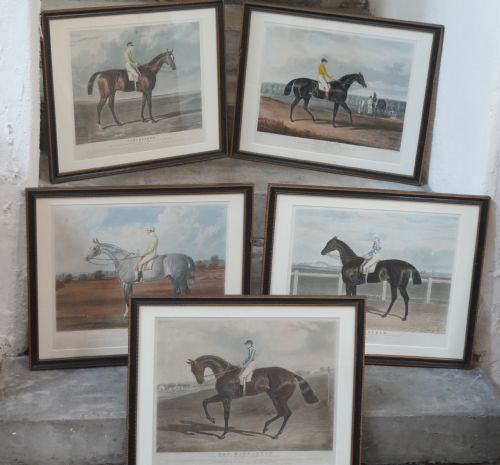
The pieces on this page span the Victorian era, specifically drawing from the mid to late nineteenth century around eighteen-fifties to eighteen-seventies. You will encounter individual framed works as well as matched sets of four or five prints.
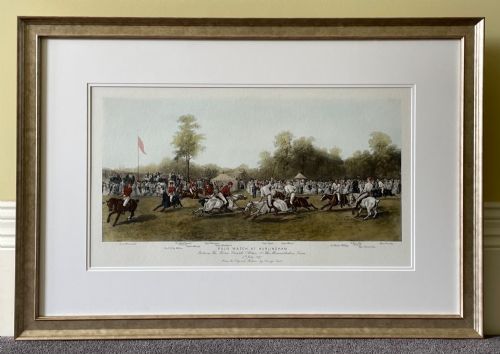
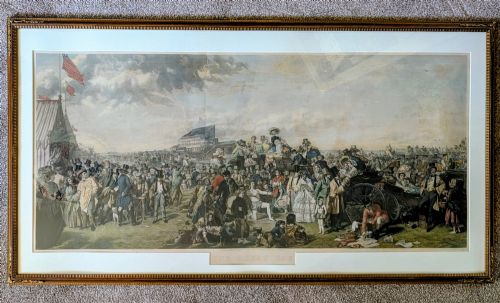
Subjects range from specific racehorses like Canezou and polo matches at Hurlingham to grand gatherings at the Derby Day and general equestrian studies. They typically arrive framed in wood, gilded wood, or gilt wood, ready to hang.
How they were made
These works rely on traditional printmaking techniques executed on paper using ink. The inventory includes engravings, lithographs, aquatints, and etchings produced during the nineteenth century.
Publishers often paired these detailed prints with bespoke framing in wood, gilded wood, or gilt wood. This protected the paper and enhanced the visual weight of the equestrian artwork for domestic display.
Listings feature paper works framed in wood, gilded wood, and gilt wood, spanning the nineteenth century with dates recorded around 1850 and 1870.
What varies in quality
Quality rests upon the crispness of the ink impression and the artistic fidelity of the original composition. Works associated with notable painters and printmakers show superior line work and tonal depth compared to anonymous commercial outputs.
The preservation of the paper and the integrity of the original frame also influence the overall standard. Intact sets with matching frames command greater appreciation than mismatched or later assembled groupings.
William Powell Frith·J F Herring
The Victorian Horse Engravings Glossary
- Engraving
- A printmaking technique where an artist cuts lines into a metal plate to hold ink. This method produces sharp, precise details suitable for reproducing fine equestrian art.
- Aquatint
- A variant of etching that creates tonal areas resembling watercolours or washes. It allowed nineteenth-century makers to render subtle shades of shadow and light across horse coats and landscapes.
- Lithograph
- A planographic printing process based on the antipathy of oil and water. It enabled publishers to issue detailed multi-coloured or monochromatic prints of sporting events efficiently.
- Etching
- A process using acid to cut lines into a metal plate protected by a ground. This technique offers a freer, more expressive line than traditional engraving.
- Gilded wood
- Wood treated with a thin layer of gold leaf or metallic gilt. Victorian framers utilised this finish to add warmth and status to sporting prints.
Victorian Horse Engravings: Frequently Asked Questions
What are Victorian horse engravings?
These are nineteenth-century printed works on paper depicting horses, racing scenes, and equestrian sports. They capture the sporting culture of the Victorian period.
Most examples are found mounted behind glass within wooden or gilded frames, designed specifically for wall display.
How were these prints displayed?
Victorians typically hung these framed engravings in libraries, studies, and hallways to signal an interest in equestrian pursuits and racing.
Sets of four or five were often arranged together to create a cohesive narrative along a corridor or above a mantelpiece.
How do I date a horse engraving?
Dating relies on the paper quality, printing technique, and stylistic markers of the nineteenth century. Specific dates like eighteen-fifty or eighteen-seventy sometimes appear in the publishing details or framing style.
Subject matter can also provide clues, such as historical racing events or named horses tied to specific decades.
How do I care for framed engravings?
Paper prints require protection from direct sunlight to prevent the ink and paper from fading over time. Keeping them away from excessive moisture preserves both the artwork and the wooden or gilt frame.
Dust the glass gently with a dry cloth and avoid spraying cleaning solutions directly near the frame edge.