
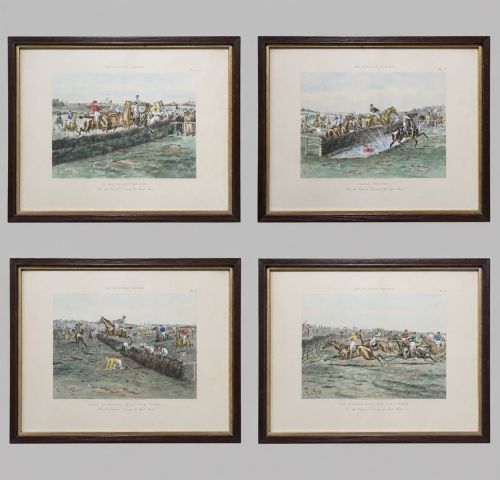
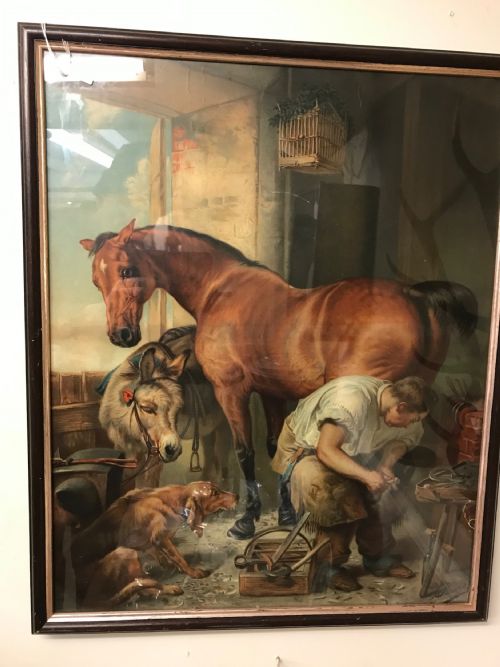
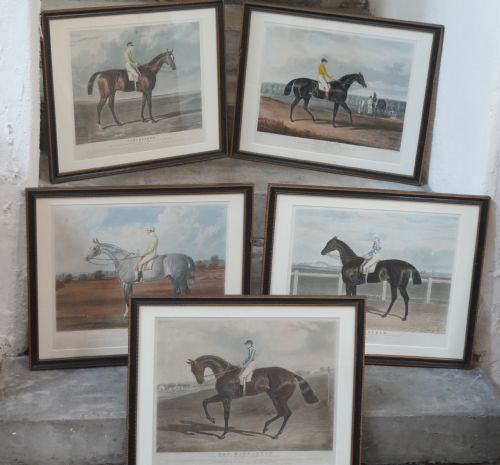


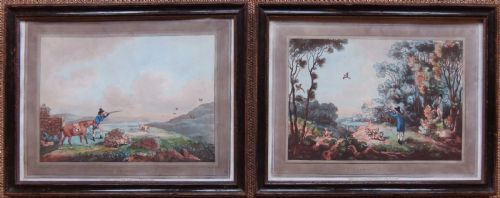


Dark Wood Equestrian Frames
Dark wood equestrian frames enclose centuries of sporting art, offering rich timber tones and classic racing scenes that anchor any traditional study.
Dark Wood Equestrian Frames
Dark wood equestrian frames encompass traditional wall art, prints, engravings, and mirrors united by their subject matter and timber surrounds. When searching for dark wood equestrian frames, a buyer encounters Victorian pieces, nineteenth century works, and early twentieth century British sporting art.
The forms span oil paintings, watercolours, lithographs, and framed prints depicting horses, racing scenes, and huntsmen. Mahogany mirrors with horseshoe designs and brass hooks also appear among the offerings.
How they were made
Makers utilised dark timbers such as mahogany and hardwood to house paper prints, watercolours, and canvas oil paintings. Glazing protected delicate watercolours and paper engravings, occasionally paired with gold leaf accents.
Frames incorporated brass fittings, deep bevelled mirror plates, and eglomise techniques. Works on paper utilised watercolour, gouache, paint, and lithography.
Materials recorded across the selection include mahogany, brass, glass, gold leaf, watercolour, and oil paint.
What varies in quality
Quality rests in the fidelity of the framing timbers and the execution of the art within. Original watercolours and oil paintings command greater attention than mass-produced prints.
The depth of the wood grain, the integration of brass hooks or bevelled glass, and the clarity of nineteenth century engravings set finer examples apart.
George Finch Mason·Edwin Henry Landseer·Abraham Cooper·Victor Adam·W.A. Clark·H. Alken·Sam. Howitt
The Dark Wood Equestrian Frames Glossary
- Aquatint
- A variant of etching that produces areas of tone rather than lines, frequently seen in nineteenth century sporting prints. It creates the subtle washes of shadow found in racing scenes.
- Eglomise
- The process of applying gold or silver leaf to the reverse of glass, then painting or etching a design. This technique adds a reflective border to historical prints.
- Gouache
- An opaque water-based paint used in watercolours to lend solid colour and body. Artists utilised it to capture the sheen of horse coats and harness details.
- Lithography
- A planographic printing process using stone or metal plates to produce detailed multi-colour or monochrome prints. It allowed nineteenth century artists to issue popular sporting series in volume.
- Mahogany
- A durable, reddish-brown tropical hardwood favoured for nineteenth century frames and furniture. Its dense grain takes a deep polish suited to formal interiors.
Dark Wood Equestrian Frames: Frequently Asked Questions
What periods do these pieces come from?
The pieces span from the nineteenth century through the Victorian era and into the early twentieth century. These eras saw a high volume of British sporting art and framing.
Victorian and Edwardian workshops produced both original paintings and commemorative prints celebrating racing horses, hounds, and huntsmen.
How were horse mirrors used?
Mahogany horseshoe mirrors with brass hooks served practical functions in halls and boot rooms for hanging riding accessories. Their distinct equine shapes reflected the prevalent sporting tastes of the Victorian period.
The deep bevelled plates provided functional reflection while celebrating equestrian themes in domestic spaces.
Are watercolours original?
Many listings feature original watercolours and gouache paintings executed by hand on paper. These unique works differ from mass-printed reproductions by showing individual brushstrokes and artist signatures.
Collectors prize original watercolours for their direct connection to the artist's hand during the nineteenth and twentieth centuries.
How do I care for timber frames?
Dark wood frames require dusting with a soft cloth and protection from direct sunlight to preserve the mahogany or hardwood finish. Avoiding moisture prevents damage to the timber and any internal glass plates.
Stable indoor temperatures keep the wood from warping and protect delicate paper prints or watercolours mounted within.