


Antique Racehorse Prints
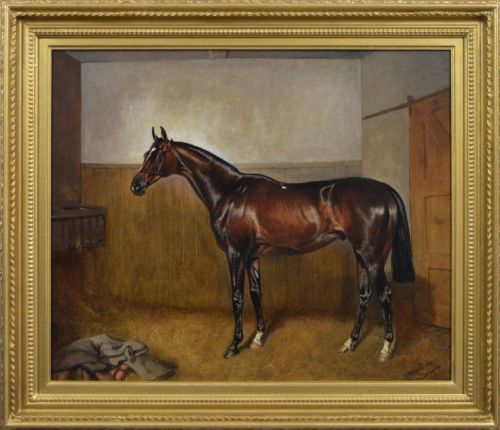
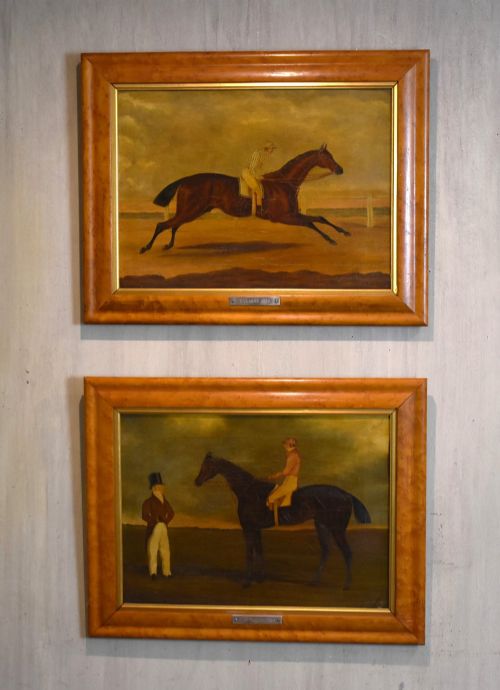
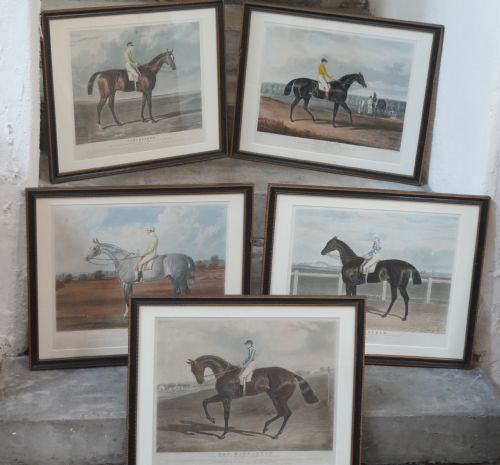
Antique racehorse prints capture the speed and form of legendary thoroughbreds, offering a glimpse into historic turf history for your walls.
Antique Racehorse Prints
When you search for antique racehorse prints, you are looking at visual records of famous runners, jockeys and historic racecourses produced across the nineteenth and early twentieth centuries. These works range from individual framed prints and engravings to sets of photographic reproductions and hand-coloured aquatints.
The versions you are most likely to meet on this page span the Georgian era through to the 1930s, encompassing styles from nineteenth-century sporting art to Victorian equestrian works. They typically arrive framed in wood or gilt wood, ready to hang.
Subjects frequently celebrate specific champions like General Peace, Diamond Jubilee and Creeping Molly, often depicted with their jockeys up or pounding down the turf at Newmarket and Newcastle. Sets of multiple engravings or photographic plates also appear alongside single sheet prints.
Materials and methods
Makers produced these works on paper using ink and printmaking techniques such as engraving and aquatint, occasionally applying hand-colouring to bring vibrancy to the jockey silks and turf. Photographic prints also emerge from the later decades represented here.
Framing materials commonly feature wood and gilt wood, sometimes paired with glass to protect the delicate paper sheets and eglomise panels beneath.
Listings feature works spanning from the Georgian period through 1930, utilising paper, ink, oil paint, canvas, wood, glass, and gilt wood.
Distinctions in quality
The standard of an antique racehorse print often rests on the clarity of the impression and the precision of the draughtsmanship, distinguishing sharp contemporary engravings from softer later impressions. The presence of known artists or publishers in the lineage adds considerable interest.
Condition and presentation play their part, with intact period frames of wood and gilt wood, clean paper free from excessive toning, and well-preserved surface details elevating certain examples above others.
John Alfred Wheeler·John Frederick Herring Snr·Abraham Cooper·Alfred Wheeler·John Atkinson·Isaac Cullin
The Antique Racehorse Prints Glossary
- Aquatint
- A printmaking technique that produces tonal areas resembling watercolours, frequently utilised in sporting prints to render skies and turf.
- Engraving
- A method of cutting a design into a metal plate with a sharp tool to hold ink for printing crisp lines.
- Eglomise
- A process of applying gold leaf and painting on the reverse side of glass, seen in decorative reproductions.
- Jockey Up
- A traditional sporting phrase describing a racehorse depicted with its jockey mounted in the saddle.
- Sporting Art
- A genre of painting and printmaking dedicated to equestrian subjects, racing, hunting and other field sports.
Antique Racehorse Prints: Frequently Asked Questions
What periods do these prints cover?
The pieces span from the Georgian era through the nineteenth century and into the 1930s. They capture evolving tastes in equestrian imagery over two centuries.
You will find works dated specifically to 1753, the 1850s, 1900, 1910, 1920 and 1930 alongside broader nineteenth-century examples.
How were these prints originally displayed?
Many of these works were produced as framed prints, wall art, or series intended for the studies and country houses of turf enthusiasts. Sets often documented entire racing seasons or famous stables.
Today they arrive framed in wood or gilt wood, continuing their traditional role as interior decoration for equestrian-themed rooms.
Are these works single items or sets?
The inventory includes both individual portraits of celebrated thoroughbreds and multi-part sets. You will encounter single antique prints alongside sets of five or eight images.
Archive records also demonstrate that larger series of twelve prints occasionally pass through.
What materials make up these framed pieces?
The core visual elements rely on paper, ink, and photographic processes. Some examples incorporate oil paint and canvas or reverse-painted glass panels.
Surrounding these are frames constructed from wood and gilt wood, frequently protected behind glass.