


Antique Thoroughbred Equestrian Art
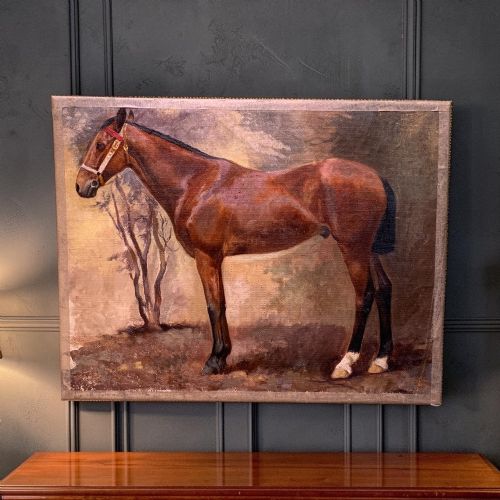
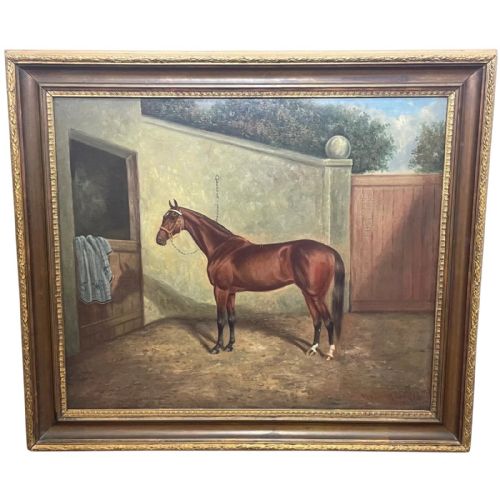
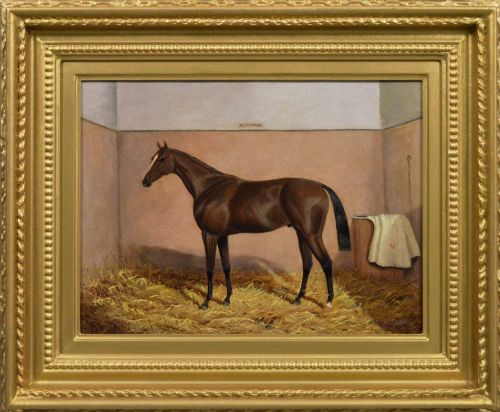
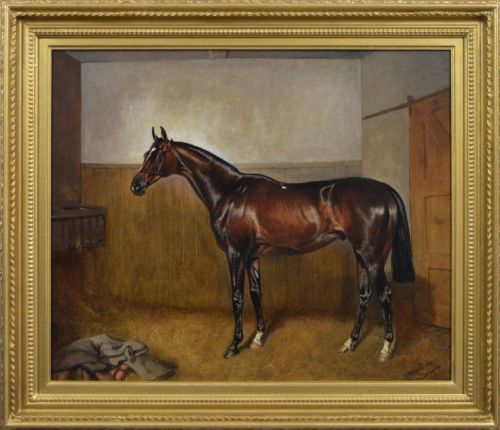
These antique thoroughbred equestrian art pieces capture celebrated racehorses and stable scenes in traditional oil paintings and framed prints.
Antique Thoroughbred Equestrian Art
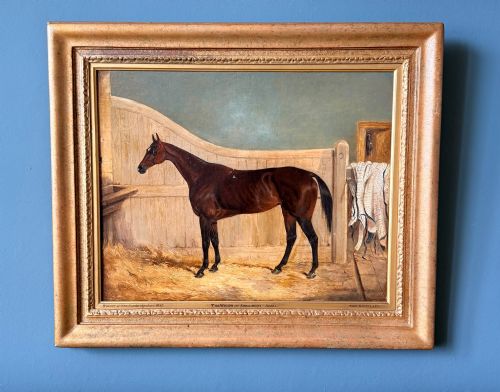
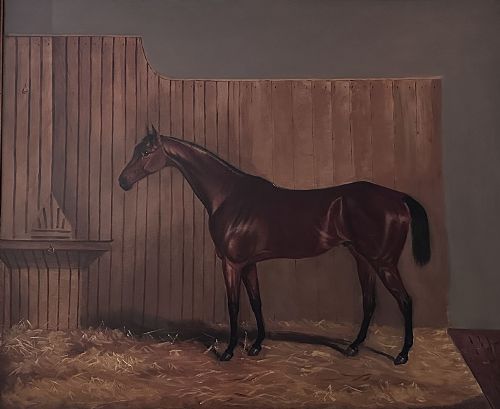
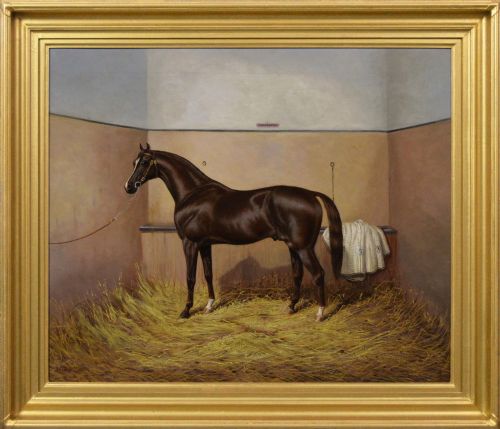
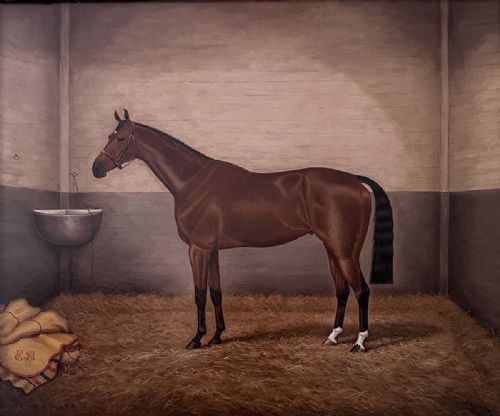
When you search for antique thoroughbred equestrian art, you encounter oil paintings and framed prints dedicated to famous racehorses, stables, and notable racing winners from the nineteenth and early twentieth centuries. These works record legendary thoroughbreds such as Spion Kop, Flying Fox, and Persimmon, often alongside named jockeys and owners.
The pieces on this page span the Victorian and Edwardian eras, reflecting British realism and Victorian sporting art traditions. Buyers encounter everything from intimate horse portraits in stable settings to dramatic trackside victories painted by period artists.
How they were made
Artists painted these works using oil paint on canvas panels and stretched canvas supports, occasionally housed within ornate giltwood frames finished with gold leaf. The physical construction relies on traditional timber stretchers and heavy wooden frames designed to protect the painted surfaces.
Print works from the later periods utilise photographic techniques, resulting in framed and glazed sets that document famous racehorses of the nineteen-thirties.
Materials recorded across the inventory include oil on canvas, wood, giltwood, and gold leaf.
What varies in quality
Quality in these works rests upon the precision of the animal's anatomy, the accuracy of the jockey's silk colours, and the provenance recorded in the subject matter. Pieces depicting documented Epsom Derby winners by named painters stand apart from anonymous studio portraits.
The skill of the brushwork in rendering the sheen of the horse's coat and the alertness of its expression determines the artistic merit of each painting. Original giltwood frames with intact gold leaf also contribute to the integrity of the piece.
Frederick Albert Clark·John Alfred Wheeler·Thomas Walker Bretland·Edward Lloyd of Ellesmere·Samuel Spode·Alfred Wheeler·Frank Giggs·Walter Herbert Wheeler
The Antique Thoroughbred Equestrian Art Glossary
- Giltwood
- Carved wood decorated with gold leaf or gold paint. This finish frequently appears on the frames surrounding nineteenth-century sporting paintings.
- Sporting Art
- A genre of painting and illustration dedicated to equestrian subjects, racing, and field sports. This style forms the core of the Victorian works found in this collection.
- Stretcher
- The wooden frame that holds a canvas taut behind a painting. Period pieces utilise traditional wedged timber frames.
- Realism
- An artistic movement focused on depicting subjects truthfully without artificiality. British realism in these paintings captures the exact proportions and musculature of thoroughbred horses.
Antique Thoroughbred Equestrian Art: Frequently Asked Questions
What subjects do these paintings show?
These works primarily depict celebrated racehorses, stable portraits, and significant racing winners from the nineteenth and early twentieth centuries. Many pieces identify specific champions alongside their jockeys and owners.
Subjects range from detailed studies of bay horses in stables to action scenes on the racetrack, including famous Epsom Derby winners.
How do I date an equestrian painting?
Dating relies on the artist's recorded working period, costume details of the jockeys, and inscriptions on the canvas or frame. Victorian and Edwardian clothing styles provide reliable chronological markers.
Many works explicitly name the winning horse and the year of the race, linking the painting directly to historical sporting events.
Where should I hang these artworks?
These framed oil paintings and prints suit libraries, studies, and hallways traditionally associated with equestrian and sporting decor. Pairing them with wood-panelled walls or traditional interiors complements their heritage.
Positioning them away from direct sunlight protects the oil paint and canvas from environmental damage over time.
Who are the key artists to look for?
Notable painters in this field include Albert Clark, John Alfred Wheeler, and Thomas Walker Bretland. These artists specialised in capturing the precise conformation and spirit of thoroughbred horses.
Works bearing signatures or attributions to these nineteenth-century and Edwardian painters carry documented historical sporting provenance.