


Vintage Jockey Prints
These vintage jockey prints capture the energy of the turf, offering historic character and rich equestrian colour for your walls.
Vintage Jockey Prints
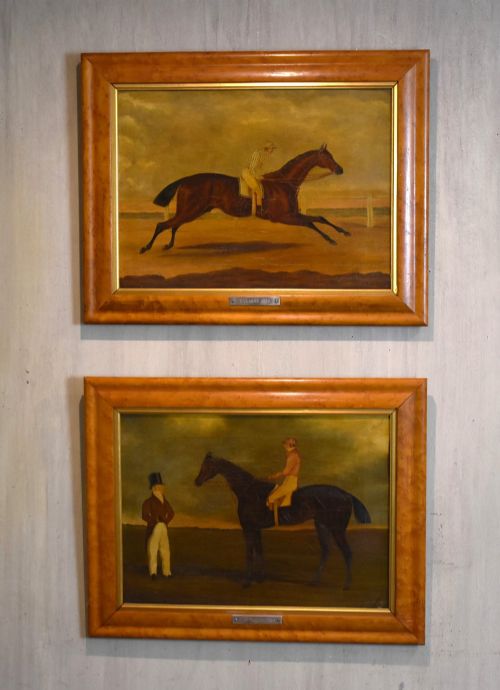
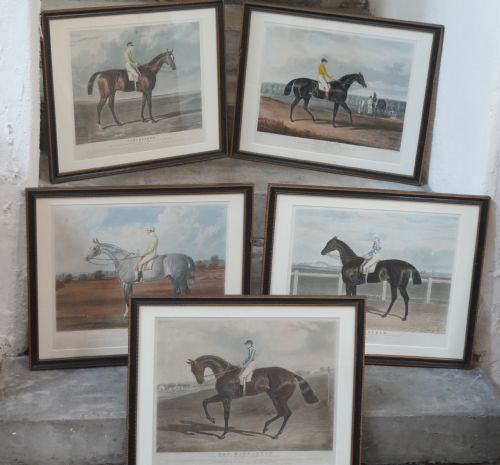
Vintage jockey prints encompass framed antique engravings, lithographs, and original prints depicting horse racing scenes and portraits. Buyers exploring this category will encounter works ranging from Georgian period engravings to Edwardian prints and mid-century French Expressionist oil paintings.
The selection includes individual framed prints, pairs, and sets of horse racing engravings depicting famous racehorses, jockeys up, and trackside scenes. Framed artwork forms the core of the items, occasionally accompanied by related sporting art and themed furnishings.
Origins span British sporting art traditions through to continental scenes, reflecting the enduring appeal of the turf in the nineteenth and twentieth centuries.
What varies in quality
Quality rests in the fidelity of the draughtsmanship and the strength of the printing or brushwork, distinguishing standard decorative prints from artist-signed works. The clarity of the subject, whether a named racehorse or a specific jockey, defines the visual impact of the piece.
The quality of the framing materials, such as birds eye maple or period wood mouldings with gilt detailing, contributes significantly to the overall presence of the artwork. Age and period authenticity also elevate pieces originating from the Georgian and Victorian eras.
Materials across these listings include paper, glass, wood, ink, gilt, birds eye maple, and oil on canvas.
John Frederick Herring Snr·Gabriel Dauchot·Alfred Wheeler·John Atkinson·Isaac Cullin·Snaffles
The Vintage Jockey Prints Glossary
- Chromolithography
- A planographic printing technique used to produce multicoloured prints. It builds up rich colour through the successive application of different lithographic stones.
- Aquatint
- An intaglio printmaking technique that produces tonal effects resembling watercolour washes. It was frequently employed in sporting prints to render atmospheric racecourse backgrounds.
- Engraving
- A printmaking process where an artist cuts lines directly into a metal plate with a burin. This technique delivers sharp, precise details vital for identifying historical jockeys and horses.
- Birds Eye Maple
- A figure in maple wood resembling tiny swirling bird's eyes, created by local stress in the growing tree. It is prized for cabinetry and picture framing.
- Gilt
- A thin layer of gold or gold-like material applied to wood or metal surfaces. It provides a bright decorative border on traditional picture frames.
Vintage Jockey Prints: Frequently Asked Questions
How do I care for vintage jockey prints?
Keep paper works out of direct sunlight to prevent fading of the inks and discolouration of the paper. Ensure frames with glass are hung in stable humidity environments to protect the antique timber and mounts.
Regularly check the backboards and fixings of framed prints to ensure the structure remains secure. Gentle dusting of the wood and glass is sufficient for routine maintenance.
Are these prints originals or reproductions?
The selection comprises period items, including original prints, antique engravings, and vintage oil paintings from the eighteenth, nineteenth, and twentieth centuries. Each piece originates from the era of its creation rather than being a modern facsimile.
Signatures, printing techniques, and paper ageing help identify the period and authenticity of individual works.
How do I style horse racing art at home?
These works suit studies, hallways, and living spaces, pairing well with traditional timber furniture and equestrian themes. Grouping pairs or sets creates a strong focal point on a wall.
Matching the frame finish, such as dark wood or gilt, to existing room decor helps integrate the artwork seamlessly.
What periods do these pieces cover?
The collection spans multiple centuries, featuring Georgian, Victorian, and Edwardian works alongside mid-century pieces. Each period brings distinct artistic styles, from precise nineteenth-century sporting art to French Expressionism.
Dates range from mid-eighteenth-century engravings up to mid-twentieth-century canvases.