


Victorian High Back Settle
A victorian high back settle offers draught-excluding shelter by the hearth and heavy timber presence in the hallway.
Victorian High Back Settle
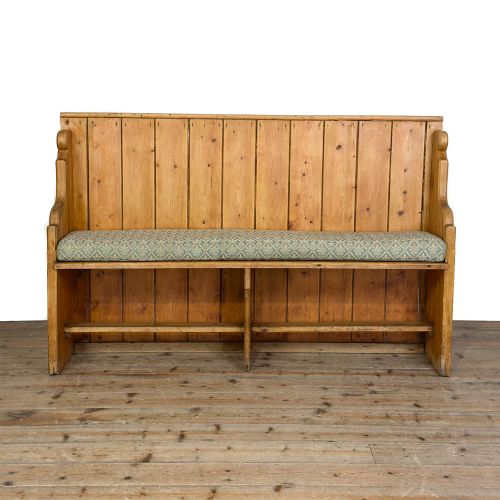
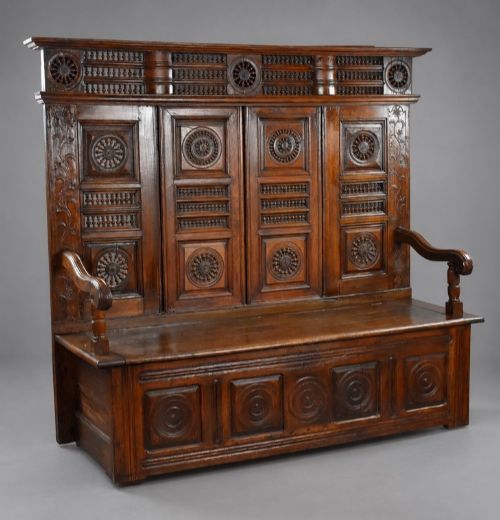
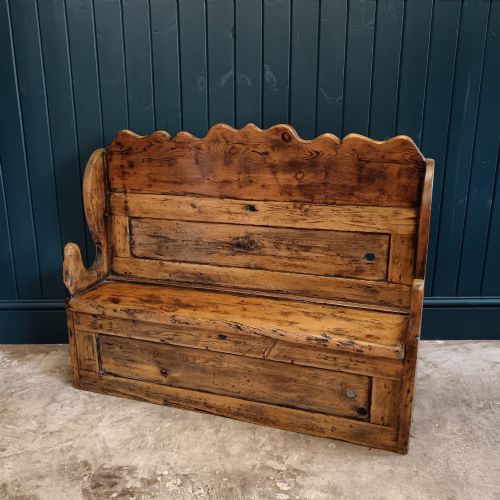
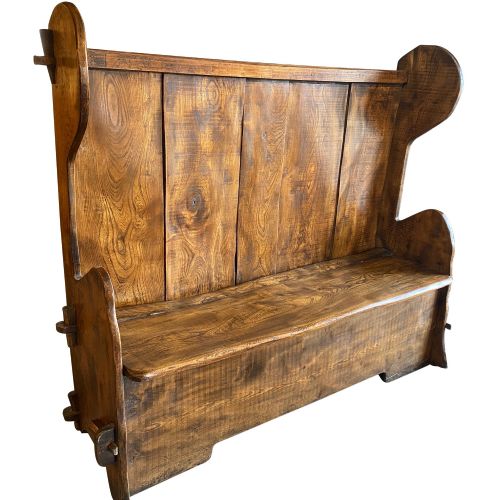
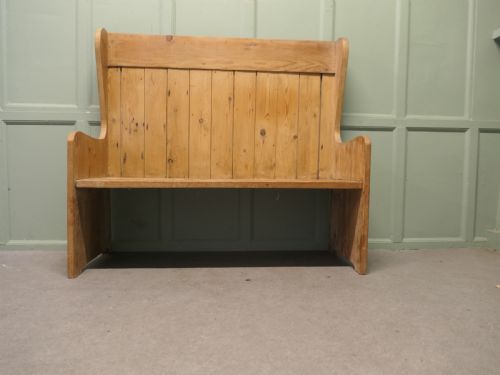
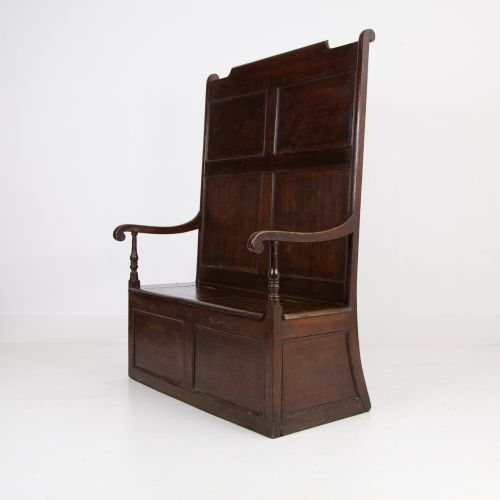
A victorian high back settle is a heavy wooden seat designed to keep out cold draughts in large hallways, farmhouses, and public houses. The pieces on this page appear as solid panelled benches, box seats with storage beneath, and barrel-backed forms built for fireside warmth.
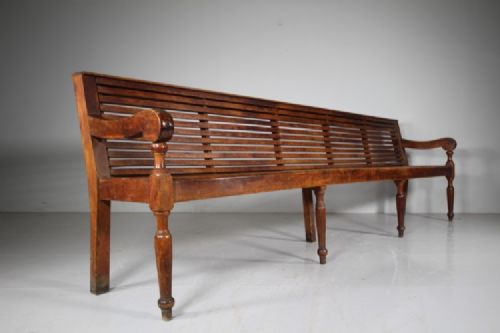
Most examples you encounter date from the nineteenth century and span vernacular country styles through to heavily carved revival designs. They serve as primary seating and hallway partitions, combining deep enclosed backs with hinged storage boxes or open slatting.
Makers utilised robust native timbers to construct these substantial items, ensuring they survived generations of heavy use in domestic and institutional settings.
Materials and construction
Carpenters built these seats primarily from solid oak, pine, and elm, often combining hardwoods for structural framing with softer timbers for internal panels. Selected pieces incorporate walnut veneers and hand-carved ornamentation reflecting Jacobean and Gothic revival tastes.
Joinery relied on sturdy pegged mortise and tenon frames, while box settles featured hinged lids and heavy iron hinges to withstand regular lifting. Upholstered variants integrated ticking fabric and interior stuffing to soften the high wooden backs.
The documented examples span the nineteenth century, including specific Victorian production dates from eighteen-forty to nineteen-twenty.
Distinctions in quality
The standard of a settle rests upon the integrity of its timber and the depth of its hand-carving rather than mere age. Pieces fashioned from solid oak with deeply fielded panels and original box storage command greater appreciation than plain pine variants built for utility.
Proportion and structural survival dictate desirability, as alterations to height or replaced floor boards diminish the historical integrity of the piece. Fine maker signatures, such as those from established London cabinet makers, elevate specific walnut and carved examples above vernacular workshop output.
Hampton & Son's·Howard & Sons
The Victorian High Back Settle Glossary
- Settle
- A wooden bench with a high back, solid arms, and frequently a box base for storage. This form evolved to shield sitters from cold air currents in unheated rooms.
- Box settle
- A variant featuring a hinged seat that lifts to reveal a large storage cavity beneath. Families once used these compartments to store blankets and dry goods near the fire.
- Bacon settle
- A specialised tall wooden seat fitted with internal hooks or rails beneath the seat or within the back for curing and storing meats. These items reflect large-scale rural household management.
- Monks bench
- A term often applied to convertible furniture that functions as a settle with a back that folds down to form a table. Many nineteenth-century revival pieces bear this designation in trade descriptions.
- Barrel back
- A curved high-backed seating enclosure designed to wrap closely around the user. This configuration traps body heat and blocks side draughts effectively.
Victorian High Back Settle: Frequently Asked Questions
Where were settles placed?
These seats stood primarily in draughty entrance halls, farmhouse kitchens, and public house firesides where blocking cold air was essential.
Their high panelled backs created a microclimate that retained warmth from nearby hearths before central heating existed.
What woods were used?
Carpenters constructed these items from native British timbers, predominantly choosing sturdy oak, resilient elm, and accessible pine.
Walnut appeared on finer revival pieces intended for formal reception rooms and gentleman's clubs.
Are these benches comfortable?
Most historic examples offer upright wooden seating designed for posture and warmth rather than lounging.
Certain surviving variants include upholstered cushions or fabric padding added to soften the high backrest.