
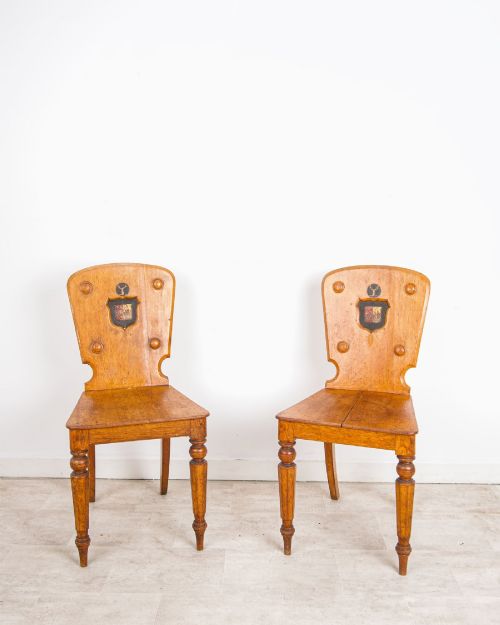


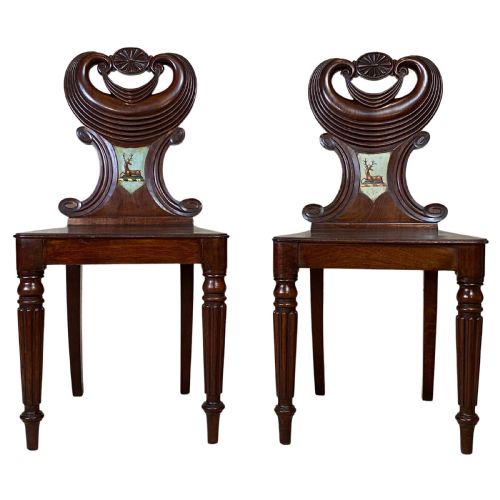


Carved Crest Hall Seat
A carved crest hall seat commands attention in an entrance hall, bearing heraldic shields and carved backs that announce family lineage to arriving guests.
Carved Crest Hall Seat
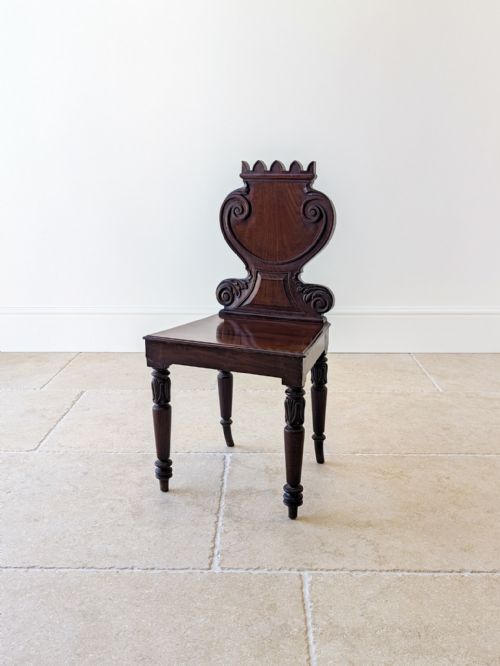
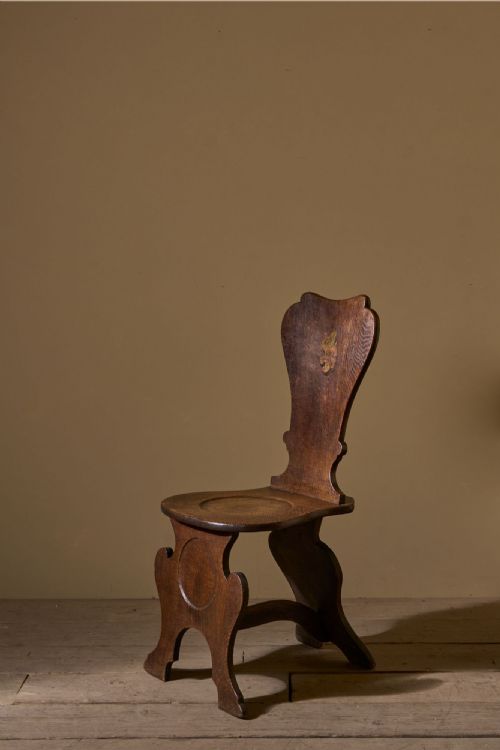
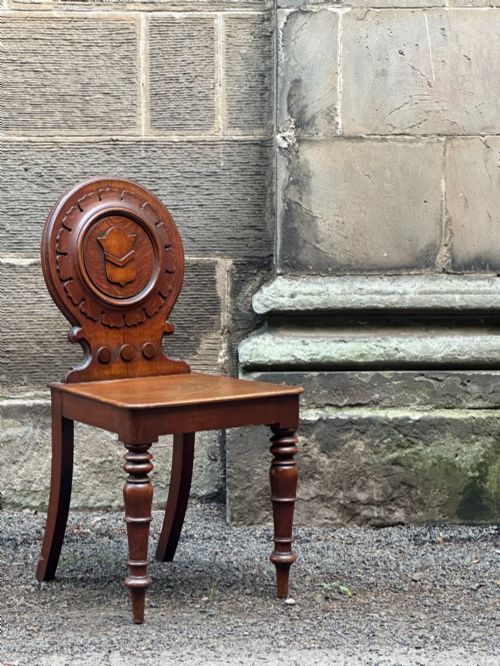
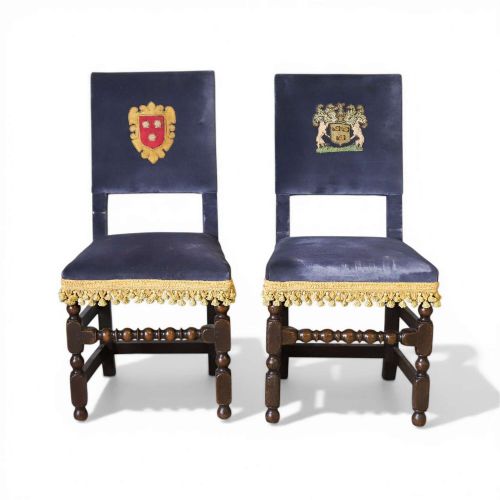
A carved crest hall seat combines formal reception seating with heraldic display, appearing most often as mahogany or oak chairs and benches featuring carved shield backs or armorial crests. You will encounter these pieces across multiple periods including the seventeenth, eighteenth, and nineteenth centuries, taking the form of single hall chairs, matched pairs, or larger dining sets.
Makers designed these seats primarily for grand hallways and reception rooms rather than comfortable lounging, employing solid woods like mahogany, oak, and walnut. The selection includes Regency shell backs, Victorian Gothic designs, and Scottish armorial clan chairs fitted with velvet upholstery or cane panels.
The category spans austere Georgian timber forms through to heavily carved Victorian and Gothic Revival interpretations. Buyers searching for a carved crest hall seat typically seek this specific architectural presence and carved heraldic detail to anchor a hallway scheme.
What varies in quality
Quality rests principally in the crispness and depth of the carved crest or armorial shield, where sharper chisel work and well-defined heraldic details distinguish superior pieces from simpler commercial output. The choice of timber grain and the integrity of the structural joinery across the legs and back junction further define the tier of the maker.
Provenance and attribution elevate certain pieces, particularly those bearing the distinctive hallmarks of notable cabinetmakers like Gillows through documented design or exceptional proportion. The presence of matching sets, whether pairs or larger groups, also dictates the desirability and cohesion of the seating.
Listings demonstrate a strong presence of mahogany and oak, stretching from seventeenth-century Scottish clan chairs to Victorian Gothic designs.
Gillows·Waring & Gillow
The Carved Crest Hall Seat Glossary
- Armorial
- Bearing heraldic bearings or coats of arms. This carved or painted emblem sits proudly upon the crest rail to denote family lineage.
- Shield back
- A chair back shaped like a heraldic shield. This distinctive form provides a flat canvas for prominent crest carving.
- Crest rail
- The top horizontal member of a chair back. Carvers lavished their finest relief work on this uppermost section.
- Japanned
- European imitation of East Asian lacquerwork using resin varnishes. This decorative finish appears on select early frames.
- Settle
- A wooden bench with a high back and solid arms. These larger seats often incorporate storage beneath the hinged or fixed seat.
Carved Crest Hall Seat: Frequently Asked Questions
Where did people put hall seats?
These pieces stood primarily in grand entrance halls, vestibules, and reception rooms of country houses and town residences. Guests and visitors used them briefly while waiting to be announced.
Because hallways served as transitional public spaces, the furniture functioned as architectural statements rather than lounging furniture. Their upright posture and carved heraldic backs projected status before visitors entered the main drawing rooms.
Are hall chairs comfortable?
Most historic hall chairs offer a firm, upright sit rather than relaxed comfort. Their primary purpose was visual impact and heraldic display within a hallway.
Some examples include upholstered pads in velvet or cane seating panels to soften the timber, but the geometry remains strictly formal. They were built for brief use while removing outerwear or waiting.
How do I identify a heraldic crest?
Heraldic shields and crests display specific symbols like lions, chevrons, and floral motifs that once identified particular families or clans. These were carved directly into the solid wood or applied as painted armorials.
Matching pieces often connect to specific country houses or Scottish clans, reflecting the lineage of the original owner. Researching the heraldic symbols can reveal the original commission.
What is the difference between oak and mahogany hall seats?
Oak seats generally appear in seventeenth and eighteenth-century styles, featuring deep grain patterns and heavy Gothic or Jacobean carving. They project an austere, ancient presence.
Mahogany versions emerged more strongly during the Regency and Victorian eras, allowing for sharper, more refined chisel work on shield backs and shell motifs. Mahogany offered a smoother, darker polished finish suited to neoclassical interiors.