


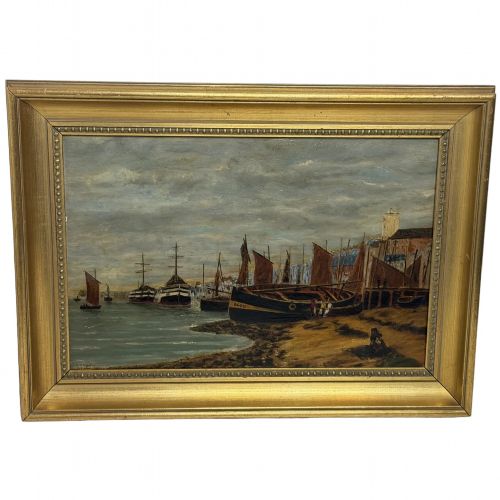


Victorian Harbour Seascape
When you seek a victorian harbour seascape, you are looking at coastal views of working ports, fishing villages and shipping lanes painted during the nineteenth and early twentieth centuries.
Victorian Harbour Seascape
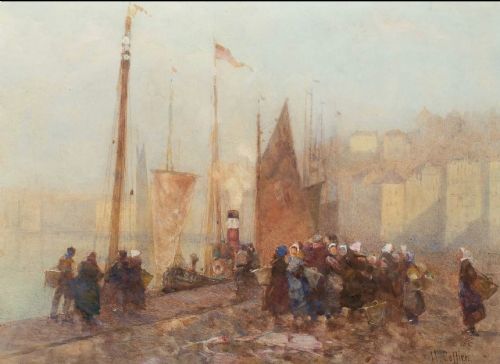
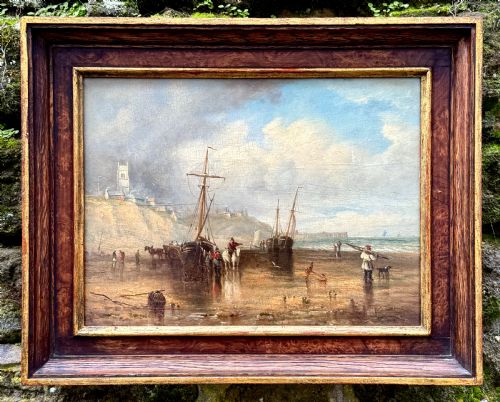
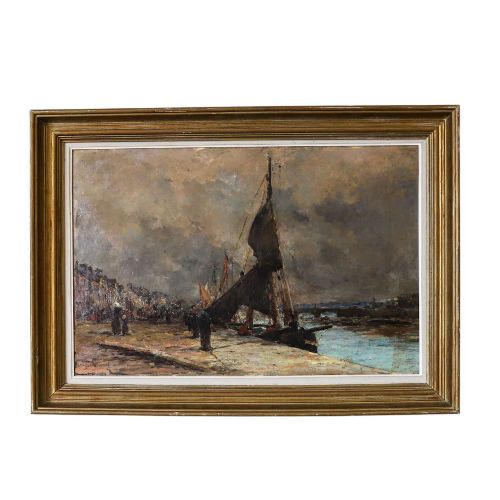
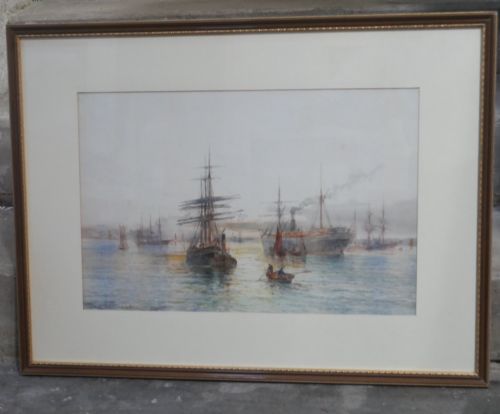
A victorian harbour seascape captures the maritime life of British and continental shores, focusing on bustling quays, incoming fishing vessels and tidal anchorages. These works record specific locations ranging from Cornish fishing ports to northern industrial rivers and Mediterranean harbours.
The selections on this page span the nineteenth century and the early Edwardian years, executed primarily as oil paintings on canvas or delicate watercolours on paper. Buyers encounter everything from small contemplative coastal sketches to large framed oils showing full maritime traffic.
Makers represented include named professional artists who exhibited widely, alongside skilled painters working within the maritime and realist traditions of the period. Each piece documents the changing light of coastal skies and the daily labour of the waterfront.
Materials and Technique
Artists painted these scenes using oil paint on stretched canvas or applied watercolour pigments to paper, often mounting the finished works within decorative giltwood or hand-enamelled frames. The choice of medium dictated the handling of light, allowing oil painters to build rich surface textures while watercolourists captured translucent coastal atmospheres.
Many works were produced on location or developed from field sketches, recording the rigging of sailing ships, the stone of harbour walls and the motion of coastal waters. Canvases received protective varnishes, while watercolours were preserved behind glass to guard against damp and fading.
The listings feature works dated across the nineteenth century and into the early twentieth century, utilising oil on canvas, watercolour and giltwood frames.
Judging Quality
Quality in these coastal works rests upon the artist's command of maritime architecture, water movement and atmospheric light. Superior examples display precise drawing of shipping rigging and convincing perspective in coastal townscapes, whereas lesser works rely on formulaic repetition.
The handling of the medium distinguishes the finest pieces, showing confident brushwork in oils or delicate control of wash in watercolours. Original framing in period giltwood further enhances the integrity and visual impact of the artwork.
William Banks Fortescue·Charles William Wyllie·William Edward Webb·Thomas Bush Hardy·Ernest Dade·James Webb·Kate E Booth·George Gregory·Alfred Henry Vickers·John Callow·Gustave de Breanski·Frank Wasley·Edward Henry Holder·William Langley·Lennard Lewis·Charles Euphrasie Kuwasseg·Hubert Thornley·Ludwig Hermann·Arthur Joseph Meadows·John James Wilson
The Victorian Harbour Seascape Glossary
- Oil on Canvas
- A traditional painting medium where coloured pigments suspended in drying oils are applied to a woven fabric support. This technique permits deep colour saturation and rich surface impasto.
- Watercolour
- A paint consisting of water-soluble pigments applied to paper supports. It creates luminous washes that suit atmospheric coastal skies and shifting marine light.
- Giltwood
- Wood carved and coated with gold leaf or gold paint, forming ornate decorative frames typical of nineteenth-century picture presentation. These frames frequently complement the palette of the painting within.
- Maritime Art
- Fine art that depicts or draws inspiration from the sea, ships, beaches and coastal settlements. It encompasses both naval engagements and civilian harbour scenes.
- Realism
- An artistic movement focused on the truthful, unidealized representation of everyday subject matter and contemporary life. In coastal art, this appears in the honest depiction of working fishing ports.
Victorian Harbour Seascape: Frequently Asked Questions
How do I clean a framed oil painting?
Dust the surface and frame gently with a soft, dry brush without applying pressure to the canvas. Avoid liquid cleaners or moisture on both the paint layer and the vintage gilt frame.
For deeper cleaning or removal of aged varnish, consult a professional conservator to prevent accidental damage to the original pigment.
Where should I hang a watercolour painting?
Position watercolours away from direct sunlight and high humidity to prevent the paper from yellowing and the pigments from fading. Interior walls with stable ambient temperatures offer the best protection for works on paper.
Ensure the glazing is intact and the backing sealed to keep out dust and atmospheric pollutants over time.
How do I identify the period of a frame?
Nineteenth-century frames often feature composition ornament applied over wooden mouldings, finished with genuine gold leaf that shows subtle craquelure or toning. Inspect the corner mitres and the backing boards for clues regarding age.
Many frames are original to the artwork, though replacement frames from the same era remain common in the antique trade.
What distinguishes an oil painting from a watercolour?
Oil paintings utilise thick, opaque pigments on canvas or wood panels, presenting textured brushwork and a deep, reflective surface. Watercolours employ translucent washes on paper, protected under glass to preserve the delicate paper fibres.
Examining the support under magnification reveals the woven canvas texture versus the smooth or textured surface of artist's paper.