
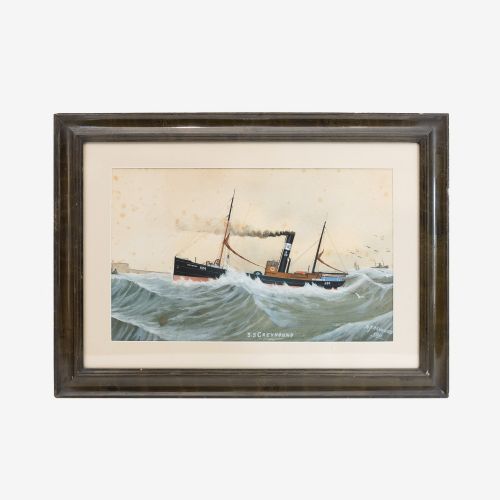


Steamship Maritime Artwork
Steamship maritime artwork captures the industrial might and elegant lines of steam-powered vessels through period oil paintings and watercolours.
Steamship Maritime Artwork
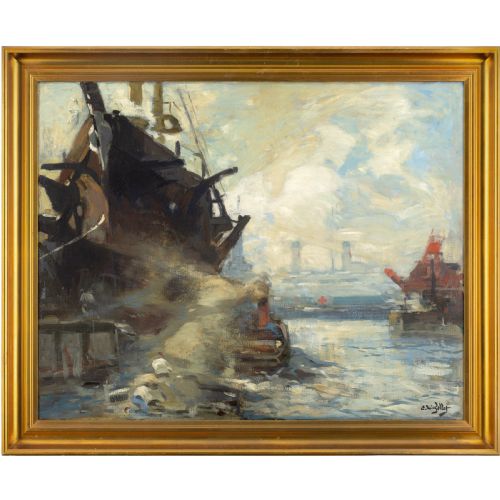
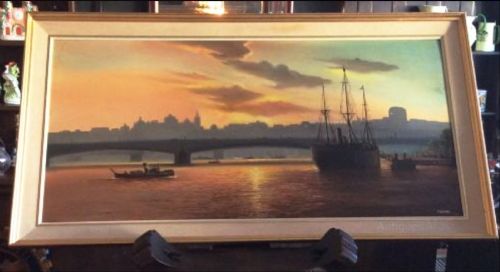
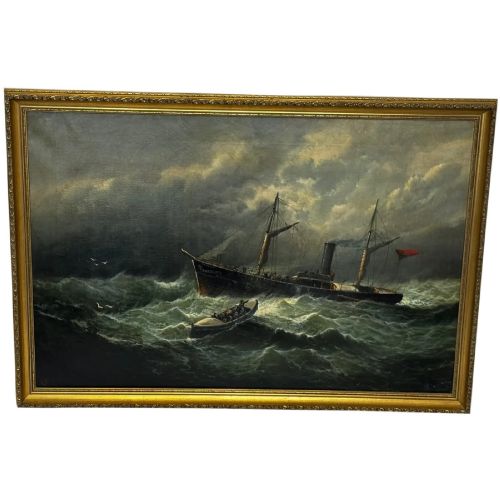
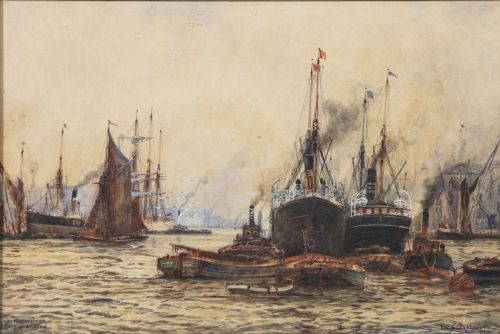
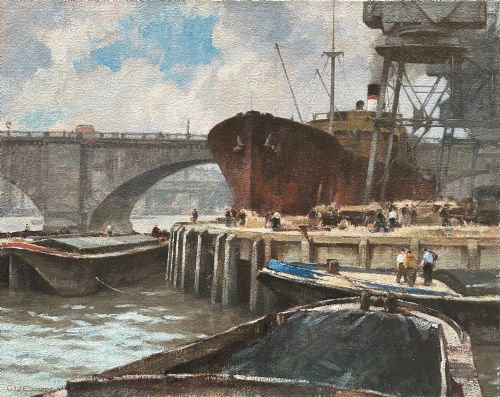
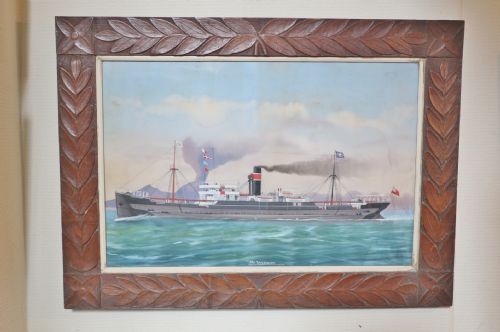
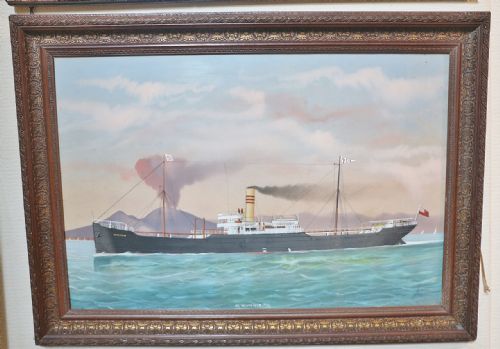
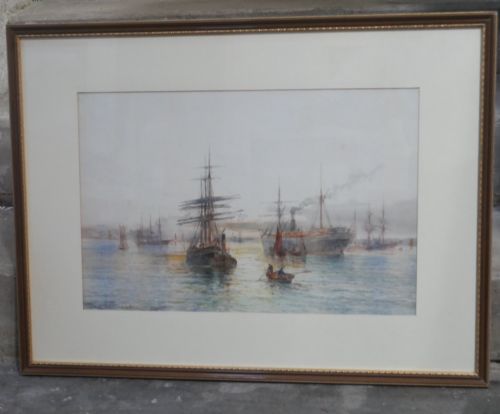
When buyers search for steamship maritime artwork, they encounter depictions of commercial vessels, ocean liners, and naval ships navigating busy rivers, coastal waters, and open seas. These works range from detailed portraits of specific vessels to atmospheric scenes of port life.
The pieces on this page originate from the late nineteenth century through to the mid twentieth century, encompassing Victorian, Edwardian, and interwar periods. Watercolours on paper and oil paintings on canvas dominate the selection, framed to suit domestic and institutional display.
Portraits of named vessels such as the SS Bregonian and RMS Lusitania appear alongside panoramic views of the River Thames and international harbours. Painters recorded these industrial subjects with varying degrees of maritime precision and painterly atmosphere.
Materials and Technique
Artists relied primarily on oil on canvas for substantial marine scenes, allowing for rich textures in water and billowing coal smoke from funnels. Watercolours and gouache on paper capture lighter, more transient effects of light and weather in harbour settings.
Support materials include stretched canvas, heavy paper, and occasionally wood panels, housed in period gilt or wood frames. Pigments were applied with brushes to render rigging, hulls, and water with technical accuracy suited to naval and commercial recording.
Artists occasionally recorded the exact moment a liner sailed past, or captured a tugboat hauling a heavy vessel into harbour.
Quality Variations
Quality rests on the artist's command of maritime architecture, perspective, and atmospheric conditions, distinguishing careful studies from generic ship portraits. Works by known professional painters demonstrate superior handling of water movement and vessel proportions compared to amateur efforts.
Condition of the canvas or paper surface, original framing, and legibility of contemporary inscriptions or signatures influence the standing of each piece. Superior examples retain their original pigments without excessive restoration or fading.
Eugène-Louis Gillot·William Broome·Frank William Scarbrough·Cyril Walduck Edwards·Alexander Harwood·Charles William Wyllie·Ernest Dade·Harold E Frecker·Edward Fletcher·Johan Jens Neumann·James Scrimgeour Mann
The Steamship Maritime Artwork Glossary
- Pierhead painting
- A specific genre of ship portrait created to record a merchant vessel, often commissioned by its captain or owner. These works prioritise accurate representation of the ship's rigging and funnel markings over artistic abstraction.
- Marine watercolour
- A painting executed with water-soluble pigments on paper, frequently utilised for coastal and river views. This medium allowed artists like Frank William Scarbrough to capture rapid shifts in light on the Thames.
- Oil on canvas
- Pigments bound in a drying oil applied to a woven fabric support stretched over a wooden frame. This medium forms the basis of larger nineteenth and twentieth century shipping scenes.
- Gouache
- An opaque watercolour medium containing a white pigment filler, utilised to add highlights of foam, clouds, and superstructure details. It frequently appears alongside transparent watercolour in maritime works.
- Panoramic seascape
- A wide-format composition depicting a broad stretch of water and shoreline, such as the Pool of London. These pieces emphasise the scale of maritime traffic and urban port architecture.
Steamship Maritime Artwork: Frequently Asked Questions
What periods do these artworks cover?
The selection spans from the late nineteenth century through the Edwardian era and into the mid twentieth century. These dates reflect the height of steam navigation and industrial maritime expansion.
Paintings capture changing vessel designs, from early nineteenth-century steamers to mid-century ocean liners, documented by contemporary artists.
How were these paintings used originally?
Many ship portraits were commissioned by shipping lines, captains, or owners to document specific vessels and voyages. Other watercolours and oils served as fine art for domestic interiors and public exhibitions.
Artists often worked near major ports like London, Liverpool, and international harbours to record active commercial shipping.
How do I identify a ship in a painting?
Look for painted inscriptions on the canvas, titled mounts on watercolours, or details regarding funnel colours and flag pennants. Many works explicitly name the vessel, such as the SS Greyhound or RMS Queen Mary.
Historical shipping registries and port records help verify the operational dates and routes of vessels depicted in these works.
How should I frame and display them?
Display these works away from direct sunlight to protect watercolours on paper and oil pigments from fading. Many retain their period gilt or wooden frames, which complement the maritime subject matter.
Ensure stable humidity levels in the room to preserve both canvas supports and paper works over time.