


Edwardian Marine Watercolour
An edwardian marine watercolour captures maritime life, coastal harbours and naval vessels on paper through delicate washes of pigment.
Edwardian Marine Watercolour
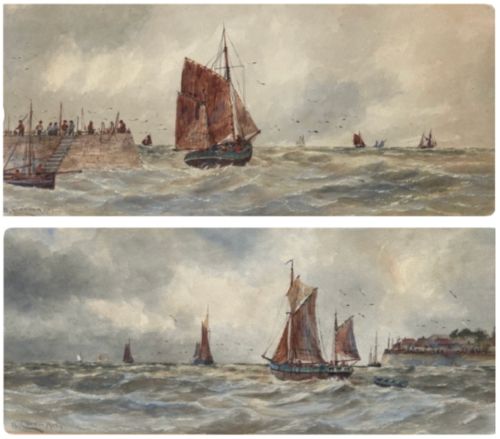
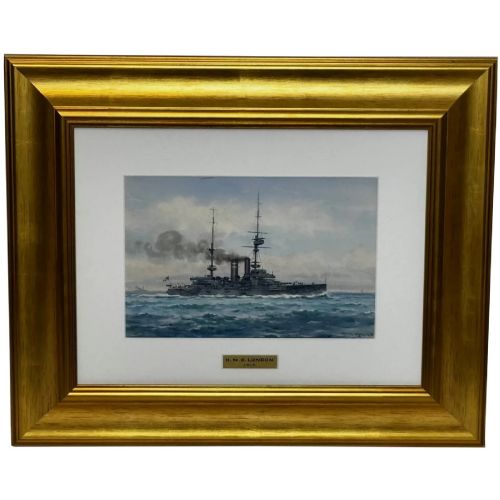
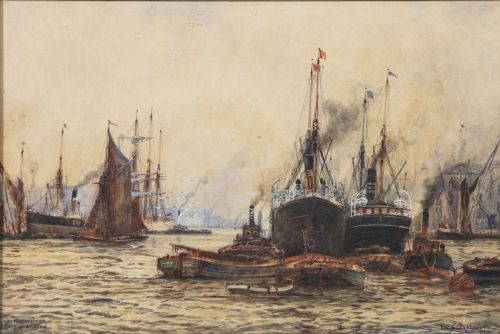
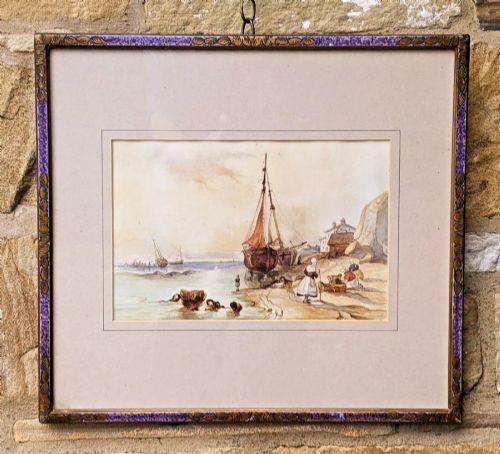
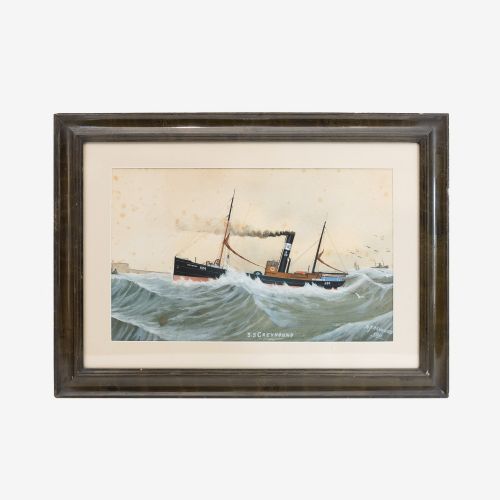
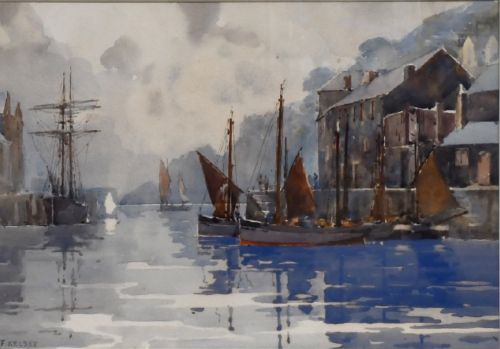
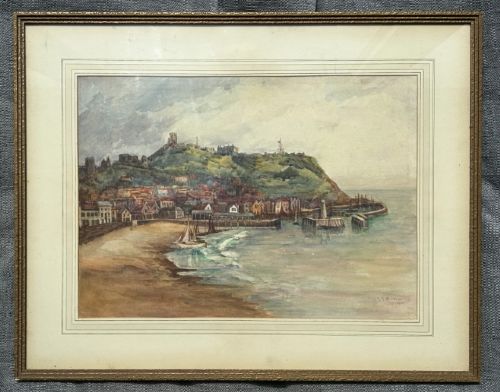
When searching for an edwardian marine watercolour, collectors encounter framed artworks depicting British coastal scenes, fishing harbours and working vessels. These pieces record maritime subjects ranging from Yorkshire fishing ports and Cornish harbours to the River Thames and international waters.
The versions most commonly met on this page date predominantly from the early twentieth century, spanning Edwardian periods alongside related Victorian and 19th-century works. Forms include detailed fine art paintings and wall art presented under glass within wooden or gilt wood frames.
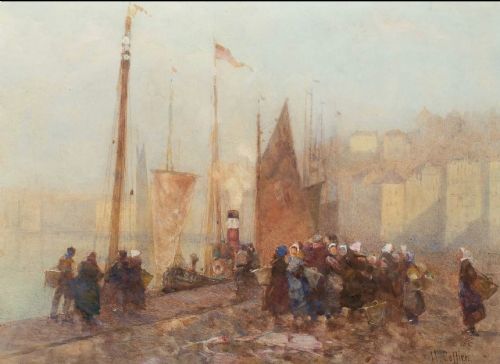
Subjects often focus on coastal industry, capturing trawling luggers, sailboats passing lighthouses, and fishermen landing the catch at locations such as Whitby, St Ives, and Scarborough.
How They Were Made
Artists created these works utilising watercolour pigment and occasionally gouache applied directly onto paper supports. The technique relies on translucent washes to build atmospheric effects of light, water and sky.
Finished works received protection beneath glass and were mounted inside wood or gilt wood frames suitable for display as framed artwork.
Sailors occasionally dedicated sentimental watercolour tributes to their ironclad battleships and shipmates.
What Varies In Quality
Quality in an edwardian marine watercolour rests upon the artist's ability to render movement, atmosphere and maritime architecture convincingly on paper. Skilled handling of pigment creates depth in turbulent seas and luminosity in coastal skies.
The nuance of the composition and the historical specificity of the vessels and locations depicted elevate certain works above standard decorative examples.
Frank Watson Wood·Frank William Scarbrough·Hector Caffieri·Frank Kelsey·Alfred George Morgan·Richard Harry Carter·Tom Clough·Fred Waugh·George Hamilton Constantine·James Thomas Watts·Ernest F Hill·Frederick Stuart Richardson·Percy Brooke·Alfred Robert Quinton·Walter Duncan·William Tatton Winter·William Kay Blacklock·Rowland Henry Hill·John McDougal·Frank W Scarborough·Harry Wanless·William Lee Hankey·William Knox·George Stanfield Walters·Harold E Frecker
The Edwardian Marine Watercolour Glossary
- Watercolour
- A paint consisting of pigment suspended in a water-based solution, applied to paper to create transparent washes of colour.
- Gouache
- An opaque water-based paint similar to watercolour, frequently utilised alongside standard watercolour pigments to add highlights and solid areas of tone.
- Lugger
- A small fishing vessel carrying lug sails, commonly seen in British coastal and harbour scenes from the period.
- Gilt Wood
- Wood that has been coated with gold leaf or a gold-coloured finish, standard for framing fine art paintings of this era.
Edwardian Marine Watercolour: Frequently Asked Questions
What subjects appear in these paintings?
The works depict maritime and coastal subjects including fishing boats, harbour scenes, naval battleships and urban waterways.
Specific locations feature frequently, ranging from Yorkshire ports to the River Thames and Venetian canals.
How are these artworks framed?
Most examples are presented as framed art utilising wood or gilt wood surrounds to protect the paper beneath glass.
Original framing helps preserve the watercolour pigment and paper support from environmental damage.
What materials make up these works?
The primary components consist of watercolour paint applied to paper surfaces, occasionally augmented with gouache.
Protective glass and wooden or gilt frames complete the physical structure of the wall art.