


Framed Thames Seascape
A framed thames seascape captures the bustling maritime heart of London, offering a historic window into the river's rich past.
Framed Thames Seascape
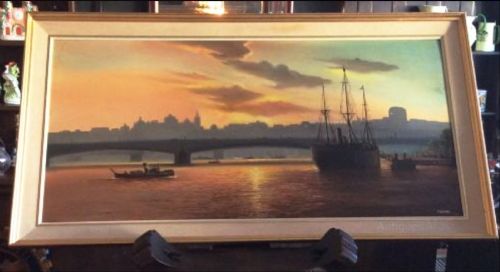
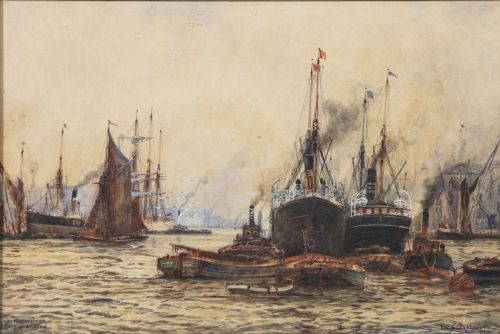
When you examine a framed thames seascape, you are looking at maritime art depicting the river, shipping, and bridges of London. These works record historic scenes featuring landmarks such as Tower Bridge, Waterloo Bridge, and the Houses of Parliament.
The pieces available here span from the nineteenth century through the Edwardian era up to nineteen sixty. You will encounter both detailed oil paintings on canvas and delicate watercolours on paper, capturing the changing light on the water.
How they were made
Artists created these works using oil paint on canvas or watercolour on paper, capturing the atmospheric smoke and mist of the capital. Pigments were applied with brushwork to depict the movement of water and the detail of shipping vessels.
The finished artworks are housed in wood frames, often enhanced with gilt or gold leaf finishes. These timber surrounds complete the presentation and protect the paper or canvas beneath.
Several paintings pay special attention to the hardworking hay barges that once cluttered the river traffic.
What varies in quality
Quality in these maritime works rests upon the artist's ability to render the atmosphere and topography of the river convincingly. The handling of light on the water and the precision in depicting shipping set finer examples apart.
The framing also influences the overall character of the piece. Period wood frames with original gilt or gold leaf complement the artwork more effectively than later replacements.
Frank William Scarbrough·Charles William Wyllie·Edward Henry Eugene Fletcher·Frances E Nesbitt·Francis Moltino·Hubert Thornley
The Framed Thames Seascape Glossary
- Watercolour
- A painting method where paint is made from pigments suspended in a water-based solution on paper. This medium allows for transparent washes that suit atmospheric river scenes.
- Oil on Canvas
- A technique utilising pigments mixed with an oil medium applied to a stretched canvas support. This combination permits rich colour depth and textured brushwork.
- Gilt
- A thin layer of gold applied to wood frames to create a decorative metallic surface. It enhances the visual weight of the surround.
- Edwardian
- A historical period spanning the early twentieth century defined by specific artistic styles. Works from this era often reflect the maritime activity of the time.
Framed Thames Seascape: Frequently Asked Questions
What subjects do these paintings show?
These artworks depict river scenes, shipping traffic, and famous London landmarks along the Thames. Common subjects include barges, bridges, and city buildings viewed from the water.
Artists focused on capturing the working life of the port and the distinct atmospheric conditions of the capital. Each piece offers a specific view of the river during its period.
How do I date a painting?
Dating relies on stylistic clues, artist signatures, and framing materials associated with specific periods like the Edwardian era. Historical landmarks depicted in the scene also provide a chronological anchor.
Comparison with documented works by known artists helps narrow down the decade of creation. Written records or signatures on the canvas or paper often confirm the timeframe.
Where should I hang one?
These works suit traditional reception rooms, studies, or hallways where their maritime subject matter can be appreciated. Wall spaces with stable light levels away from direct sunlight protect the pigments.
Ensure the hanging wall can support the weight of the timber frame. Placing the artwork at eye level allows for proper viewing of the detail.
Are the frames original?
Many pieces retain their period wood frames, which may feature gilt or gold leaf decoration. The appropriateness of the frame often matches the date of the artwork.
Examining the construction of the timber backing and the wear on the gold leaf helps determine its age. Original surrounds add significantly to the historical integrity of the piece.