


Victorian Hand Painted Glassware
Victorian hand painted glassware brings together rich coloured vessels and delicate enamel work, offering a vibrant focal point for any room.
Victorian Hand Painted Glassware
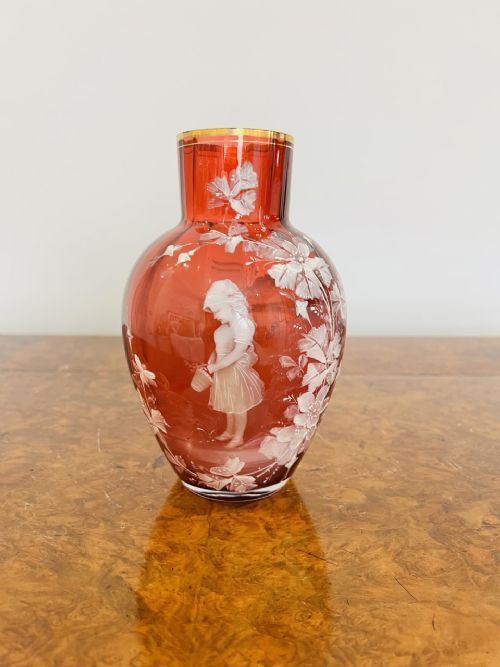
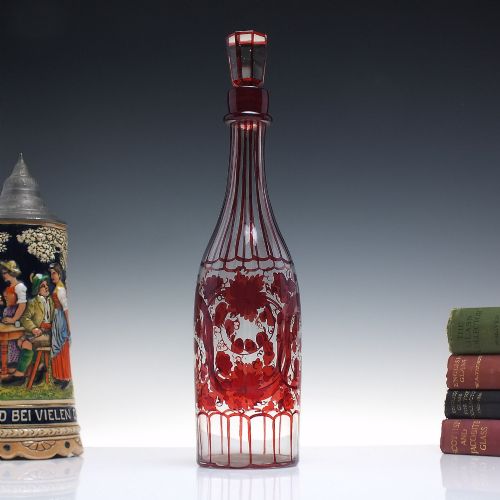
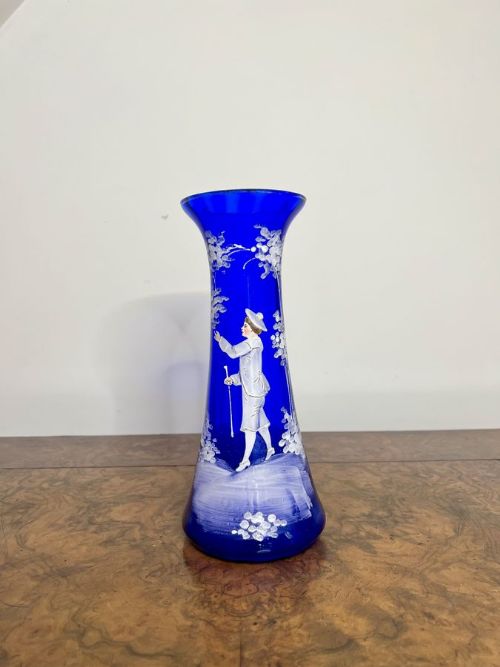
The items you meet most frequently on this page include Mary Gregory style pieces featuring white enamel silhouettes of children, alongside Bohemian green and ruby vessels decorated with gilding and enamel scenes. Forms extend from single decorative vases and pairs to complex epergnes and wine goblets.
Origins vary between British Victorian production and continental European workshops, particularly Bohemian makers who excelled in coloured glass and heavy gilding. The aesthetic spans traditional Victorian historicism through to later Art Nouveau influences and folk art interpretations.
Judging quality in the range
The distinction between standard and superior pieces rests on the precision and fineness of the hand painting, particularly in detailed portraits, armorials, or figurative subjects such as those by Lobmeyer or Fritz Heckert. Crisp enamel work and careful gilding elevate a piece above simpler, mass-produced decorative items.
The weight and clarity of the glass itself, whether cranberry, green, or opaline, together with the depth of colour and proportion of the vessel, determine the overall success of the object.
Materials recorded span cranberry, ruby, amber, green, clear, and opaline glass, enhanced with enamel and gold leaf.
Lobmeyer·Fritz Heckert·Moser
The Victorian Hand Painted Glassware Glossary
- Cranberry glass
- A rich red-pink transparent glass coloured with gold chloride. It appears frequently in Victorian jugs, vases, and epergnes.
- Opaline glass
- An opaque or translucent pale glass developed in France and popular during the nineteenth century. It often serves as a pastel background for enamel painting.
- Enamel
- A vitreous composition fused to the surface of the glass by heat. It provides the opaque colours used for painting motifs and figures.
- Epergne
- A large table centrepiece featuring a central bowl with attached arms and hanging baskets. They were used for holding fruit or flowers during Victorian dinners.
- Gilding
- The application of gold leaf or gold paint to the glass surface. It highlights rims, handles, and painted scenes.
Victorian Hand Painted Glassware: Frequently Asked Questions
What is Mary Gregory glass?
Mary Gregory glass refers to Victorian glassware decorated with white enamel silhouettes depicting children playing in woodland settings. The style became widely popular across various coloured glass bodies.
While named after an American artist, most pieces originate from Bohemian and British factories of the period rather than her personal studio.
How do I care for hand painted glass?
Hand painted glass requires gentle cleaning with lukewarm water and a soft cloth to protect delicate enamels and gilding. Avoid soaking or using harsh detergents.
Display the pieces away from direct sunlight to prevent fading of the coloured glass and painted pigments over time.
What is Bohemian glass?
Bohemian glass originates from the historic region of Bohemia, now part of the Czech Republic, known for centuries of master glassmaking. Makers there produced distinctive coloured vessels with heavy gilding and enamel work.
These items often feature deep ruby or green tones combined with intricate portraits or hunting scenes.
How can I tell the period?
Dating relies on stylistic clues such as the form of the vessel, the palette of the enamel, and specific design movements like Aesthetic Movement or Art Nouveau. Victorian pieces often combine historicism with vibrant coloured glass.
Maker attribution and registration marks, where present, help narrow the production era to the nineteenth or early twentieth century.