
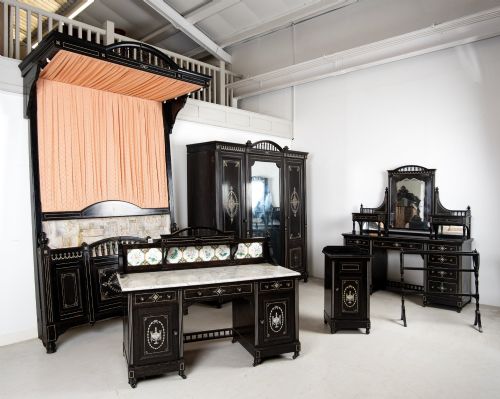


Victorian Half Tester Bed
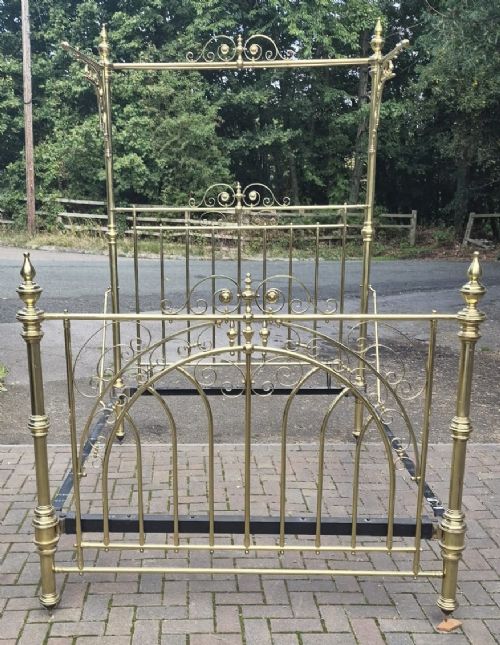
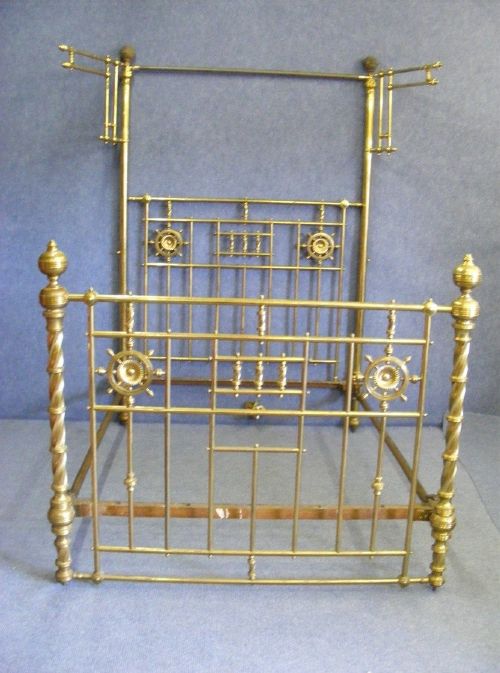
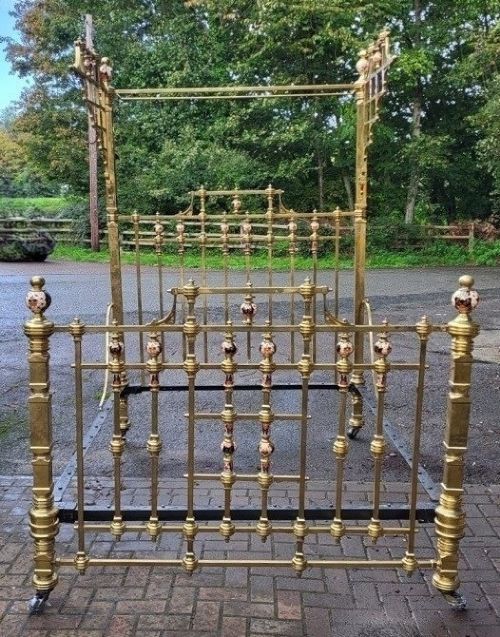
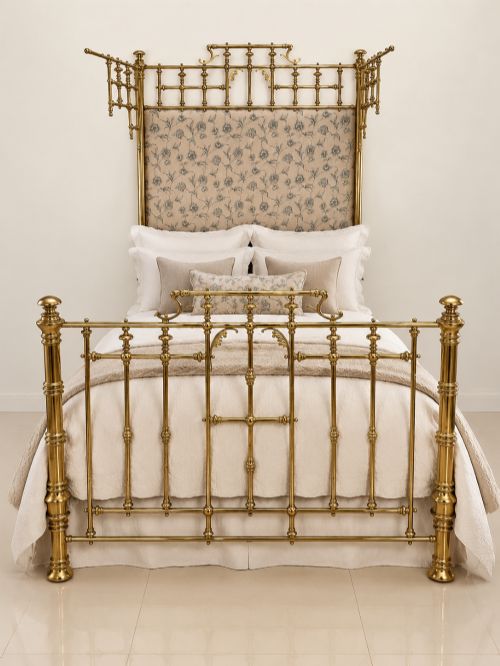
A victorian half tester bed brings monumental presence to a bedroom, offering the enclosed intimacy of a tester frame combined with an open foot.
Victorian Half Tester Bed
A victorian half tester bed is a substantial sleeping piece characterised by a canopy that projects only partway over the head of the mattress, supported by posts or attached directly to the wall. These pieces date principally from the mid to late nineteenth century, spanning various decades of the era.
The version most commonly met on this page is constructed from polished brass or cast and wrought iron, frequently scaled for king or double mattresses. Wooden iterations in mahogany, burr walnut, flame mahogany, and ebonised timber also appear regularly, sometimes forming part of larger bedroom suites.
Makers and retailers of the period, including notable firms, produced these bedsteads in styles ranging from plain utilitarian models to elaborate Gothic and Aesthetic Movement designs. They served as primary bedroom furniture for substantial homes, combining decorative textile canopies with sturdy metal or timber frames.
How they were made
Metal half tester beds rely on structural cast iron for strength in the frame and base, paired with gleaming brass tubing, spun brass fittings, and ceramic castors. Iron components provide rigid support while brass elements deliver decorative polish and visual warmth.
Wooden examples utilise dense timbers such as mahogany, satin birch, and pollard oak, often accented with hand-carved details, panelled bases, and ebonised or inlaid contrasting woods. Cabinetmakers joined structural carcases with mortise and tenon techniques, finishing surfaces with traditional hand-rubbed polishes.
Victorian Half Tester Bed Retail Price Guide 2026
Typical asking prices for victorian half tester bed among the pieces listed under this phrase on Sellingantiques today, from the lower quarter to the upper quarter. They describe what is for sale here now, not the wider market.
Listings feature both metal and timber frames, spanning solid brass, cast iron, mahogany, burr walnut, and ebonised wood across the nineteenth century.
What varies in quality
Quality in a metal half tester bed rests upon the weight of the brass tubing, the crispness of the cast iron junctions, and the integrity of the original joints and fixings. Substantial gauge brass and heavy cast components separate utilitarian sleeping frames from exhibition grade models produced for display.
In wooden pieces, the selection of timber figures, such as flame mahogany or burr walnut veneers, dictates visual hierarchy alongside the depth and precision of hand carving on the headboard and canopy cornice. Superior examples exhibit harmonious proportions and intact original show wood without later alterations.
RW Winfield·Heal and Sons·JAS Shoolbred
The Victorian Half Tester Bed Glossary
- Half tester
- A bed frame featuring a partial canopy extending over the upper portion of the mattress rather than the full length. This design allowed for luxurious drapery above the pillow while keeping the lower room feeling open.
- Bedstead
- The structural framework of a bed, including headboard, footboard, and side rails, constructed without the mattress or base springs. Nineteenth-century bedsteads often dismantle into separate components for transport.
- Ebonised wood
- Timber treated with a chemical stain or pigment to imitate heavy, dense ebony. This dark finish was popular during the Victorian period for accentuating inlay and creating dramatic contrast.
- Flame mahogany
- Mahogany timber cut at an angle to the branch junction to produce a characteristic flickering grain pattern. Cabinetmakers reserved this decorative veneer for prominent surfaces like headboard panels.
- Cast iron
- Iron alloy poured into a mould to create rigid structural shapes and decorative motifs. It formed the hidden backbone of many nineteenth-century metal beds.
Victorian Half Tester Bed: Frequently Asked Questions
How do I clean a brass bed?
Dust metal surfaces regularly with a soft, dry cloth to prevent the accumulation of airborne grime. Avoid harsh chemical polishes that can strip original lacquers or patina accumulated over the decades.
For stubborn tarnish, apply a gentle metal cleaner specifically formulated for vintage brass, working carefully around joints and decorative castings. Buff the metal gently with a clean microfibre cloth to restore its warm lustre without scratching the surface.
How do I hang the canopy?
The half tester canopy typically incorporates a metal or wooden framework designed to suspend fabric curtains above the head of the bed. Historic examples often feature small rings or fixing points along the underside of the projection.
Drape lightweight fabrics over the cornice or attach panels using traditional tape headings to recreate the intended enclosed silhouette. Secure any wall-mounted supports firmly into structural studs to bear the weight of the textiles.
How do I dismantle the frame?
Victorian metal and wooden bedsteads usually connect using tapered dovetail joints or heavy iron bolts concealed within the corner posts. Tap wooden joints gently with a rubber mallet or loosen rusted metal bolts with penetrating oil before attempting separation.
Keep all original wedges, bolts, and side rail fixings together during transport, as replacements matching nineteenth-century threading are difficult to source. Reassemble the bed on a level floor to ensure the side rails square up correctly with the headboard.