



19th Century Tester Bed
These 19th century tester bed examples bring monumental presence to a bedroom through grand proportions and architectural canopies.
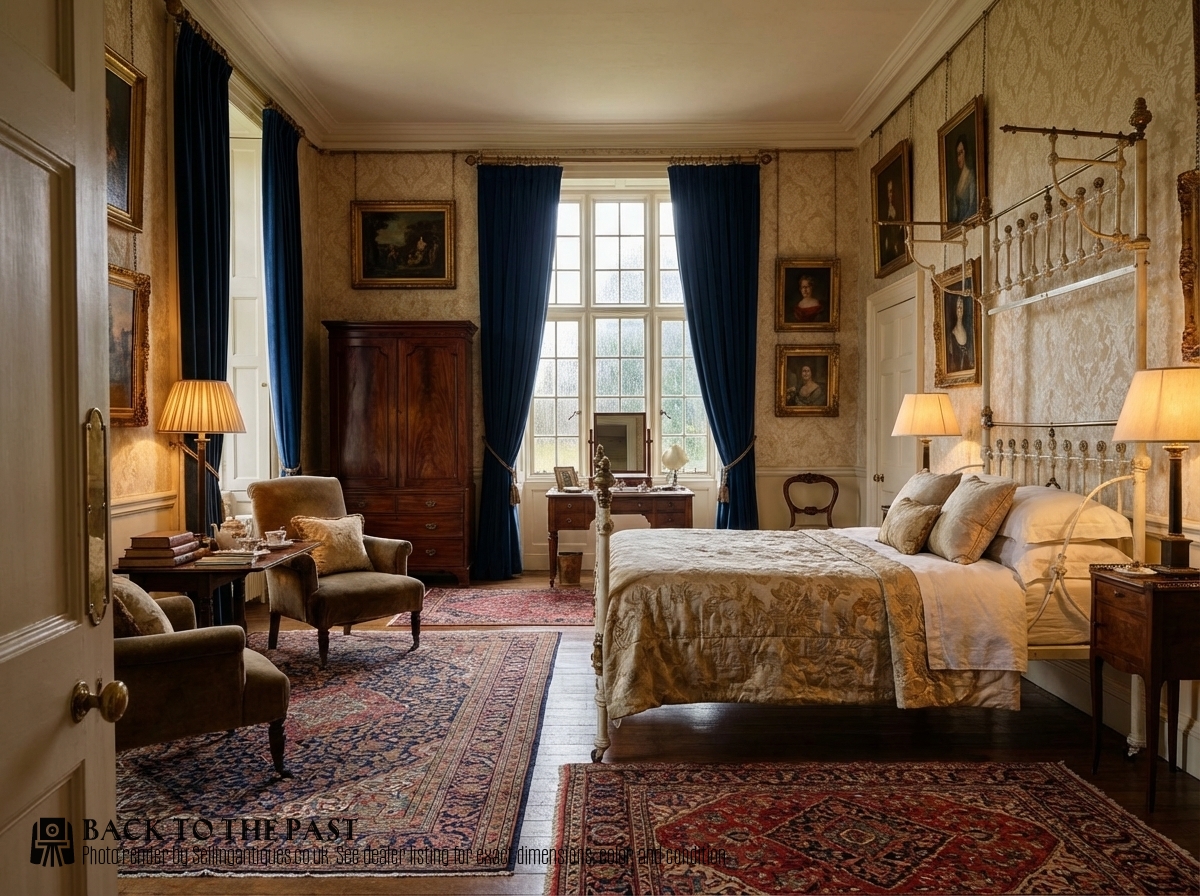
19th Century Tester Bed
A 19th century tester bed provides an enclosed sleeping area defined by an overhead canopy supported by vertical posts or wall mounts. Buyers seeking these grand sleeping quarters will find substantial frames designed to anchor large bedroom spaces with architectural authority.
The variations on this page include full four poster frames and half tester designs where the canopy extends only partway over the head of the mattress. Mahogany and brass dominate the offerings, frequently appearing alongside iron, oak, and ebonised wood.
How they were made
Makers utilised dense timbers like mahogany, oak, and burr walnut, often pairing them with structural metals including brass and cast iron. Woodwork involved intricate carving, turning, and ebonising, while decorative elements incorporated bone inlay or porcelain details.
Metal components relied on foundry casting and tubular brass construction to support the heavy fabric hangings and wooden canopies. Joinery and assembly systems were engineered to bear significant weight across extended spans while allowing dismantling for transport.
19th Century Tester Bed Retail Price Guide 2026
Typical asking prices for 19th century tester bed among the pieces listed under this phrase on Sellingantiques today, from the lower quarter to the upper quarter. They describe what is for sale here now, not the wider market.
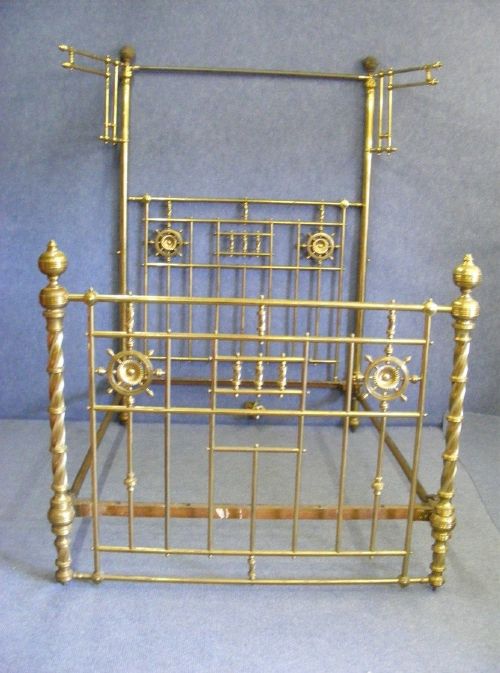
Several brass frames include integrated half testers designed to cure draughty Victorian bedrooms with metallic gleam.
What varies in quality
Quality rests in the architectural ambition of the tester and the crispness of the timber carving or metal castings. Superior examples display refined proportions and cohesive stylistic details across both the visible posts and the structural canopy.
Material selection divides the range, distinguishing between standard domestic timbers and heavily figured woods or substantial brass components. The integration of specialised decorative techniques, such as bone inlay or ebonised finishes, elevates particular pieces above standard production.
Heals of London
The 19th Century Tester Bed Glossary
- Tester
- The flat canopy or ceiling positioned above a bed frame. This overhead structure originally supported curtains to block drafts and retain warmth.
- Half Tester
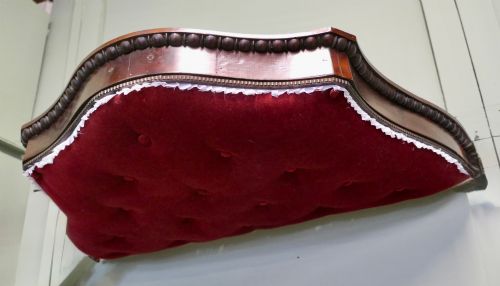
- A canopy that extends over only the head portion of the bed rather than the entire length. This form projects from the wall or is supported by two posts at the head.
- Four Poster Bed
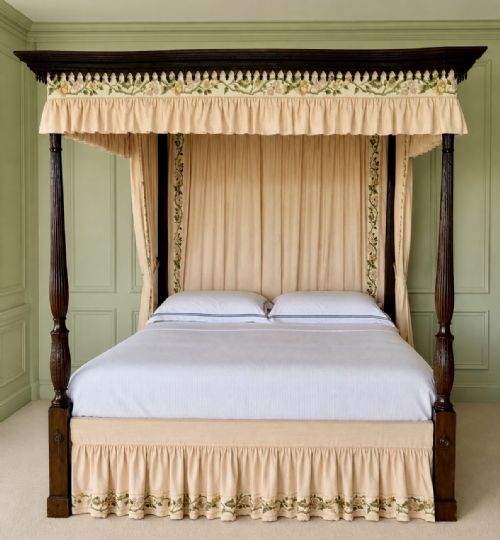
- A bed featuring four vertical columns at each corner that support an upper tester frame. These columns are frequently turned, carved, or reeded.
- Ebonised Wood
- Timber treated with chemical finishes or stains to resemble ebony. This dark surface treatment gained popularity during the Victorian aesthetic movement.
- Anglo-Indian Colonial
- Furniture made in the Indian subcontinent using local hardwoods constructed to British domestic tastes. These pieces combine traditional cabinetmaking with regional decorative carving.
19th Century Tester Bed: Frequently Asked Questions
How do I fit a modern mattress?
Many historical frames feature dimensions that differ slightly from modern standard sizes. Adapting the internal wooden slats or utilising custom-made mattresses ensures a correct fit without altering the antique side rails.
Professional consultation during delivery helps determine whether modification to the supporting frame is necessary for everyday use.
Are tester beds difficult to assemble?
These large structures require methodical assembly due to their weight and interlocking timber or metal joints. Most frames dismantle into manageable components including headboards, footboards, side rails, and the upper canopy.
Enlisting specialist installers familiar with period furniture prevents structural damage to delicate cornices and turned posts during setup.
How were half tester beds used?
Half tester designs focused the canopy strictly over the pillow area where curtains provided privacy and blocked cold drafts. This configuration offered the visual grandeur of a full tester while requiring less floor space and lighter framing.
Bedrooms utilised these frames to balance comfort with the prevailing architectural scale of nineteenth-century domestic interiors.
How do I distinguish Regency from Victorian?
Regency frames typically exhibit classical restraint inspired by ancient Greek and Roman forms, featuring clean lines and restrained brass mounts. Victorian examples tend toward heavier proportions, exuberant carving, and diverse stylistic revivals including Gothic and French influences.
Examining the turning on the posts and the treatment of the cornice clarifies the distinct design priorities of each era.