

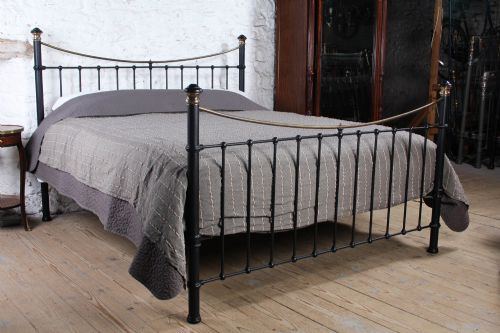


Black and Brass Bedstead
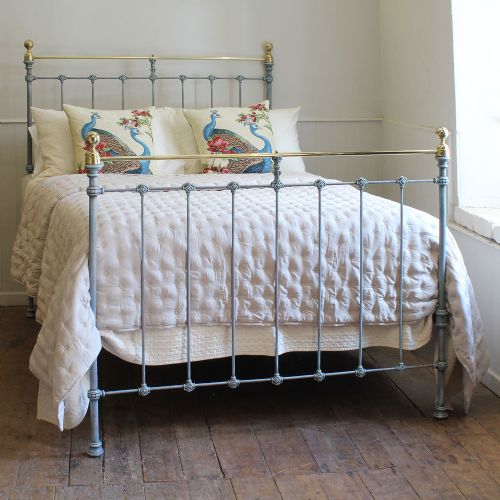
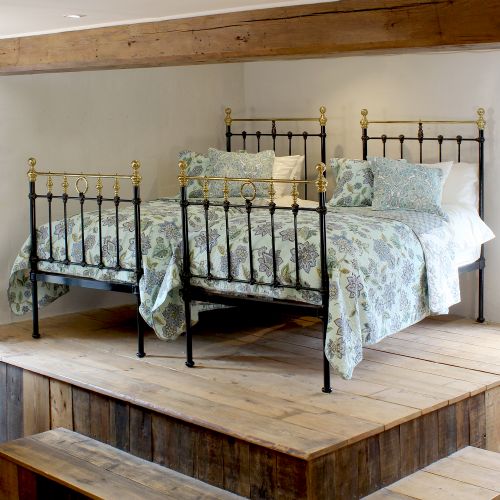
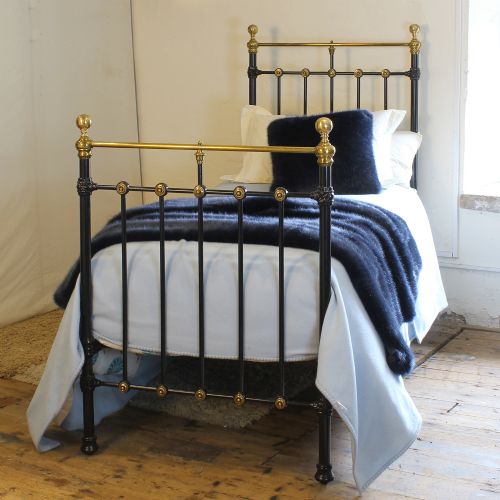
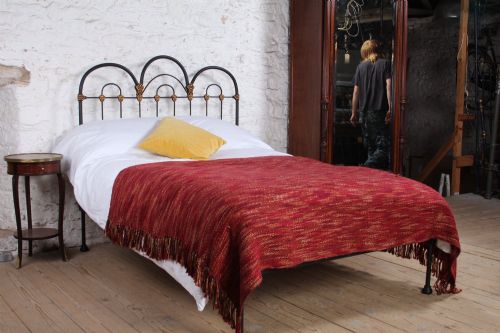
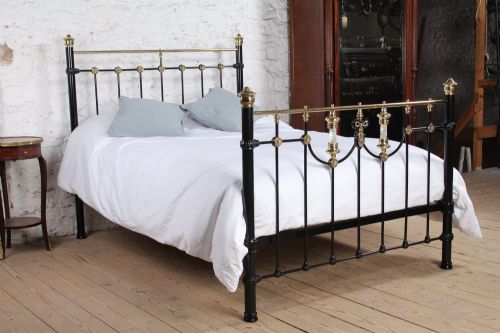
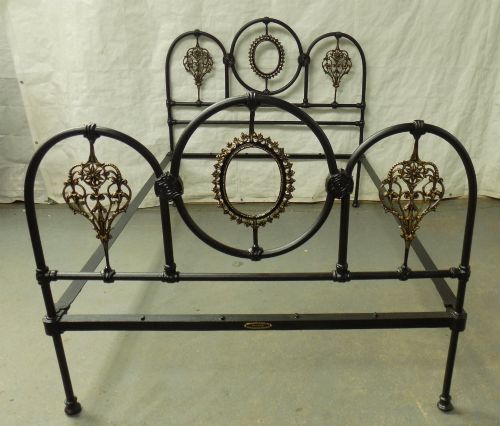
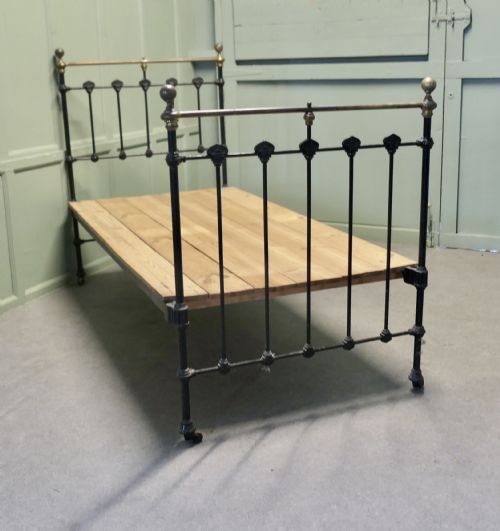
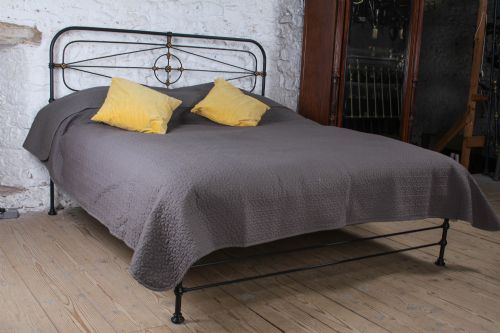
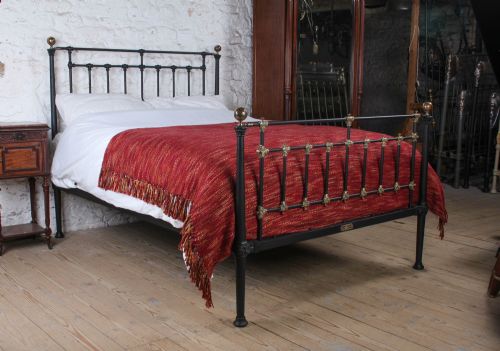
A black and brass bedstead provides sturdy metal framing combined with bright metallic mounts, offering a central sleeping focal point for period bedrooms.
Black and Brass Bedstead
A black and brass bedstead brings together dark iron frames and polished brass components, spanning formats from single sizes up to super king dimensions. The examples seen on this page predominantly date from the nineteenth century through to the early twentieth century, encompassing Victorian and Edwardian periods.
Buyers encounter various structural configurations including standard double beds, king size frames, and French style designs featuring low or absent end rails. Materials recorded across these listings combine iron, cast iron, and wrought iron with brass details, occasionally incorporating wood, enamel, or mother of pearl inlay.
Materials and Construction
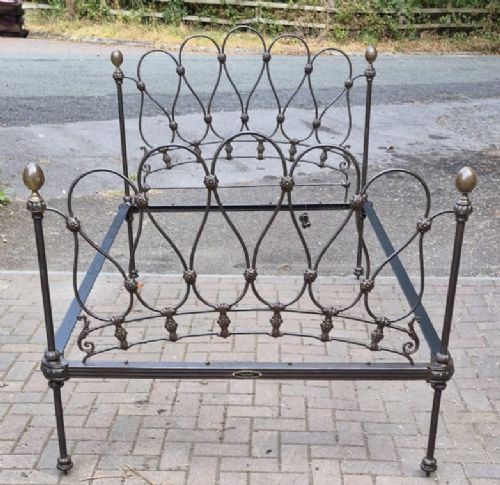
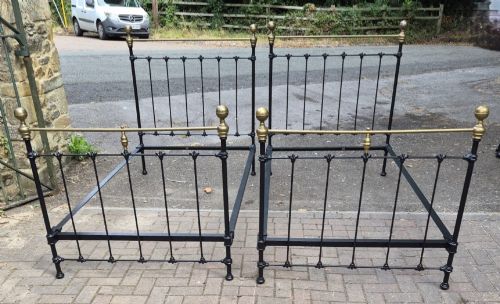
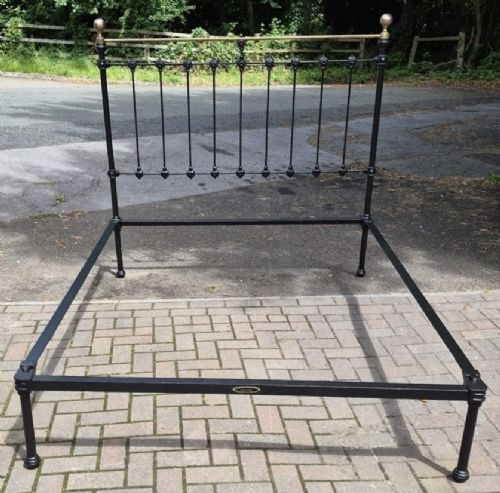
Construction relies heavily on durable iron frameworks finished in black, paired with bright brass elements such as finials, spindles, and rails. Workshops utilised casting and hand forging techniques to shape the metal components.
Surface finishes include japanned lacquer and enamel coatings applied to the iron to protect the metal and provide a uniform dark appearance, while brass portions received polishing to contrast against the dark frames.
Black and Brass Bedstead Retail Price Guide 2026
Typical asking prices for black and brass bedstead among the pieces listed under this phrase on Sellingantiques today, from the lower quarter to the upper quarter. They describe what is for sale here now, not the wider market.
Listings span the Victorian and Edwardian eras, combining cast iron, wrought iron, and brass.
Quality Variations
The standard of a black and brass bedstead depends on the weight and integrity of the iron casting, along with the thickness and casting detail of the brass mounts. Better examples exhibit crisp detailing on finials and spindles without surface distortion.
Originality of surface finishes, such as japanned lacquer or enamel, influences the character of the piece. Well preserved original components and maker marks indicate higher grade production standards from period workshops.
Winfield·Maple & Co.
The Black and Brass Bedstead Glossary
- Bedstead
- A framework of a bed upon which the mattress is supported. This term covers the complete structural assembly of headboard, footboard, and side rails.
- Japanned
- A style of European finishing that mimics Asian lacquerware. It involves applying dark resin layers to iron surfaces to produce a glossy black coating.
- Dip Rail
- A horizontal top rail on a headboard or footboard that curves downward toward the centre. This configuration appears frequently on Edwardian designs.
- Finial
- A decorative ornament fixed to the top of bed posts. They are typically cast in brass to provide a contrasting focal point.
- Half Tester
- A bed featuring a short tester canopy projecting from the headboard. This form combines metal framing with partial overhead drapery support.
Black and Brass Bedstead: Frequently Asked Questions
How do I clean a brass bedstead?
Maintenance requires soft cloths and mild soapy water to remove dust from both the iron and brass components.
Harsh chemical abrasives should be avoided on lacquered or finished surfaces to preserve the original metal coatings.
Will modern mattresses fit antique bed frames?
Many period frames vary slightly from contemporary standard sizing due to nineteenth and twentieth-century manufacturing dimensions.
Checking the specific internal width and length dimensions listed for each frame ensures compatibility with modern mattress sizes.
Are these beds easy to assemble?
Most antique metal bed frames utilise standard side rail wedges or bolts that slot directly into the headboard and footboard sockets.
Assembly typically requires basic hand tools to secure the side rails firmly to the main vertical posts.
How do I date a black and brass bedstead?
Dating relies on examining stylistic indicators such as dip rails, tapered posts, or the presence of specific decorative elements like mother of pearl.
Reference to Victorian and Edwardian manufacturing periods helps establish the chronological timeframe of the piece.