
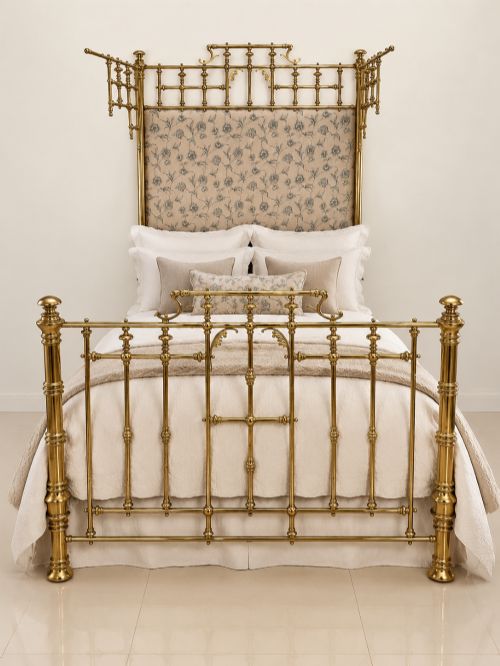


Victorian Canopy Bed Frame
A victorian canopy bed frame brings grand architectural presence to a bedroom through soaring posts and draped testers.
Victorian Canopy Bed Frame
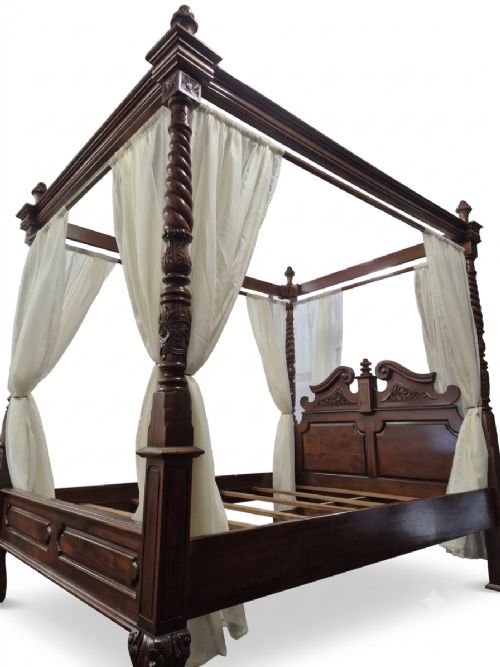
A victorian canopy bed frame encompasses both full four-poster designs and half tester configurations where the canopy extends only partway over the head of the bed. These pieces emerge from the nineteenth century in various scales, spanning single, double, and king sizes suited to modern rooms.
The aesthetic expressions on this page lean heavily into Victorian Gothic, William IV, and Anglo-Indian Colonial styles. Buyers encounter substantial timber builds alongside gleaming metal structures.
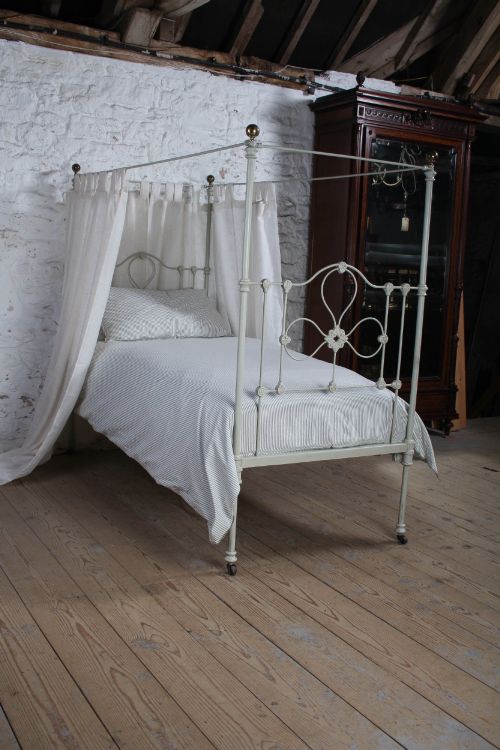
Makers utilised resilient materials such as mahogany, oak, brass, iron, and cast iron to construct these large frames. The resulting forms range from imposing solid wood constructions to lighter, luminous brass and iron combinations.
Materials and Construction
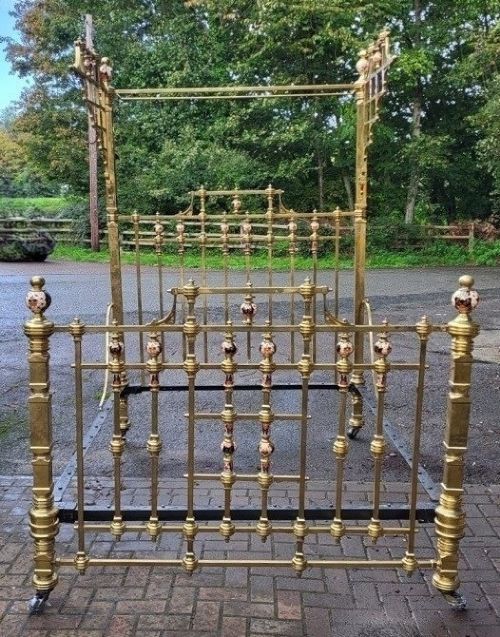
Cabinetmakers fashioned wooden frames from dense hardwoods like mahogany and oak, frequently employing hand carving to decorate the posts and headboards. Some examples incorporate porcelain components alongside timber.
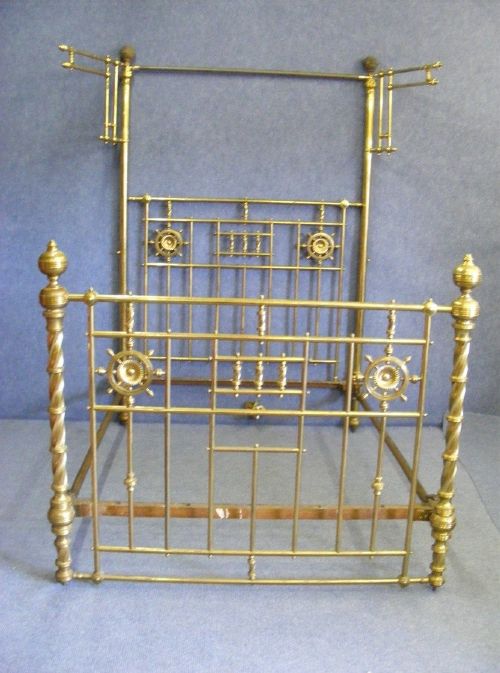
Metal frames rely on brass, cast iron, and wrought iron, often combining polished brass tubing with durable iron structures for stability. Half tester designs integrate metal frameworks that project from the wall or headboard to support drapery fabrics.
One brass four poster bears a provenance linked directly to the Prince of the Ottoman Empire during the early nineteenth century.
Judging Quality
Quality rests upon the crispness of hand-carved details in wooden frames and the structural integrity of metal joining. Exhibition quality pieces demonstrate superior finishing, heavier gauge metalwork, and intricate ornamentation.
Proportion and scale distinguish standard production from exceptional commissions. The refinement of turned or carved posts and the integration of specialised elements such as porcelain mounts elevate certain pieces above others.
Howard and Sons·RW Winfield
The Victorian Canopy Bed Frame Glossary
- Half tester
- A bed canopy that extends only partway over the head of the bed rather than covering its entire length. This configuration suspends fabric above the pillow area while leaving the foot of the bed open.
- Four poster bed
- A bed featuring four vertical columns that support an upper horizontal panel or tester. These posts often display decorative turning or carving.
- Tester
- The wooden or metal canopy frame suspended above a bed to hold curtains or drapery. It creates a defined enclosure for warmth and privacy.
- Anglo-Indian Colonial
- A style reflecting British furniture forms manufactured in India using native tropical hardwoods. These pieces frequently combine traditional British silhouettes with deep, intricate carving.
Victorian Canopy Bed Frame: Frequently Asked Questions
How do I fit a modern mattress?
Many historic frames were built to nineteenth-century dimensions rather than standard modern mattress sizes. Custom mattress ordering or subtle internal frame adjustments are often necessary to achieve a proper fit.
Working with a specialist upholsterer ensures the support slats and base height accommodate contemporary mattress depths without compromising the proportions of the tester.
Are these beds difficult to assemble?
These large structures rely on substantial bolts, joints, and heavy timbers or metal components. Professional installation is normally recommended to ensure structural safety and correct alignment.
Careful handling protects delicate brass finishes and hand-carved wooden posts during the erection process.
How do I clean polished brass?
Polished brass requires gentle dusting and occasional cleaning with a non-abrasive metal cleaner suited for antiques. Avoid harsh chemical agents that strip protective lacquers or vintage patinas.
Regular soft cloth wiping prevents dust accumulation in the detailed junctions and decorative castings of metal frames.
What is an Anglo-Indian frame?
An Anglo-Indian frame represents nineteenth-century furniture production where British forms met local craftsmanship in the subcontinent. These pieces use dense tropical hardwoods and feature deep, distinctive carving.
They bring a colonial aesthetic distinct from standard domestic British Victorian output.