



Victorian Green Goblets
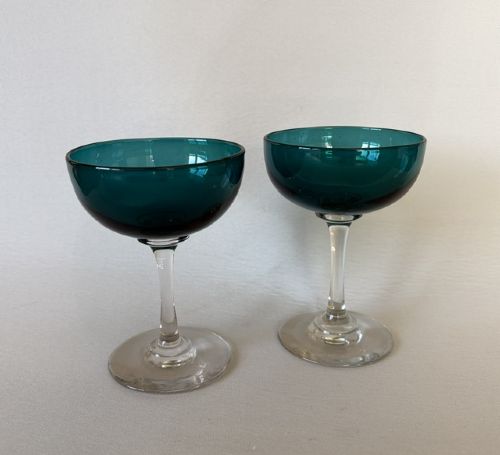
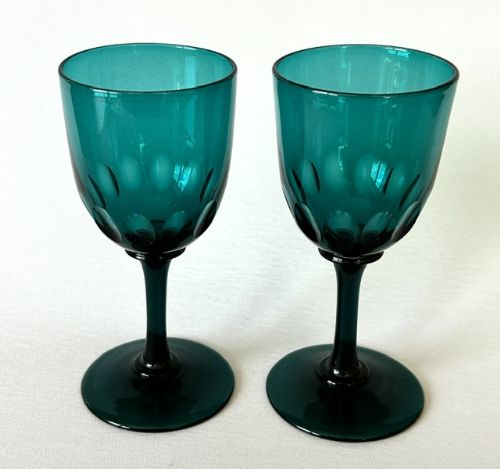
These Victorian green goblets bring rich colour and weight to the table, combining heavy lead glass with deep botanical shades.
Victorian Green Goblets
Victorian green goblets encompass wine glasses, roemers, and liquor glasses shaped by nineteenth-century glassmakers across various European centres. When searching for victorian green goblets, you encounter drinking vessels ranging from early Victorian pairs to larger enamelled presentation pieces.
Materials and methods
Makers utilised lead glass and coloured glass, often forming vessels through traditional blown glass techniques. Artisans also applied polychrome enamel and vitreous enamel decorations, as seen in armorial Lobmeyer goblets.
Cut glass methods created facets on Biedermeier examples, catching the light across heavy walls. Free-blowing and mould-blowing shaped the tulip bowls and roemers found across the nineteenth century.
Victorian Green Goblets Retail Price Guide 2026
Typical asking prices for victorian green goblets among the pieces listed under this phrase on Sellingantiques today, from the lower quarter to the upper quarter. They describe what is for sale here now, not the wider market.
The material evidence spans plain blown lead glass alongside specialised coloured glass, including distinct shades of aqua, emerald, and uranium green.
Judging quality
Quality rests upon the depth of the green colouration and the clarity of the lead glass. Hand-blown pieces with uniform thickness demonstrate superior workshop practice compared to heavier, uneven vessels.
Intricacy of surface ornament elevates certain goblets, particularly where enamelling or cutting is executed with precision. Sets displaying matching hues across multiple glasses command greater attention than assembled groups.
Lobmeyer
The Victorian Green Goblets Glossary
- Roemer
- A traditional Germanic drinking vessel featuring a large bowl set upon a ribbed or studded stem. These glasses often appear in shades of green within nineteenth-century collections.
- Uranium glass
- A type of glass containing trace amounts of uranium dioxide, which glows brightly under ultraviolet light. This material frequently yields a vivid yellow-green hue in Victorian tableware.
- Lead glass
- Heavy glass containing metallic oxides that increase brilliance and weight. It provides the substantial feel expected in nineteenth-century dining goblets.
- Vitreous enamel
- Glassy powder fused to the surface of a vessel through high-temperature firing. Makers utilised this technique to add permanent coloured armorial designs.
- Biedermeier
- A Central European design style spanning the mid-nineteenth century, characterised by clean lines and functional elegance. Pieces from this tradition often feature precise cut glass decoration.
Victorian Green Goblets: Frequently Asked Questions
Are these goblets safe for daily use?
These nineteenth-century drinking vessels are generally fragile due to their age and material composition. Hand washing in lukewarm water preserves the delicate glass and any applied enamel work.
Using them for special occasions rather than daily dining protects the antique lead glass and historic surfaces from accidental knocks.
What is the difference between roemers and standard wine glasses?
Roemers feature a distinctive large spherical bowl supported by a cylindrical stem decorated with prunts or ribs. Standard wine glasses follow more traditional tulip or straight-sided profiles.
Both forms utilise the characteristic green glass found throughout nineteenth-century European table settings.
How do I identify uranium glass?
Uranium glass displays a distinct yellowish-green tint under normal daylight and emits a bright neon green glow when exposed to ultraviolet light. This chemical reaction results from the oxide added during manufacturing.
Many Victorian drinking glasses incorporate this material for its striking optical properties.
Can I date these glasses by their colour?
Shades of green shifted across the nineteenth century, moving from deep emerald tones in earlier decades to paler aqua and vaseline hues by eighteen eighty. Enamelled armorial pieces typically appear toward the later Victorian period.
Colour offers a helpful guide when combined with an examination of the forming technique and vessel shape.