

Victorian Gothic Stand
When you search for a victorian gothic stand, you are entering a world of robust oak, ecclesiastical brass, and heavy cast iron designed to anchor a grand hallway or church interior.
Victorian Gothic Stand
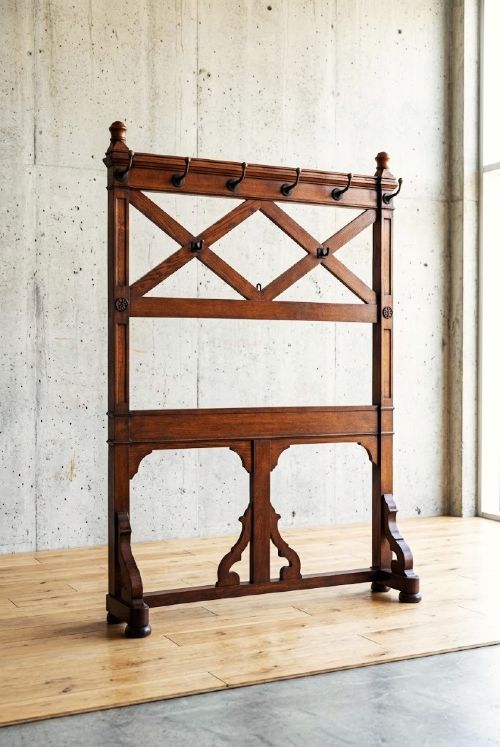
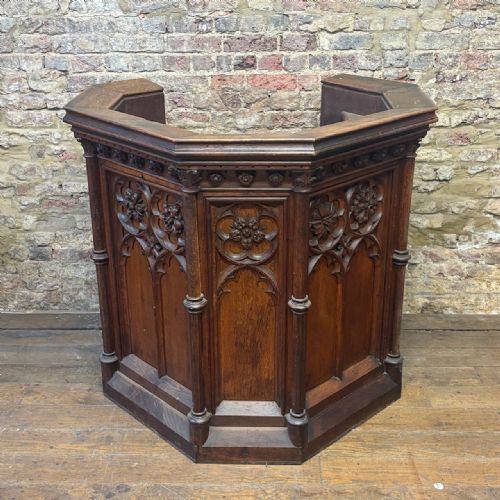
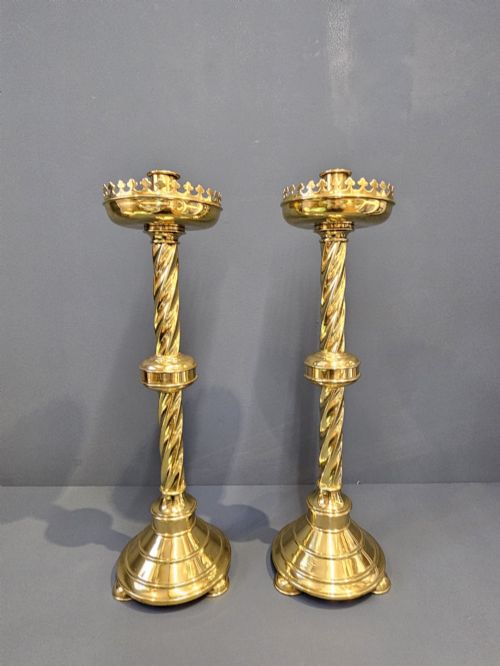
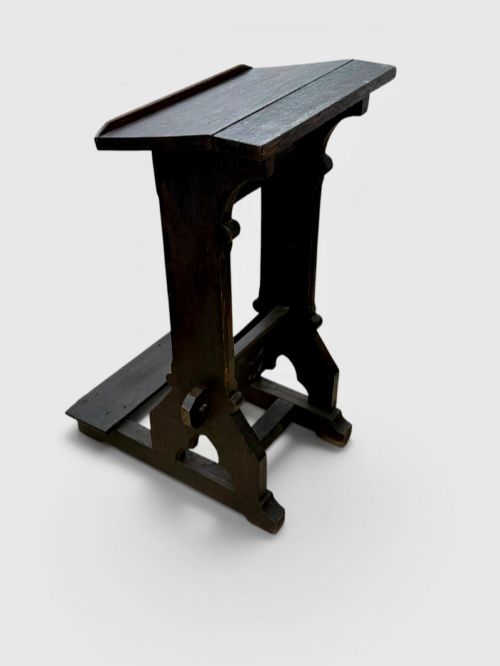
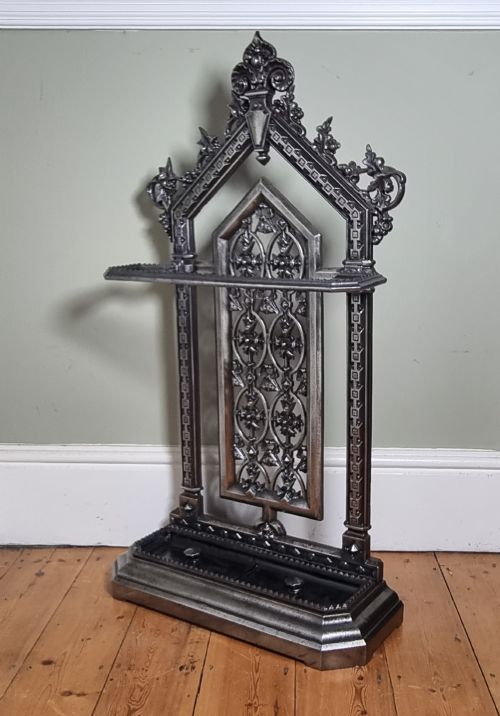
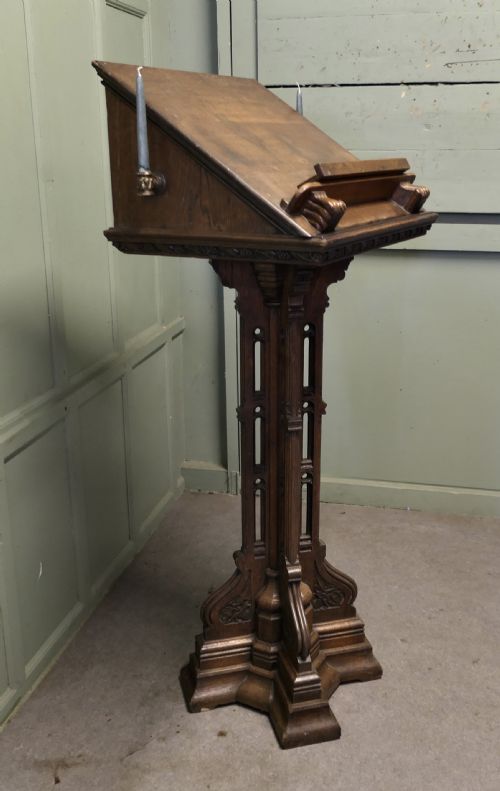
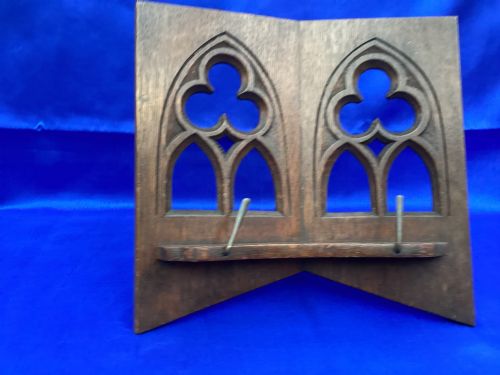
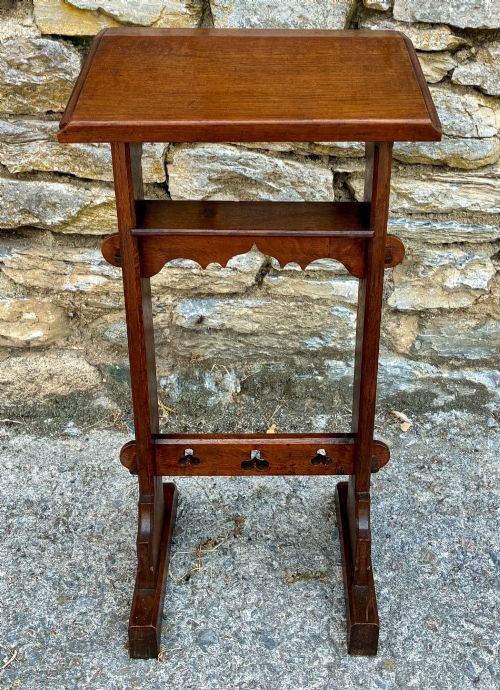
A victorian gothic stand encompasses a broad variety of functional furnishings, ranging from imposing hall stands and umbrella holders carved from solid oak to heavy cast iron stick stands and ecclesiastical brass reading lecterns. The evidence shows that these pieces frequently borrow architectural motifs from the Gothic Revival and Aesthetic Movement, manifesting as trefoils, pointed arches, and occasionally dramatic Green Man carvings.
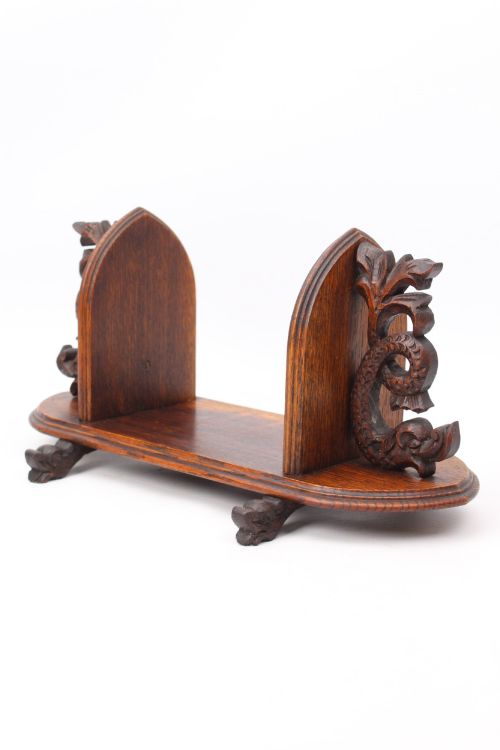
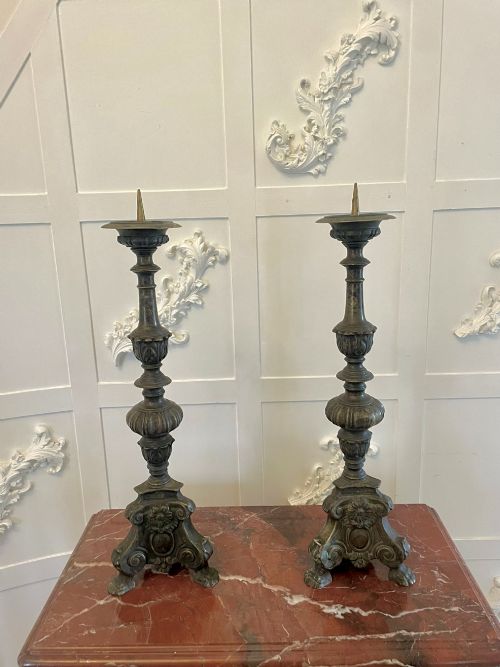
The most common forms you will encounter on this page are large oak hall stands featuring integrated mirrors and coat hooks, alongside sturdy metal umbrella and stick stands intended for nineteenth-century entrance halls. Alongside these heavy wooden items appear smaller table-top book stands, reading podiums, and ecclesiastical candlesticks originating from the latter half of the nineteenth century into the early twentieth century.
Makers and designers of the period adapted medieval ecclesiastical styles for domestic use, producing items that balance utilitarian purpose with severe architectural presence. Whether you examine a tall church pulpit, an occasional table, or a dedicated umbrella stand, the unifying characteristic remains the heavy reliance on gothic ornamentation.
Materials and construction
The pieces on this page rely heavily on solid timber and durable metals, with oak appearing frequently alongside walnut, coromandel, and pine in the wooden furniture. Carpenters utilised deep chip-carving and relief work to create intricate tracery and foliate masks on hall stands and reading desks.
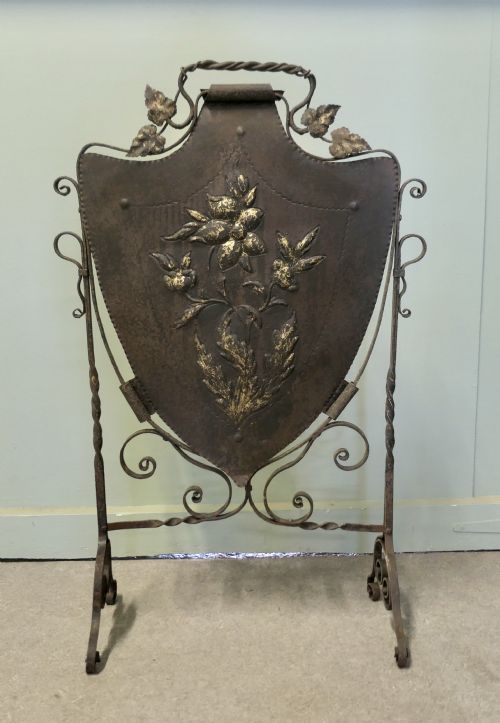
Metal components utilise cast iron, wrought iron, and heavy brass, often shaped into structural frameworks for stick stands, fire screens, and pricket candlesticks. Foundries and workshops employed sophisticated casting and articulation techniques to produce robust umbrella holders and adjustable brass candelabra.
Stare too long into a hallway oak mirror and the carved foliage starts whispering about your hat collection.
Separating the ordinary from the exceptional
Quality in a victorian gothic stand rests primarily on the depth and crispness of the carving, particularly on large oak hall pieces where hand-chiselled Green Man motifs or tracery distinguish bespoke cabinet work from mass-produced factory output. Metalwork quality shows in the weight and clean definition of cast iron umbrella stands and the structural articulation of heavy brass candlesticks.
The integrity of the timber and the retention of original fittings, such as drip pans in stick stands and operable hardware on writing surfaces, separate standard utility items from exceptional examples. Pieces bearing stamps or attribution to known designers demonstrate superior metal-founding and cabinet-making standards.
Liberty & Co.·Thomas Jeckyll·Coalbrookdale·Osborne Garrett & Co·Wm. Tonks & Sons·William Whiteley
The Victorian Gothic Stand Glossary
- Gothic Revival
- An architectural and decorative style popular during the nineteenth century that imitates medieval gothic forms such as pointed arches, trefoils, and heavy tracery. This aesthetic defined much of the ecclesiastical and domestic furniture of the period.
- Pricket Candlestick
- A heavy altar candle holder featuring a sharp metal spike upon which a large candle is impaled. These are frequently cast in brass or bronze for church settings.
- Green Man
- A sculptural architectural ornament depicting a human face surrounded by or entwined with foliage and vines. It symbolises rebirth and appears commonly on carved oak hall stands.
- Lectern
- A slanted reading desk or podium designed to support books or notes for a speaker. They often appear in carved oak or articulated brass.
- Trefoil
- A graphic ornamentation consisting of three overlapping rings or pointed lobes resembling a clover leaf. It is a signature geometric motif of gothic design.
Victorian Gothic Stand: Frequently Asked Questions
What is a Green Man hall stand?
A Green Man hall stand is a large entranceway furniture piece carved with a distinct foliate mask face representing rebirth. These heavy oak structures typically incorporate mirrors, coat hooks, and umbrella storage.
They reflect the Victorian fascination with medieval mythology and dark wood architecture.
How do I identify Gothic Revival ironwork?
Gothic Revival ironwork is typically heavy, featuring structural casting that mimics stonework, quatrefoils, or pointed arches. Look for maker stamps and substantial weight in umbrella stands and fire screens.
Foundries used these robust techniques to ensure everyday durability in bustling Victorian hallways.
Where were church candlesticks used?
Church candlesticks, including large brass pricket stands, were designed for altars and chancels to hold heavy wax candles during services. Their sturdy construction allowed them to support tall, thick tapers securely.
Today, collectors often repurpose these monumental brass pieces as floor-standing decorative lighting.
What is the difference between a lectern and a podium?
A lectern is specifically designed with a slanted top to hold books or reading material for a speaker, often seen in ecclesiastical or academic settings. A podium generally refers to a raised platform or a flat-topped stand.
Victorian examples frequently feature adjustable brass reading rests or carved oak panels.