
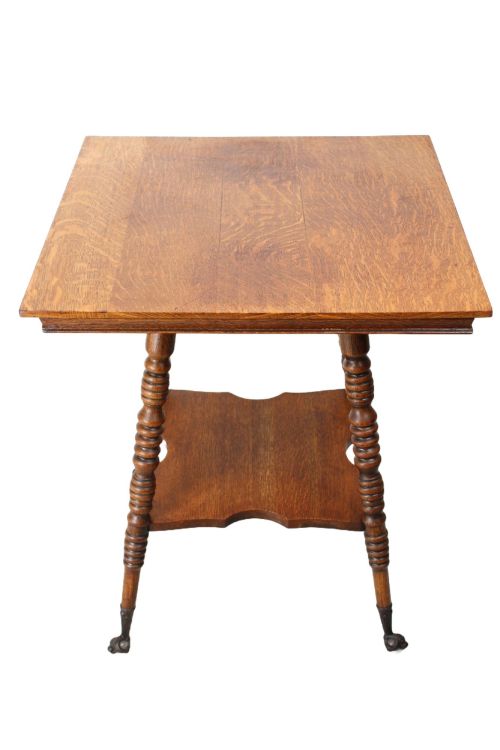
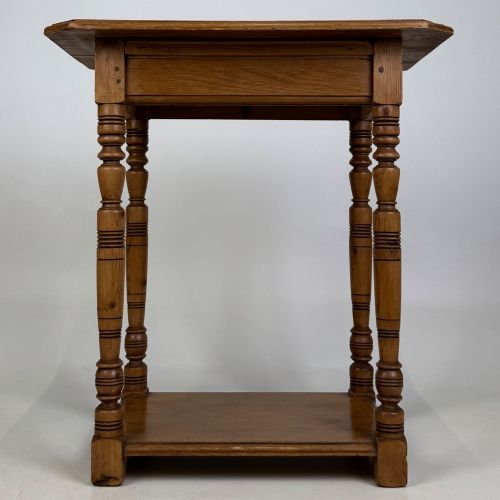
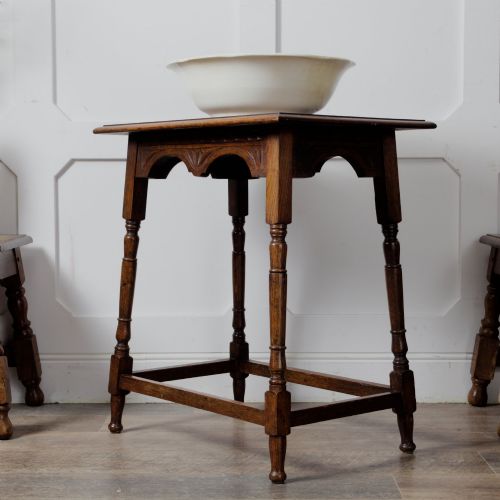
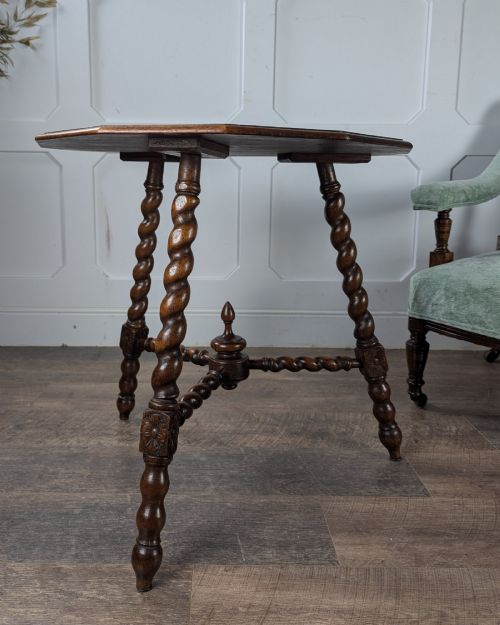


Victorian Oak Plant Table
These robust victorian oak plant table pieces bring sturdy timber charm and practical display space to any corner.
Victorian Oak Plant Table
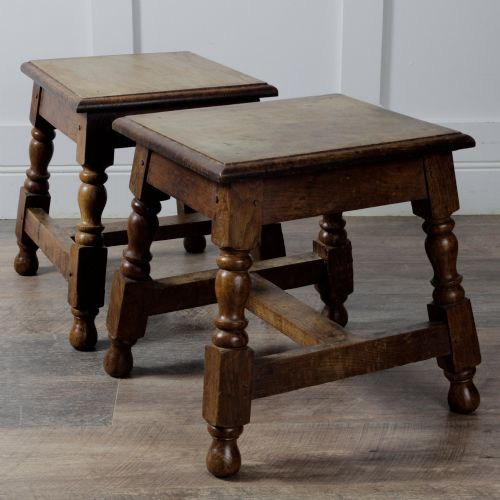
A victorian oak plant table provides a compact surface designed originally for ferns, flower pots, and decorative jardinières. These useful items appear across the nineteenth century and into the early twentieth century, spanning standard Victorian production alongside Arts and Crafts and Gothic Revival outputs.
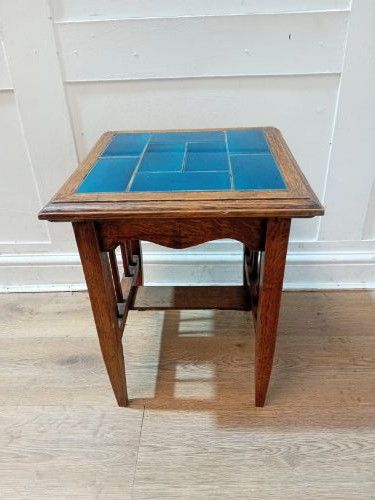
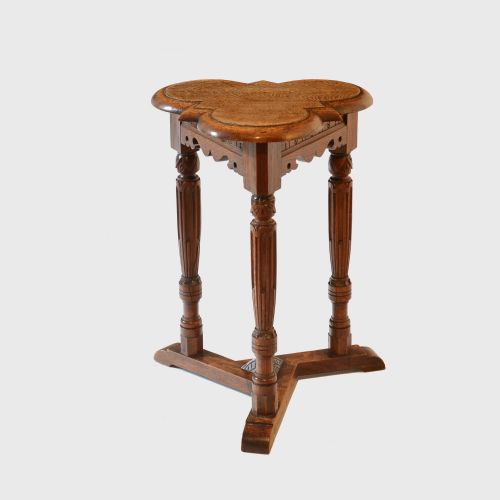
Most examples function as small side tables, occasional tables, or plant stands constructed from native timber. Common formats include tripod bases, clover leaf tops, and ceramic tile inserts suited to damp plant pots.
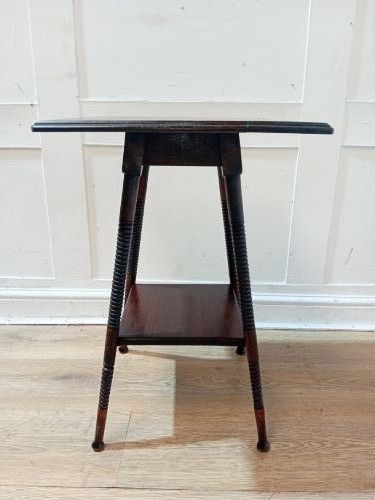
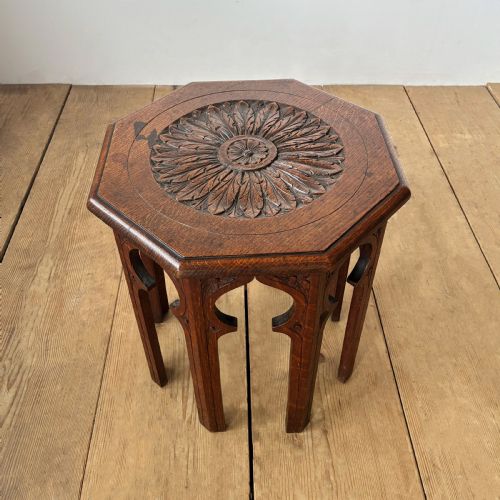
Makers often drew inspiration from diverse design movements, producing pieces with barley twist legs, bobbin turnings, or Moorish detailing. Buyers frequently select these versatile surfaces for displaying ornaments or holding lamps in narrow spaces.
What varies in quality
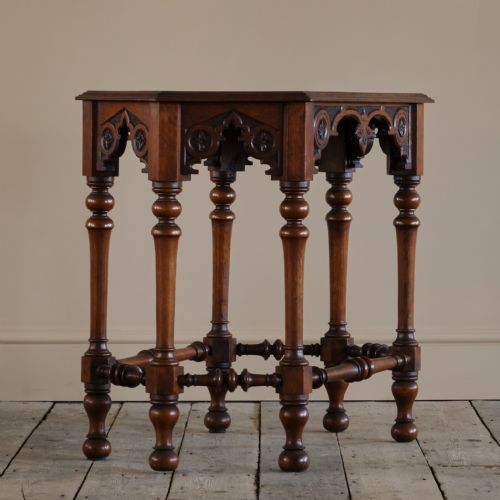
Quality rests upon the selection of timber and the crispness of the carving work across the legs and top. Plain, utilitarian stands sit at one end of the scale, while heavily carved Gothic Revival or Arts and Crafts pieces represent more ambitious craftsmanship.
The integrity of the joints and the choice of supplementary materials dictate the overall merit of an example. Fine pieces display well-turned barley twist legs, secure jointing, and decorative elements like intact ceramic tiles or shaped clover leaf tops.
Design influences span 19th Century Country, Gothic Revival, Arts and Crafts, Moorish Revival, and Edwardian styles.
Liberty of London·William Birch
The Victorian Oak Plant Table Glossary
- Barley twist
- A carved wooden support resembling a spiral rope. This turning style appears frequently on nineteenth-century table legs and uprights.
- Trefoil
- A three-lobed decorative shape resembling clover leaves. Makers often shaped small table tops into this distinctive geometric form.
- Ebonised wood
- Timber treated with a dark stain or finish to imitate ebony. This technique highlights carved details through strong contrast.
- Jardinière
- An ornamental pot or stand designed to hold indoor plants. These vessels sit atop the small occasional tables found in period homes.
Victorian Oak Plant Table: Frequently Asked Questions
What were plant tables originally used for?
These compact tables held heavy Victorian potted plants, ferns, and decorative jardinières in nineteenth-century parlours.
The raised surfaces kept damp pots off carpets while displaying greenery near windows.
How do I identify a Victorian oak plant table?
Look for heavy solid oak construction, turned wooden legs, and compact top surfaces designed for single pots.
Period indicators include characteristic nineteenth-century styles such as Gothic Revival, Arts and Crafts, or barley twist supports.
Where should I place a plant table today?
These small stands fit neatly into unused room corners, hallways, or beside armchairs as occasional surfaces.
They continue to function well for holding houseplants, table lamps, or small decorative ornaments.
Why do some tables have tile tops?
Ceramic tile inserts provided a durable, waterproof surface that resisted water damage from overflowing plant pots.
This practical feature was especially popular during the Arts and Crafts period.