
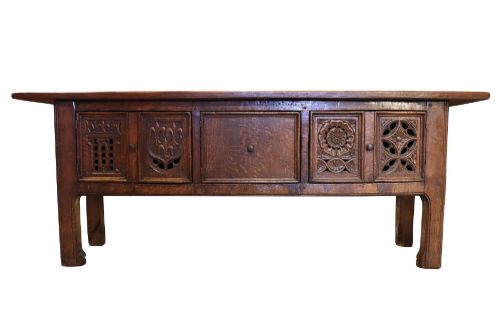
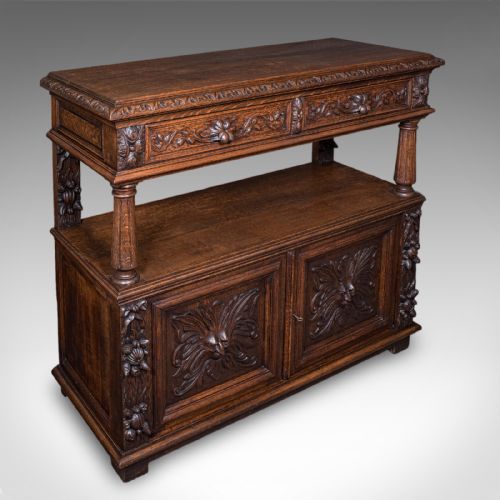
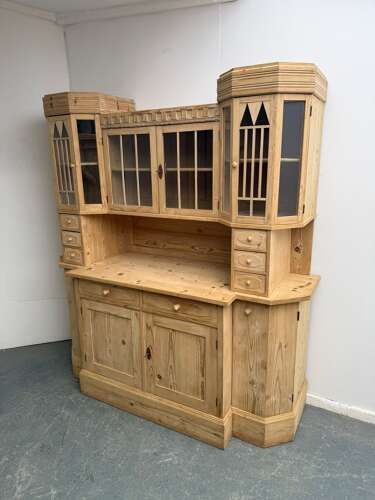
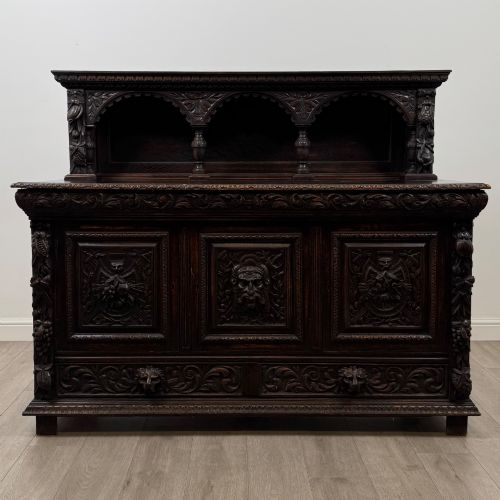

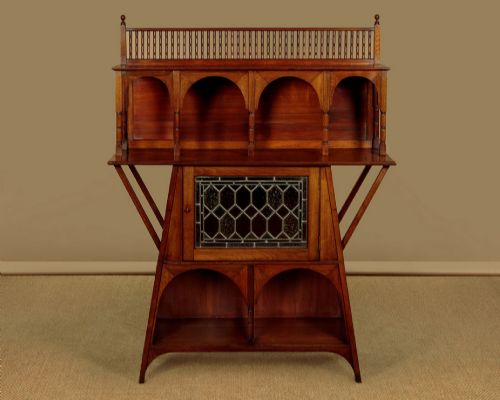
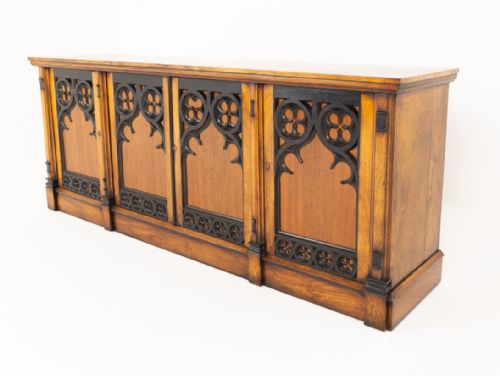

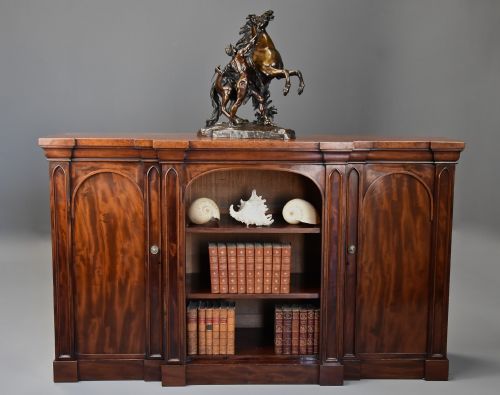
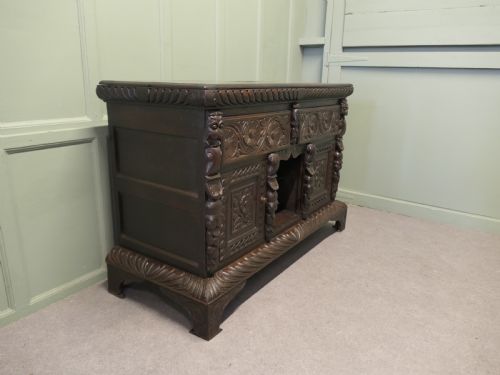
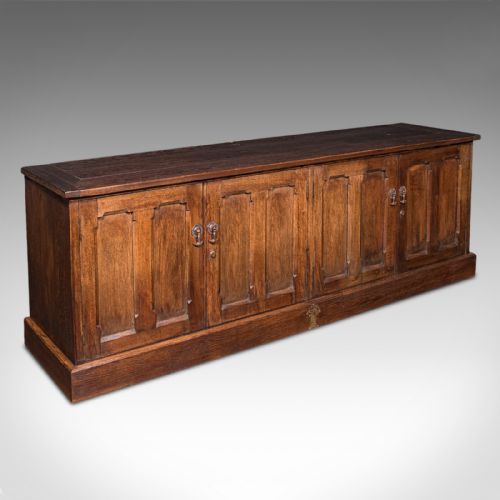

Victorian Gothic Sideboard
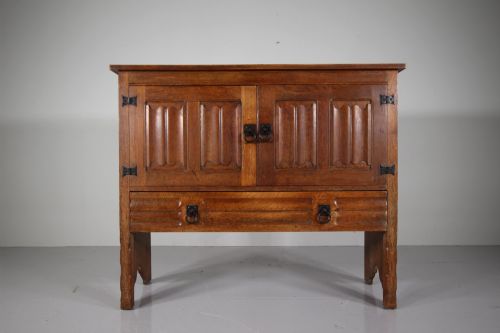
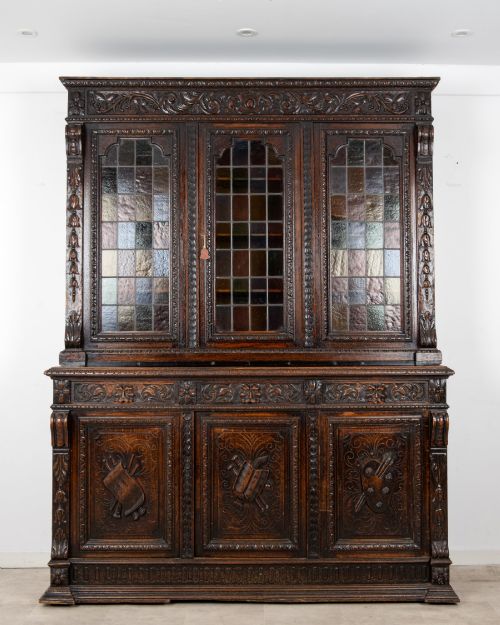
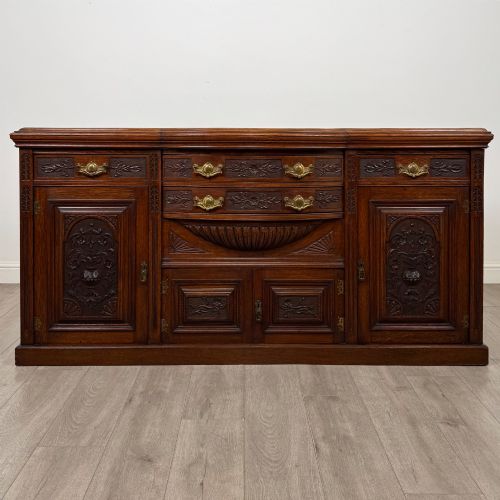
A victorian gothic sideboard brings medieval weight and dark timber into a room, offering substantial storage anchored by pointed arches and heavy carving.
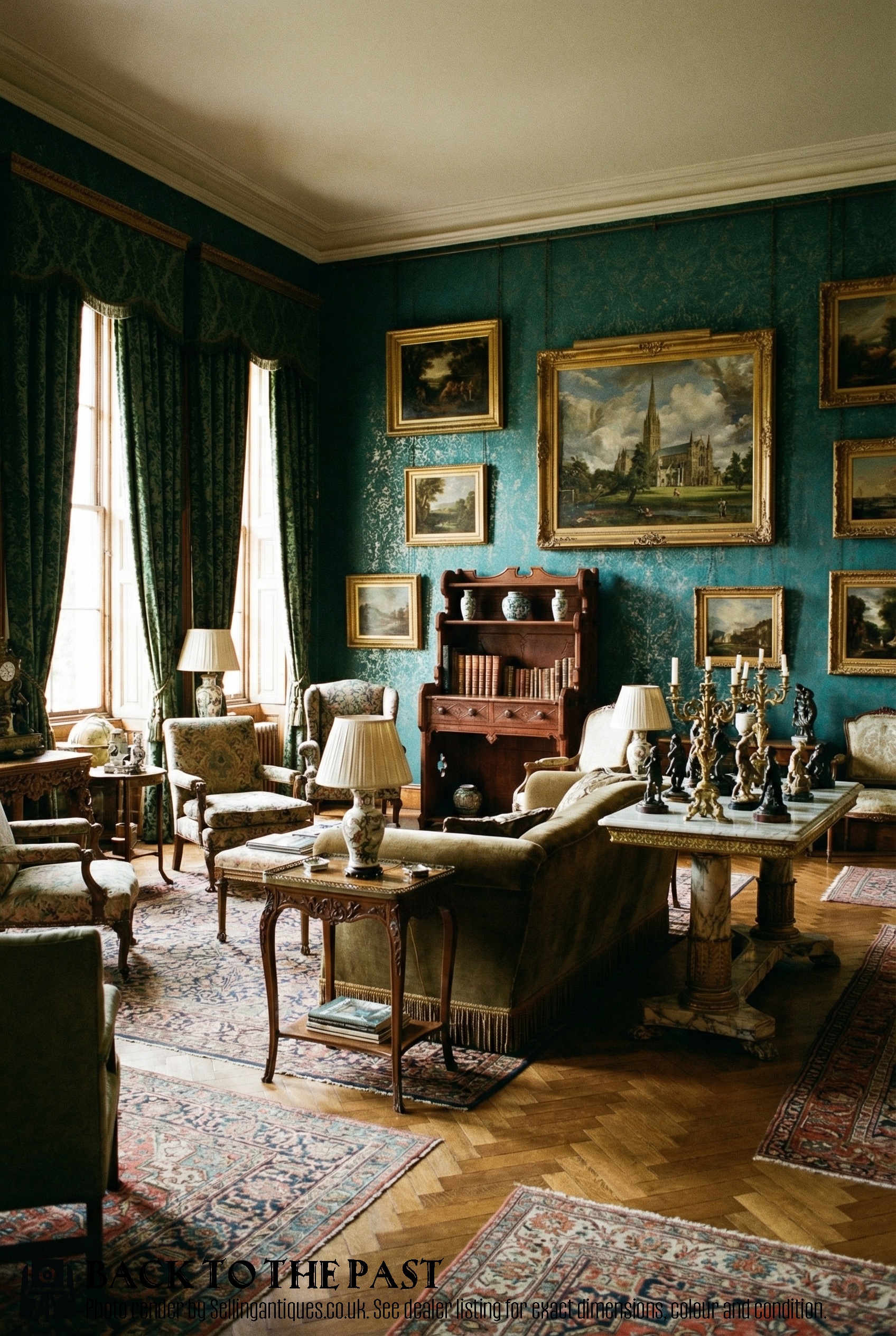
Victorian Gothic Sideboard
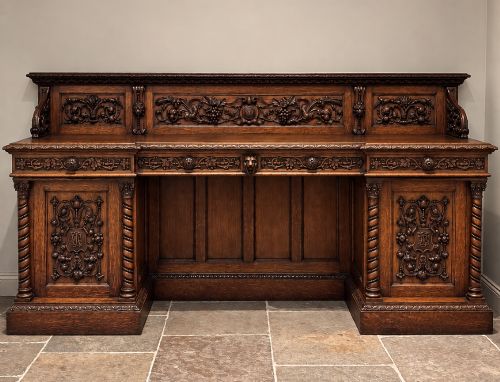
A victorian gothic sideboard is a substantial storage piece shaped by nineteenth-century revivals of medieval architecture, appearing most frequently in heavy carved oak.
The pieces on this page span the broader Victorian era alongside specific decades from the mid-nineteenth century to the early twentieth century, taking forms such as mirror-backed servers, pedestal sideboards, and cupboards.
Makers drew on gothic taste, featuring architectural elements like pointed arches, linenfold panels, and occasional grotesque carvings such as green men.
Materials and Technique
Solid oak dominates these pieces, frequently complemented by walnut, mahogany, or pitch pine, paired with iron or brass hardware and occasional stained glass.
Construction relies on deep relief carving and applied architectural details, assembling heavy timber frames to support massive mirror backs or stepped plate racks.
Several pieces feature unexpected green men staring out from the leafwork, keeping a silent watch over the dining room.
Craft and Proportion
Quality rests in the depth and crispness of the carving, distinguishing sharply undercut foliage and expressive figural work from shallow, mechanical stamping.
Proportion and timber selection dictate the standing of a piece, separating unified grain choices and balanced architectural mass from awkward scaling.
Liberty & Co.·John Moyr Smith
The Victorian Gothic Sideboard Glossary
- Gothic Revival
- An architectural and decorative style drawing inspiration from medieval design. It employs pointed arches, tracery, and robust proportions.
- Green Man
- A sculptural motif of a human face emerging from or entwined with foliage. This pagan symbol frequently appears in nineteenth-century woodcarving.
- Pedestal Sideboard
- A large dining room storage form featuring pedestals or cupboards flanking a central recess. It provides extensive interior capacity.
- Breakfront
- A cabinet front where the central section projects forward from the flanking wings. This layout creates depth and shadow in heavy timber.
Victorian Gothic Sideboard: Frequently Asked Questions
What is a victorian gothic sideboard?
A victorian gothic sideboard is a heavy nineteenth-century storage piece constructed predominantly from carved oak, featuring medieval architectural motifs such as pointed arches and linenfold panels.
These pieces were built for dining rooms to serve food, display silver, and store linens, functioning as the architectural centrepiece of the room.
How do I date a gothic sideboard?
Dating relies on combining the timber choice, hardware, and structural style with the specific decorative idioms of the nineteenth century. Mid-century examples often favour massive proportions and mirror backs, while later pieces incorporate arts and crafts influence.
Examining the secondary woods, backboards, and interior fixings provides further clues to narrow down the decade of manufacture.
Where should I place this sideboard?
These sideboards require a room with adequate scale and natural light to balance their dark timber and heavy carved presence. A dining room or a spacious hallway provides the right architectural context.
Ensure the floor can support significant weight, as solid oak and mirrored superstructures make these pieces exceptionally heavy.
How do I care for antique oak?
Antique oak benefits from occasional applications of beeswax to nourish the timber and maintain a soft, protective sheen. Avoid using modern silicone sprays or placing the piece near direct heat sources.
Keep the timber away from rapid humidity fluctuations to prevent the heavy panels from splitting or warping over time.