
Victorian Gothic Revival Furniture
Victorian gothic revival furniture brings ecclesiastical architecture indoors, offering dark woods, pointed arches and dramatic carving for domestic interiors.
Victorian Gothic Revival Furniture
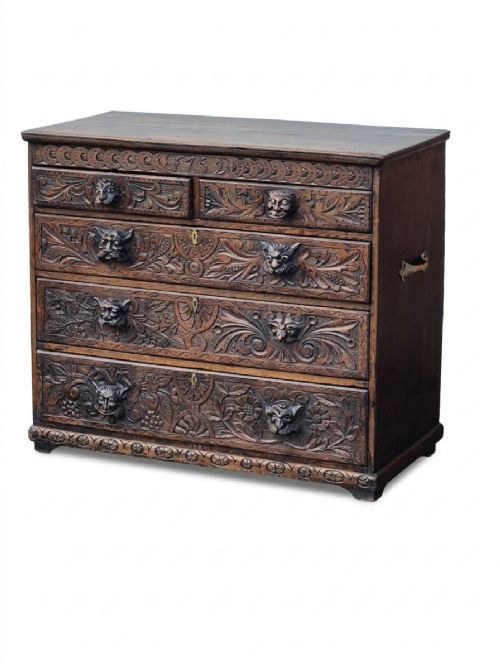
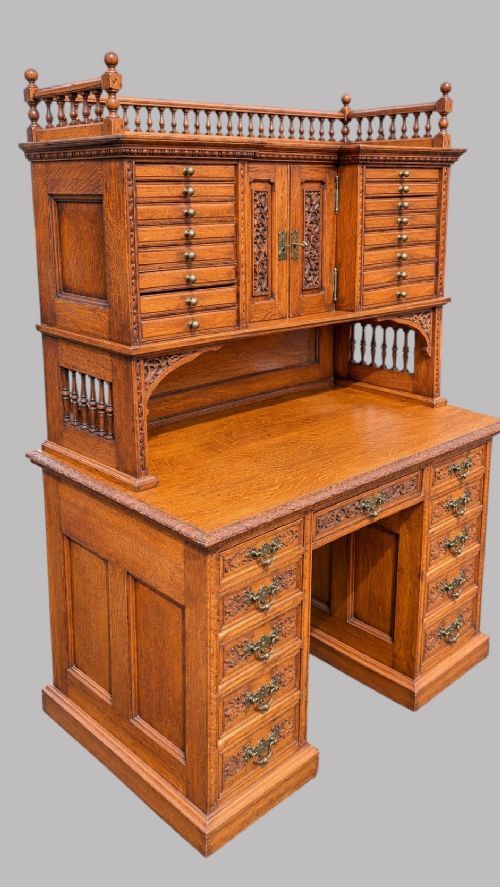
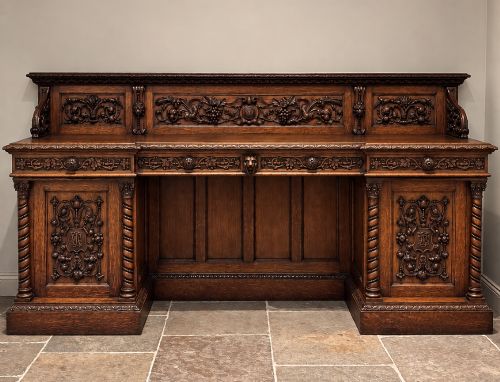
Victorian gothic revival furniture translates medieval architectural motifs into functional household pieces. Buyers encounter heavy oak sideboards, carved hall benches and ecclesiastical prayer desks rooted in the nineteenth century.
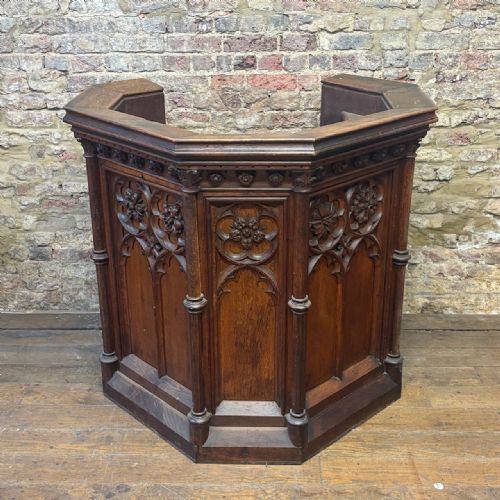
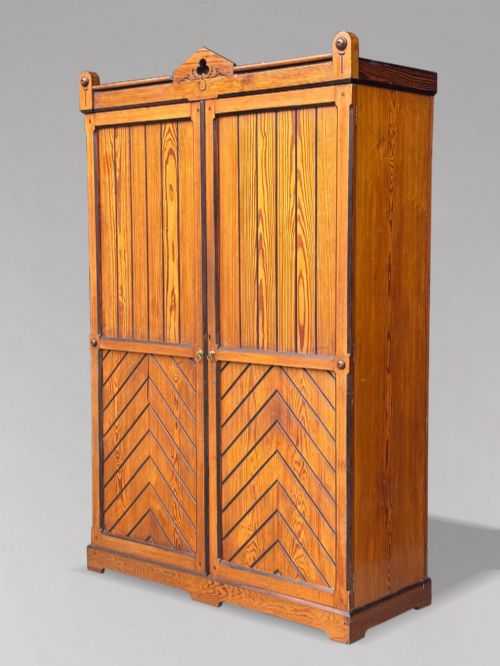
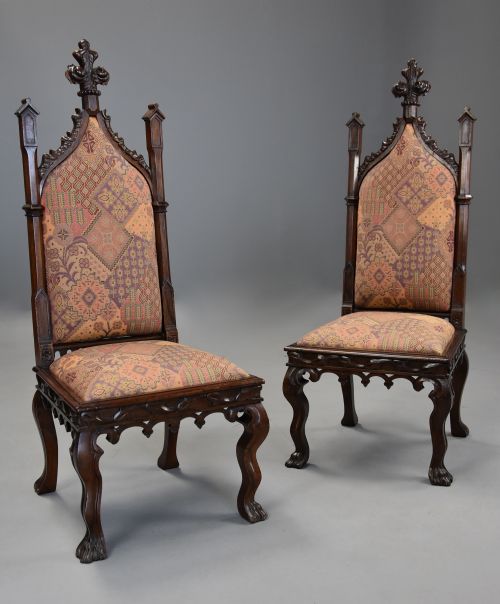
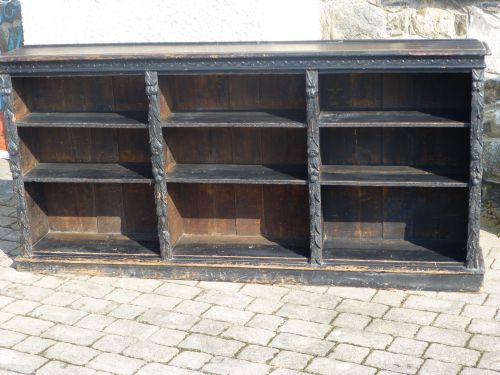
The aesthetic draws heavily on church design, incorporating pointed arches, trefoils and grotesque masks. Domestic forms range from small side tables and wall bookcases to large wardrobes and ecclesiastical pulpits.
Makers adapted these medieval elements for everyday Victorian living, producing seating, storage and desks. Oak predominates, supplemented by walnut, pine and iron within domestic and ecclesiastical contexts.
Materials and Construction
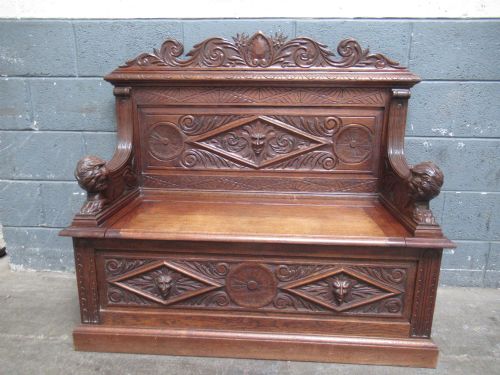
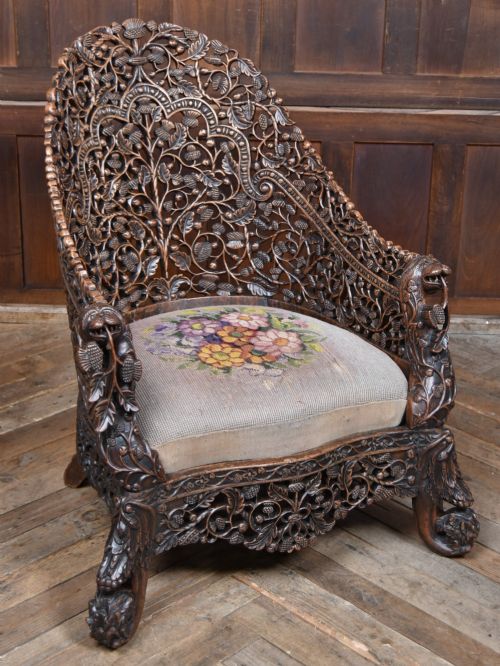
Solid oak serves as the primary structural material, worked by hand to create deep relief carvings of green men, lions and foliage. Workshops also utilised walnut, satinwood, pine and ebonised timber for specific commissions.
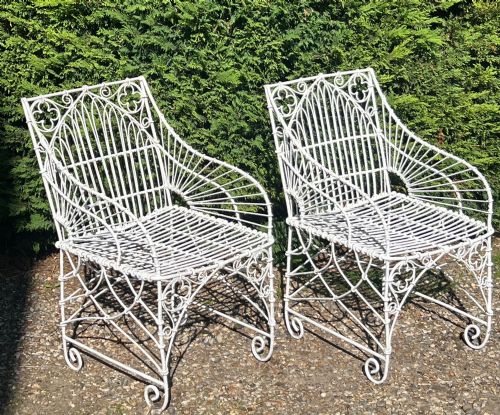
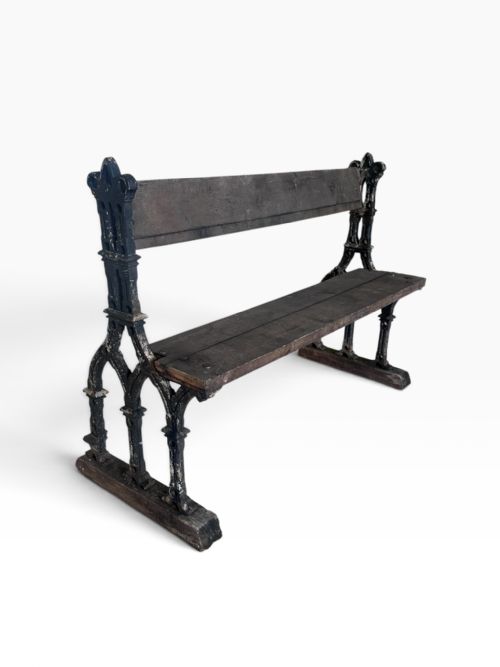
Metalwork played a structural and decorative role, integrating cast iron for garden benches and brass fittings for hinges and handles. Upholstery utilised velvet, fabric and needlepoint panel screens within framed wooden structures.
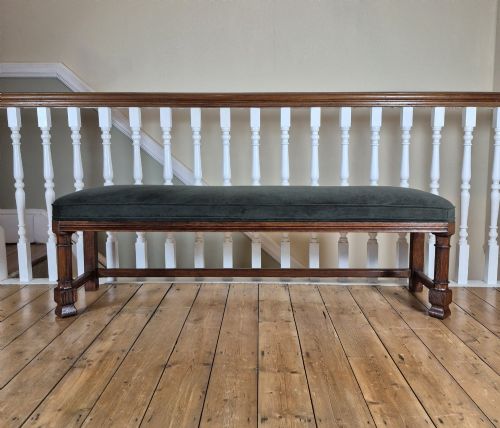
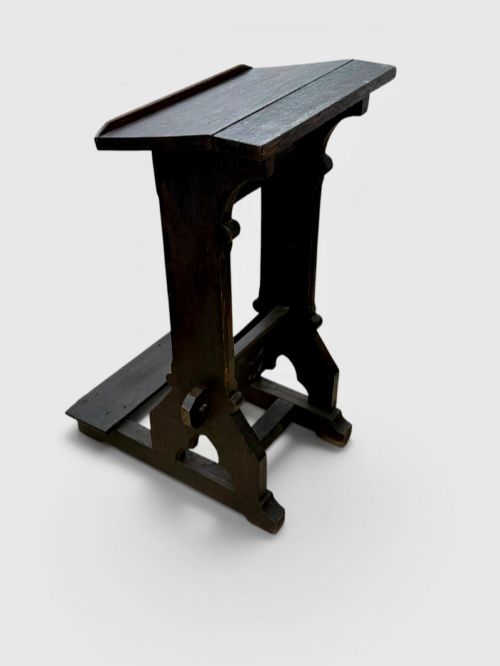
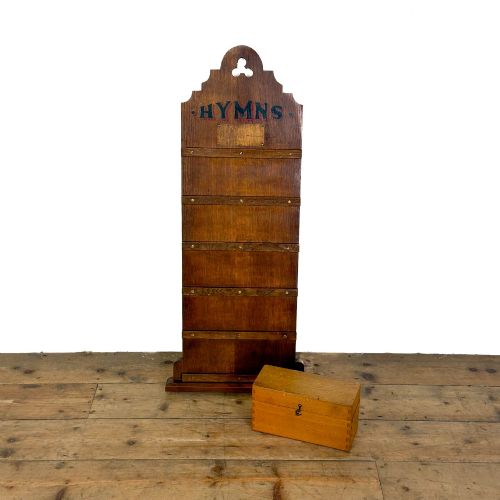
The inventory records ecclesiastical forms including prayer desks, hymn boards and church pulpits alongside domestic hall benches.
Distinctions in Quality
Depth and crispness of hand carving separate standard commercial production from exceptional pieces. Sharp relief work on green man masks and tracery denotes superior cabinet making.
Selection of timber grade and grain figure dictates visual merit, particularly in figured oak and walnut. Signed or attributed pieces from prominent workshops demonstrate superior architectural proportion and joinery.
Gillows·George Edmund Street·S&H Jewell·W.A. Willcocks
The Victorian Gothic Revival Furniture Glossary
- Green Man
- A sculptural motif of a human face emerging from or entwined with foliage. This pagan symbol of rebirth appears frequently on nineteenth century carved oak furniture.
- Prie-Dieu
- A small devotional desk designed for prayer, featuring a sloping shelf for books and a lower padded step for kneeling. These ecclesiastical pieces are typically constructed from solid oak.
- Trefoil
- A three-lobed decorative ornament inspired by Gothic architectural tracery. Cabinet makers carved this shape into panels and table tops.
- Secretaire
- A desk fitted with a pull down writing flap that conceals small interior drawers and pigeon holes. Examples often combine structural oak with refined internal compartments.
Victorian Gothic Revival Furniture: Frequently Asked Questions
How do I identify genuine Victorian gothic furniture?
Examine the timber for period characteristics such as solid oak construction, hand cut joints and authentic nineteenth century patination. Secondary woods and traditional fixings align with nineteenth century manufacturing methods.
Look for distinct architectural motifs including pointed arches, linenfold panels and carved grotesque masks. Attribution labels or known workshop styles further verify authenticity.
Where were these pieces used originally?
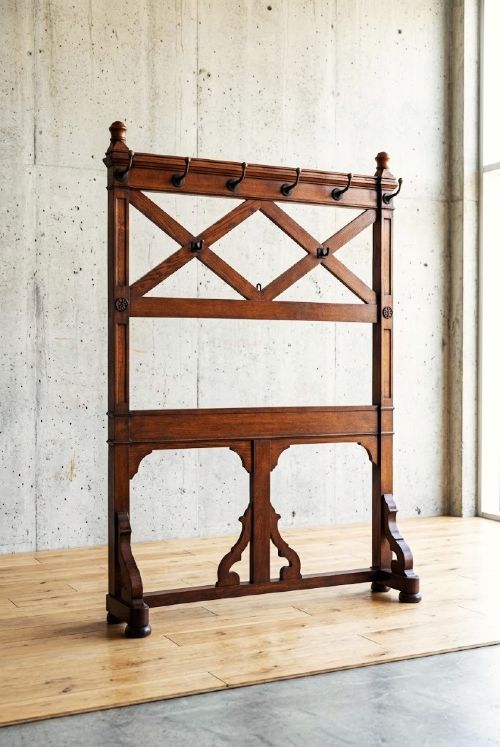
Much of this furniture was produced for grand domestic halls, libraries and drawing rooms of nineteenth century homes. Pieces like hall benches and coat stands furnished entrance spaces.
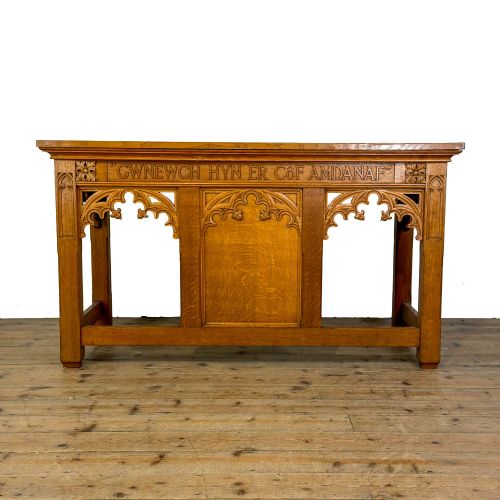
Other items originated directly from ecclesiastical settings, including prayer desks, church pulpits and chapel altar tables. Domestic adaptations brought these religious architectural forms into secular Victorian interiors.
How should I care for antique oak surfaces?
Maintain the timber by applying a microcrystalline wax periodically to nourish the dry wood and protect the original finish. Avoid placing pieces near direct heat sources or strong sunlight to prevent splitting.
Dust regularly with a soft, dry cloth rather than using silicone based polishes. Gentle care preserves the historical surface patination accumulated over generations.