
Gothic Revival Oak Cupboard
A gothic revival oak cupboard brings architectural authority and heavy timber presence into a room, rooted in centuries-old ecclesiastical design.
Understanding the gothic revival oak cupboard
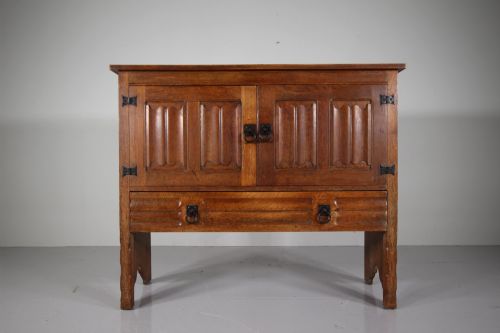
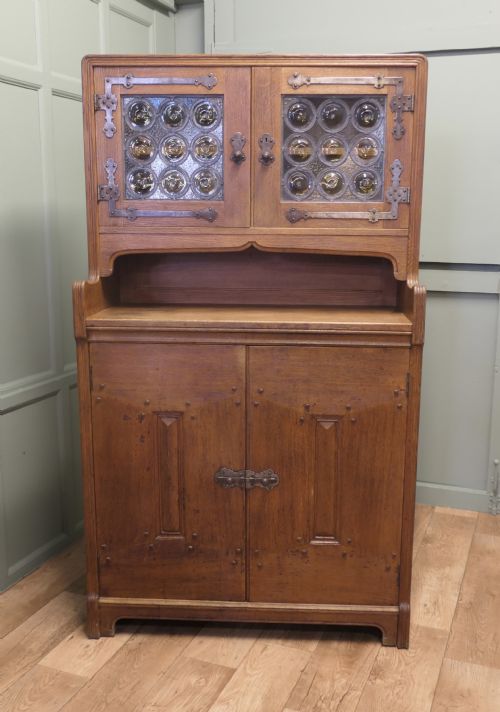
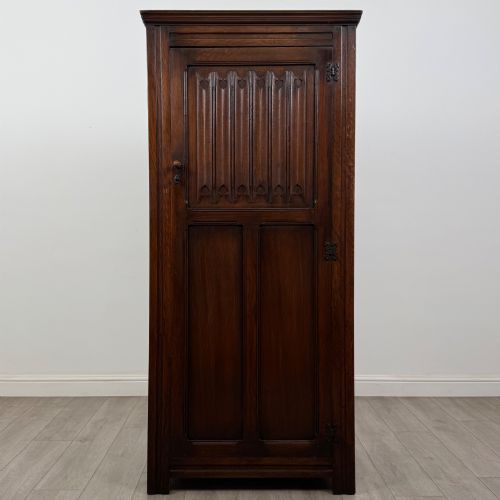
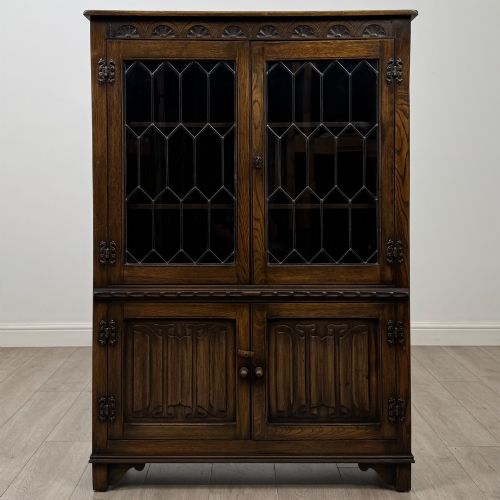
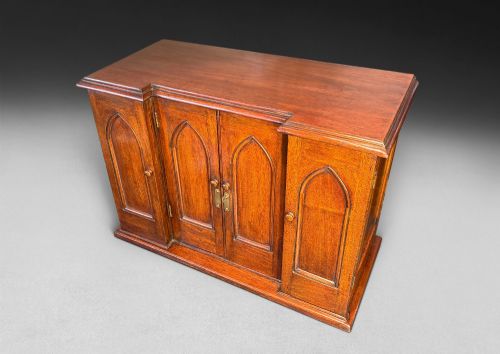
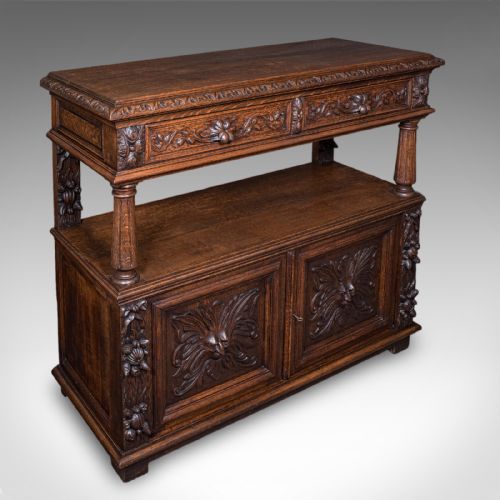
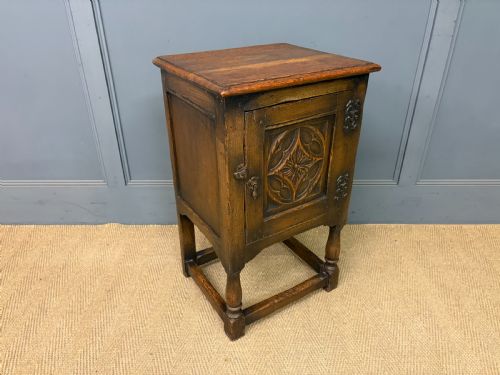
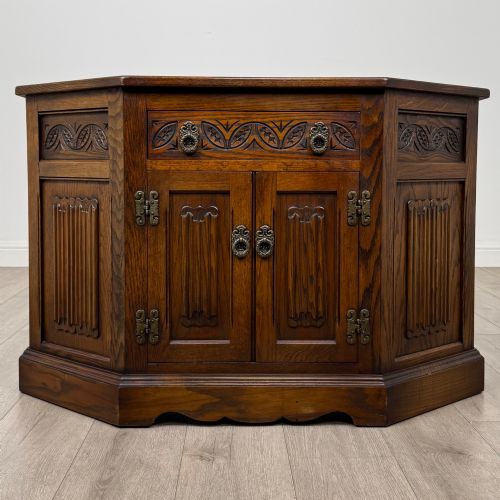
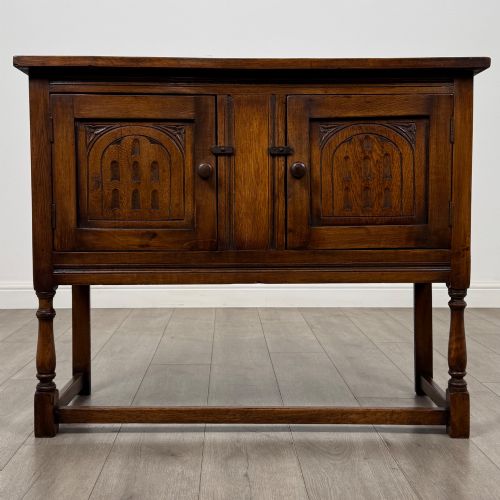
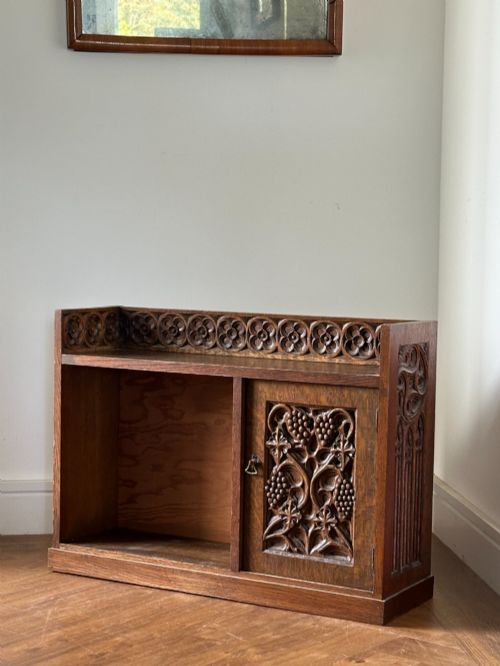
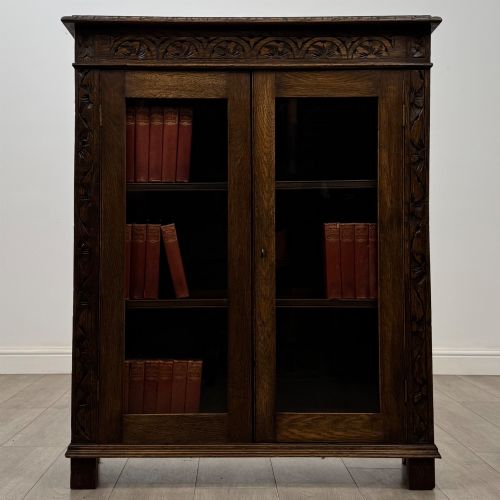
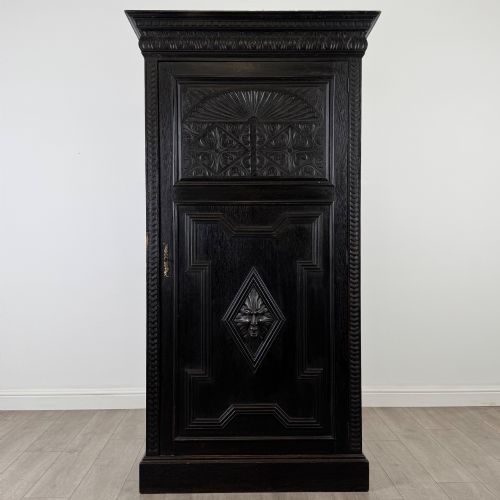
A gothic revival oak cupboard combines the imposing lines of medieval architecture with the practical storage needs of domestic interiors. Pieces span the nineteenth century, including specific dates around eighteen-sixty and nineteen hundred, and take forms such as creedence cabinets, corner cupboards, side cabinets, hall cupboards, and gun cabinets.
The aesthetic draws heavily on stylistic crossovers, appearing alongside Jacobean revival, Victorian gothic revival, Romanesque revival, and arts and crafts movements. Welsh and Ipswich regional variants also emerge within the archive, showing distinct local interpretations of these medieval forms.
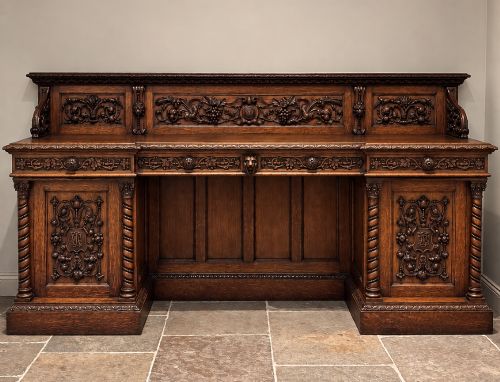
Buyers most frequently encounter nineteenth-century interpretations built as corner cupboards or side cabinets. These range from small domestic units to large carved side cabinets and ecclesiastical style cupboards designed to anchor a room.
Materials and construction methods
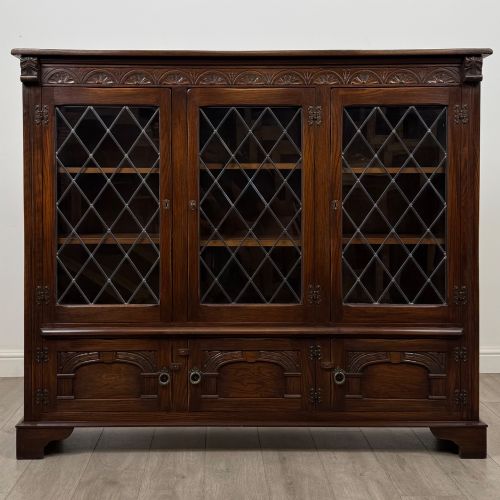
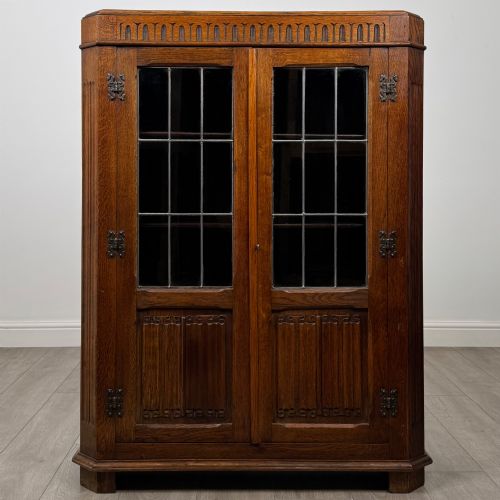
Solid oak serves as the primary structural and decorative timber across all recorded pieces, providing the dense grain and substantial weight characteristic of the style. Secondary materials such as brass and iron appear in hinges, lock plates, and strapwork, while mirror, glass, and fabric line or front specific cabinets.
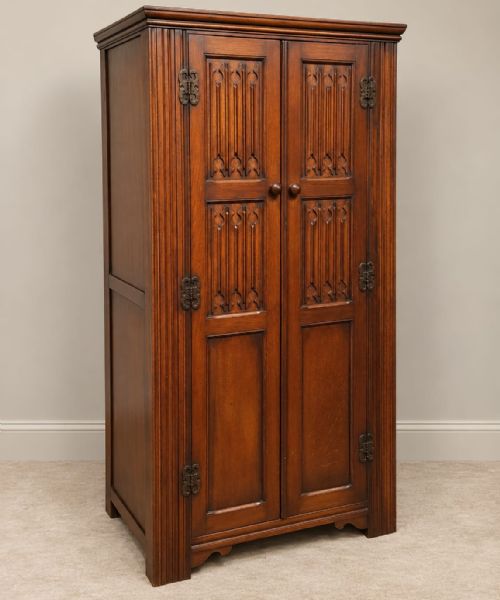
Carving forms the central decorative technique, rendering architectural motifs like tracery, pointed arches, and linenfold panels directly into the solid oak. Joinery relies on traditional frame-and-panel construction to accommodate the natural movement of heavy timber over time.
Retail Price Guide 2026
Typical UK retail prices for gothic revival oak cupboard, calculated from the Sellingantiques database of over a million retail prices indexed since 2003. This retail price guide relies exclusively on Sellingantiques data; no external sources or auction records are used, so the figures do not describe the wider market.
Some nineteenth-century makers built gun cabinets disguised as solemn ecclesiastical cupboards to keep sporting equipment safely out of sight.
Factors that separate the finest examples
The distinction between ordinary and exceptional pieces lies in the depth and ambition of the architectural carving. Superior examples display crisp, hand-chiselled tracery and deeply undercut mouldings rather than shallow mechanical stamping.
Hardware integration also dictates quality, where original wrought iron or heavy brass mounts match the period vernacular of the woodwork. The selection of the oak itself, favouring quartersawn boards with prominent medullary rays, elevates the visual presence of the timber.
The Gothic Revival Oak Cupboard Glossary
- Creedence cabinet
- A small side table or cupboard historically used for holding sacramental elements before consecration. In domestic settings, it functions as a compact display and storage cabinet.
- Tracery
- Architectural stonework ornamentation adapted into woodwork, forming intersecting ribwork in windows or panel heads. It defines the Gothic aesthetic on cupboard doors.
- Linenfold
- A style of wood carving that imitates folded fabric, popular in late medieval and revival panelling. It gives flat wooden surfaces the appearance of draped cloth.
- Romanesque revival
- An architectural and decorative style drawing on round arches, massive thick walls, and sturdy piers from the eleventh and twelfth centuries. It appears alongside Gothic forms in nineteenth-century storage pieces.
Frequently Asked Questions
Where should I place a gothic revival oak cupboard?
These substantial pieces demand a wall with sufficient visual weight to anchor their dark timber and architectural lines. Hallways, dining rooms, and studies provide appropriate settings where their heavy presence can balance other period furnishings.
Ensure the room has adequate clearance for doors to swing fully, particularly with corner cupboards or large side cabinets that feature protruding cornices and iron hinges.
How do I care for antique oak furniture?
Maintain stable indoor humidity levels to prevent the solid oak timber from splitting or warping as seasonal temperatures shift. Keep pieces away from direct heat sources and strong sunlight that can dry out the wood and fade the finish.
Apply a traditional beeswax polish occasionally to nourish the grain and protect the surface from moisture without building up a sticky film.
How can I tell a nineteenth-century piece from a later revival?
Examine the interior construction, backboards, and drawer linings for tool marks, hand-cut joinery, and timber shrinkage consistent with nineteenth-century methods. Machine-cut screws, modern plywood, and uniform modern adhesives point towards twentieth-century reproduction work.
Look at the wear patterns around iron and brass hardware to see if the patina matches the estimated age of eighteen-sixty or nineteen hundred.
What is the difference between a creedence cabinet and a standard cupboard?
A creedence cabinet specifically incorporates a raised upper section or specific ecclesiastical styling referencing medieval church furniture. Standard cupboards focus on general domestic storage through shelving and enclosed lower compartments.
Both utilise solid oak and Gothic motifs, but the creedence form carries stronger architectural references to liturgical furnishings.