
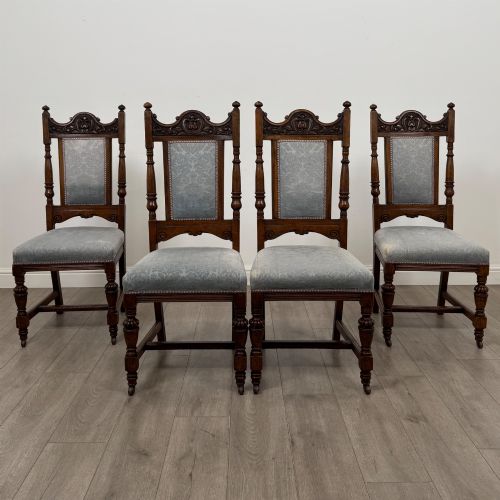
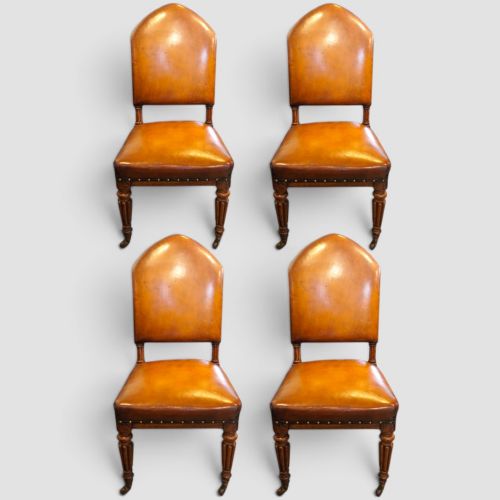
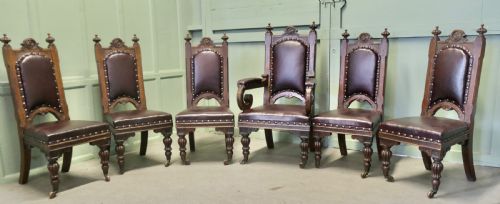
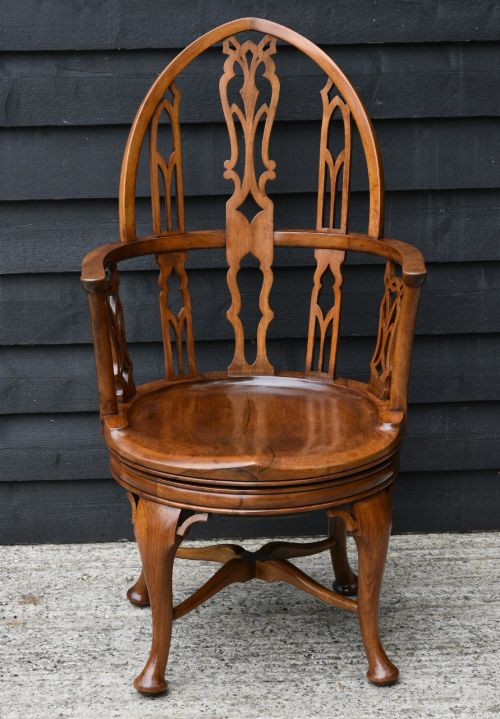
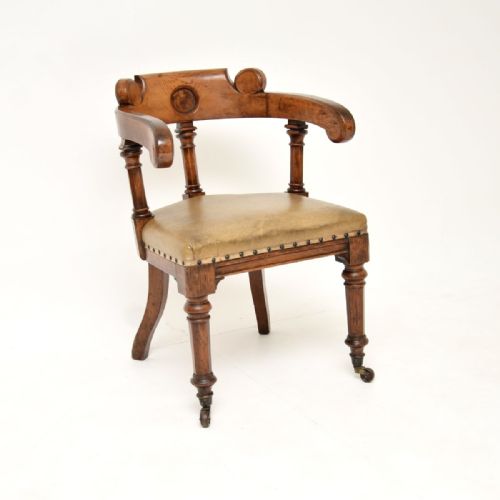


Victorian Gothic Desk Chair
A victorian gothic desk chair brings heavy architectural presence and carved detail to a workspace, combining architectural motifs with practical seating.
Victorian Gothic Desk Chair
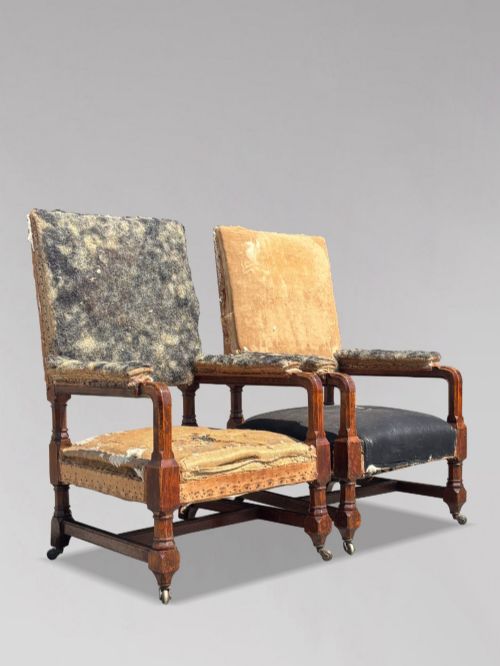
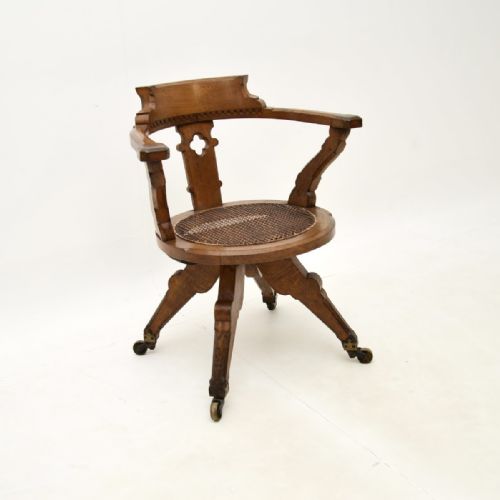
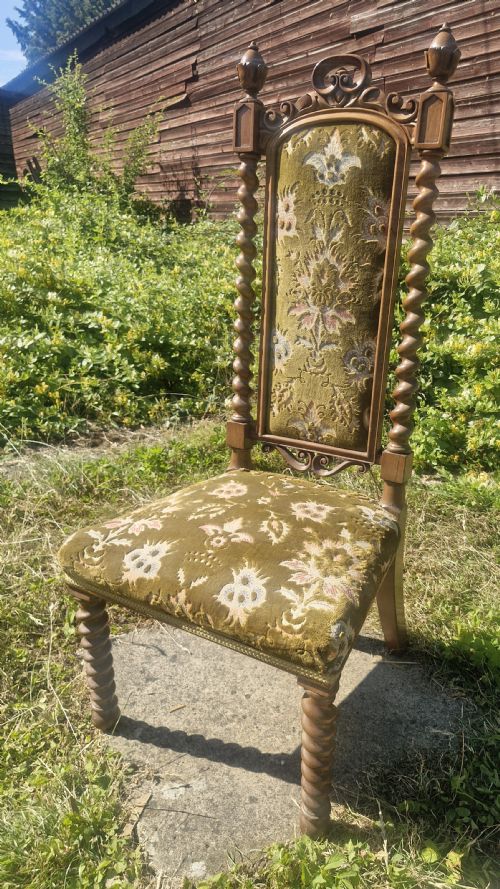
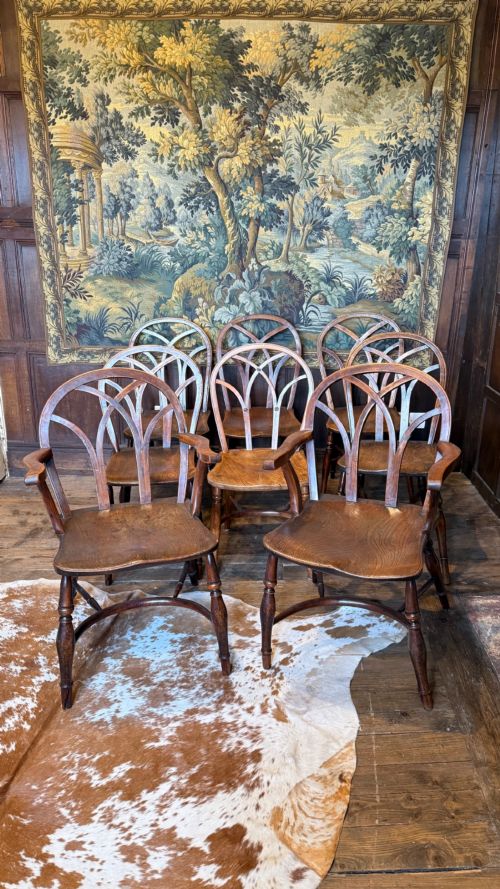
A victorian gothic desk chair combines the dark, imposing woodwork of the Gothic Revival with the practical requirements of a working seat. Buyers searching for a victorian gothic desk chair encounter solid timber frames, high carved backs, and occasionally swivel mechanisms or leather upholstery.
The materials and styles span the nineteenth century, with oak appearing most frequently alongside walnut and mahogany. These pieces range from simple side variations to revolving library chairs fitted with brass hardware.
Assessing the execution
Quality rests in the crispness of the hand carving and the integrity of the rotating or swivel mechanisms where fitted. Finer examples display deep, three-dimensional tracery and robust timber selection without excessive modern repairs.
The balance between decorative architectural elements and ergonomic comfort distinguishes standard workshop output from pieces attributed to notable makers.
Listings feature oak, walnut, and mahogany across styles spanning Gothic Revival, Aesthetic Movement, and Arts & Crafts.
Gillows·Bruce James Talbert·S&H Jewell·A. W. N. Pugin·Collier and Plucknett·Charles Bevan·Lamb Of Manchester
The Victorian Gothic Desk Chair Glossary
- Gothic Revival
- An architectural and decorative style drawing inspiration from medieval design, featuring pointed arches and trefoils. This aesthetic heavily influences the ornamentation found on these chairs.
- Swivel mechanism
- The rotating hardware hidden beneath the seat allowing the chair to turn. Early examples often incorporate robust iron or brass components.
- Carolean Style
- A decorative manner originating in the seventeenth century, characterised by rich carving and scrolling motifs. Elements of this style occasionally appear blended into Victorian seating.
- Puginesque
- A design vocabulary directly influenced by the architectural theories of A.W.N. Pugin. It demands structural honesty and strict medieval revival detailing.
Victorian Gothic Desk Chair: Frequently Asked Questions
Are these chairs comfortable for daily work?
Many examples feature supportive high backs and generous proportions designed for long hours at a library table or desk.
However, older revolving mechanisms may lack the fluid motion and adjustments found in modern office seating.
How do I identify a true swivel desk chair?
Look beneath the seat for a central iron spindle or wooden pivot secured by a heavy underframe.
These mechanical versions allow full rotation, distinguishing them from standard static armchairs.
What wood is most common in these pieces?
Oak dominates the surviving inventory, frequently finished with a dark polish to emulate medieval timber.
Walnut and mahogany appear less frequently, usually reserved for more refined library or nursing seats.
How do I care for the leather upholstery?
Maintain the material with traditional wax or leather balms to prevent cracking over time.
Keep the timber away from direct heat sources to preserve the original polish and prevent joint shrinkage.