




Carved Oak Club Chair
These heavy carved oak club chair pieces are substantial library and lounge seats built for comfort and presence.
Carved Oak Club Chair
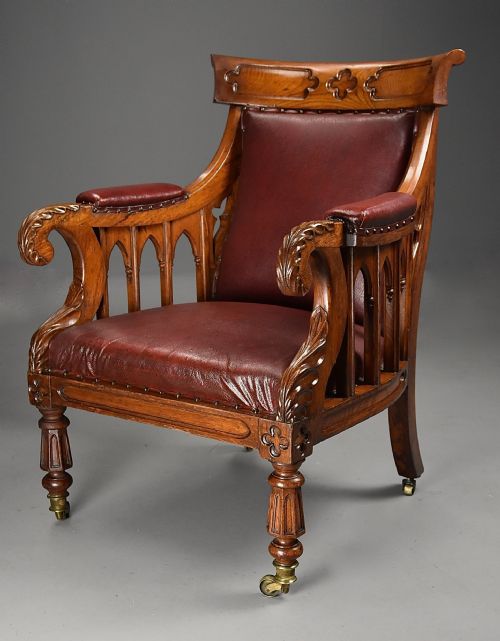
A carved oak club chair brings together sturdy timber construction and deep seating designed for a library or study. You will most frequently encounter nineteenth-century Victorian examples, often styled with Gothic Revival or Jacobean Revival motifs.
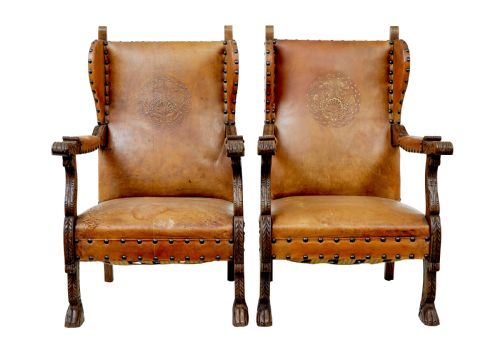
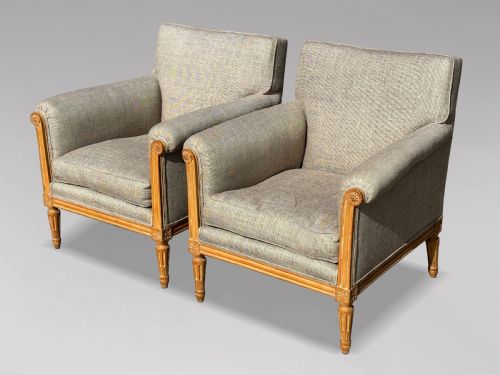
Many of these substantial armchairs feature generous proportions, deep leather upholstery, and elaborate woodwork such as carved lion heads on the armrests. The selection also includes early twentieth-century pieces and occasional French Louis XVI revival interpretations.
The form is essentially an oversized armchair built to anchor a room, relying on heavy oak frames and durable coverings. Whether you choose a Victorian library chair or an early twentieth-century reclining version, the focus remains on solid timber and comfortable padding.
Assessing quality and execution
Quality in a carved oak club chair rests upon the crispness of the timber carving and the scale of the frame. Pieces with deeply undercut lion heads or intricate Gothic tracery represent the higher tier of workshop production.
The choice of covering materials also distinguishes the pieces, with thick embossed leather and buttoned hides sitting above standard fabric upholstery. Proportions matter greatly, as the larger library armchairs demand heavier timber scantlings to maintain structural integrity.
Carved Oak Club Chair Retail Price Guide 2026
Typical asking prices for carved oak club chair among the pieces listed under this phrase on Sellingantiques today, from the lower quarter to the upper quarter. They describe what is for sale here now, not the wider market.
Several armrests feature fierce carved lion heads keeping watch over the library.
Heals of London
The Carved Oak Club Chair Glossary
- Gothic Revival
- A design style drawing on medieval architecture, featuring pointed arches, tracery, and heavy carved details.
- Jacobean Revival
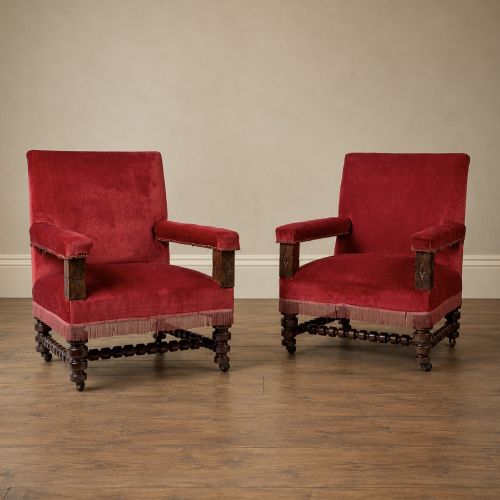
- A nineteenth-century style imitating seventeenth-century English furniture, known for dark oak, turned legs, and geometric paneling.
- Library armchair
- A large, comfortable seat designed for reading rooms, typically upholstered in leather and constructed from heavy hardwood.
- Button leather
- Upholstery technique where leather is pulled deep into the padding with buttons, creating a tufted surface.
Carved Oak Club Chair: Frequently Asked Questions
Where did these chairs originate?
Most of these heavy armchairs date from the nineteenth century, produced by English workshops embracing Victorian revival styles. You will also find occasional French pieces influenced by Louis XVI designs.
Workshop production during this era favoured solid oak frames combined with traditional leather or velvet upholstery suitable for gentlemen's libraries.
How do I care for leather upholstery?
Leather surfaces on these library chairs benefit from regular dusting and occasional treatment with appropriate conditioning balms to prevent drying. Avoid placing the timber and leather near direct heat sources.
Keeping the oak frame clean with a soft cloth preserves the original finish and the depth of the carved details over time.
Are these chairs comfortable for daily use?
These pieces were built with generous proportions and deep padding specifically for long hours of reading and relaxing. Their sturdy frames provide robust support.
Many examples feature sprung seats or buttoned leather backs designed to offer a supportive yet yielding sit.
How do I distinguish Victorian Gothic from Jacobean styles?
Victorian Gothic Revival pieces typically display architectural motifs such as pointed arches, quatrefoils, and ecclesiastical carving. They emphasise vertical lines and solemn grandeur.
Jacobean Revival furniture relies instead on heavily turned legs, strapwork, and darker oak tones reflecting seventeenth-century domestic interiors.