




Floral Upholstery Armchairs
Floral upholstery armchairs bring pattern and comfort together, spanning Regency, Victorian, and Edwardian periods with wood frames and textile covers.
Floral Upholstery Armchairs
Floral upholstery armchairs provide comfortable seating supported by wooden frames and covered in patterned textile or tapestry. When searching for floral upholstery armchairs, buyers encounter diverse forms ranging from large country house seats to boudoir chairs and fireside models.
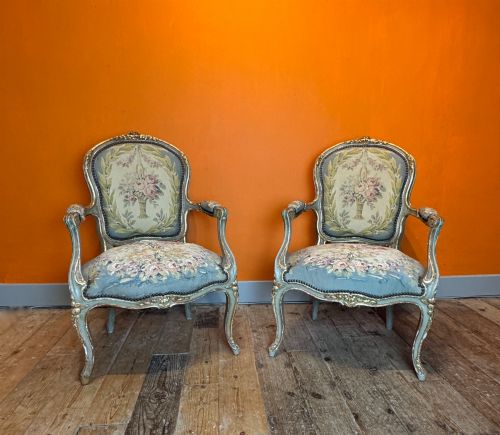
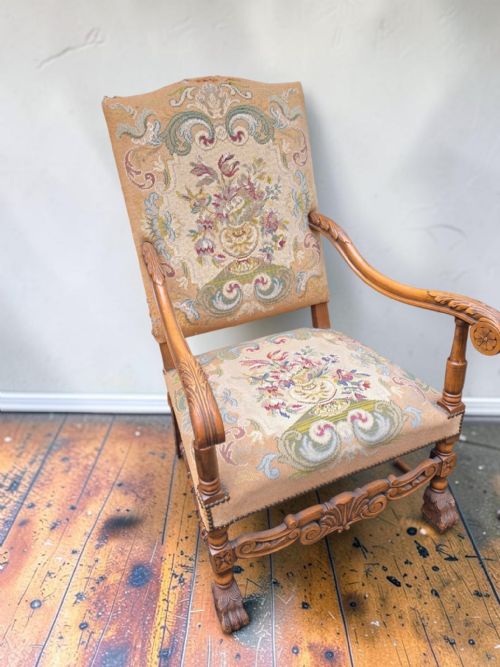
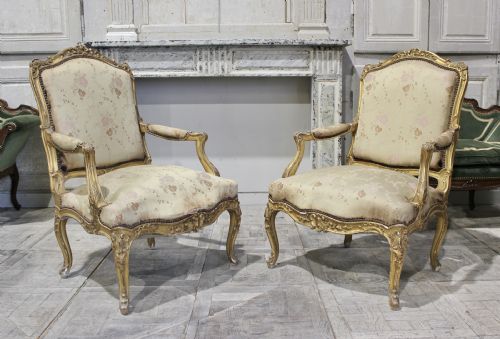
The selections span the nineteenth century through the early twentieth century, showing revival styles such as French Louis XV, Jacobean, and Queen Anne. Many pieces feature exposed timber including mahogany, walnut, and hardwood, often paired with brass details or painted and gilded surfaces.
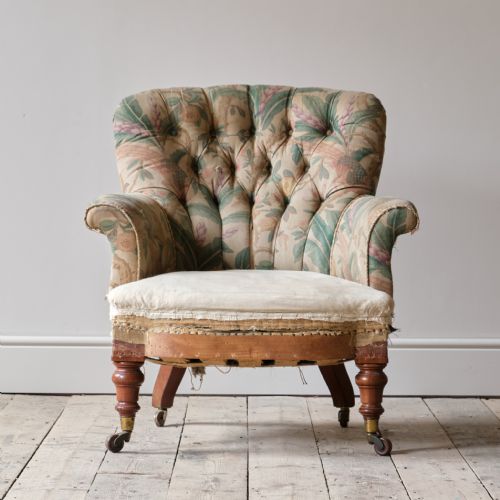
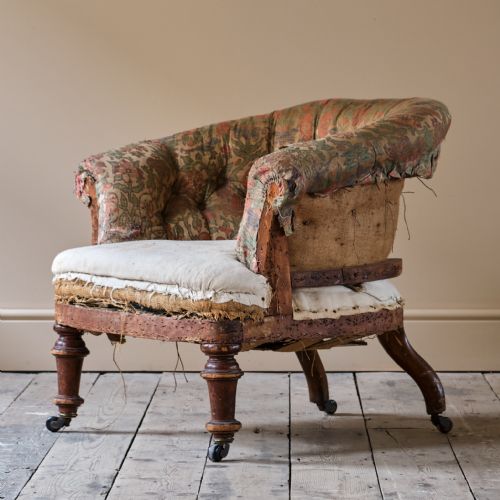
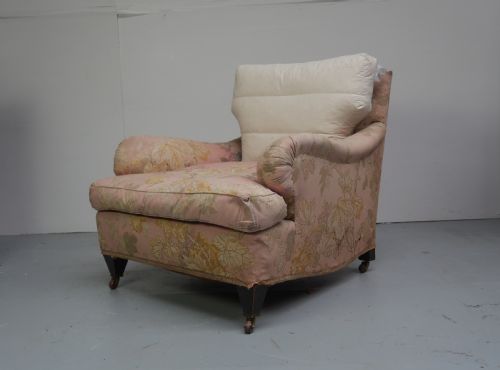
Common variations include winged backs, tub shapes, open arms, and button-backed iron frames. Certain examples appear ready for re-upholstery, while others retain historic tapestry or designer fabric.
How they were made
Makers constructed the structural frames using hardwoods such as mahogany, walnut, and general timber, frequently shaping the wood into revival forms like Regency lines or French Rococo curves. Frames incorporated iron components in specific Victorian iterations to ensure rigidity.
Upholstery techniques involved securing fabric, velvet, or tapestry directly over padded foundations, occasionally finished with button tufting. Details such as parcel gilding, paint, and brass hardware completed the decoration of the exposed wooden elements.
One cheerful Edwardian boudoir chair waits patiently for a completely new outfit.
What varies in quality
Quality differences emerge in the execution of the wooden frame, where dense hardwoods and refined carving distinguish superior work from simpler joinery. The selection of covering material also marks a division, with hand-worked tapestry or designated maker fabrics representing higher tier production.
Proportion and stylistic consistency dictate the standing of each piece, particularly in revival models that emulate French Louis XV or Queen Anne aesthetics. The integrity of the underlying frame and the historical accuracy of the upholstery scheme determine the overall execution.
Howard and Sons·William Morris
The Floral Upholstery Armchairs Glossary
- Tapestry
- A heavy hand-woven or machine-woven textile featuring pictorial or floral designs used as a durable furniture covering. It provides a textured surface traditional to nineteenth-century seating.
- Tub back
- An armchair design featuring a semicircular curved backrest that flows continuously into the arms. This enclosed shape offered additional warmth and draught exclusion.
- Boudoir chair
- A smaller, lighter seating form designed for private sitting rooms rather than formal reception spaces. These items often display delicate proportions and decorative inlay.
- Parcel gilt
- A decorative treatment where specific carved or raised details of a wooden frame are partially covered in gold leaf. It highlights structural ornaments against a painted or polished wood ground.
- Winged armchair
- A seating form featuring protective side panels attached to the backrest to shield the sitter from drafts. It remains a staple of fireside comfort across Victorian and Edwardian periods.
Floral Upholstery Armchairs: Frequently Asked Questions
What periods do these armchairs come from?
The listings span the Regency, Victorian, and Edwardian eras, encompassing nineteenth-century and early twentieth-century production.
Design influences range from French Rococo and Louis XV revivals to traditional English country house styles.
What materials are used for the frames?
Frames are constructed from various timbers including mahogany, walnut, and general hardwood. Selected examples incorporate painted and gilded finishes, brass elements, or iron frames.
Exposed wood varies according to the specific revival style and period of manufacture.
What types of upholstery do they feature?
Coverings include traditional tapestry, velvet, and patterned fabrics, with some pieces retaining specific designer textiles.
Several chairs are offered specifically for re-upholstery, allowing buyers to select new fabric.
How do I identify different chair forms?
Forms include open armchairs, winged fireside chairs, tub backs, and smaller boudoir seating. Distinctive silhouettes indicate their intended domestic use and period of origin.
Country house models offer relaxed proportions while boudoir chairs remain compact.