

Victorian Velvet Lounge Chair
A victorian velvet lounge chair brings deep pile texture and solid nineteenth-century timber frames into a modern sitting room.

Victorian Velvet Lounge Chair
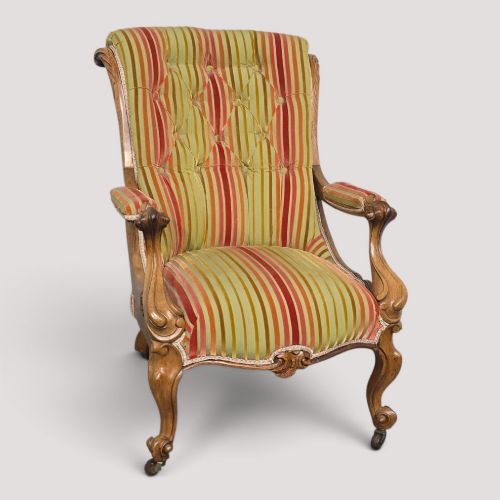
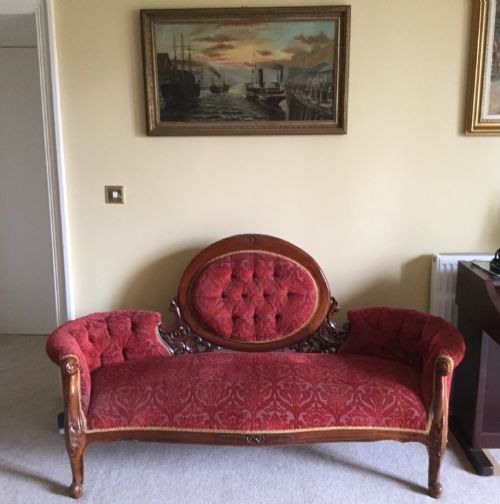
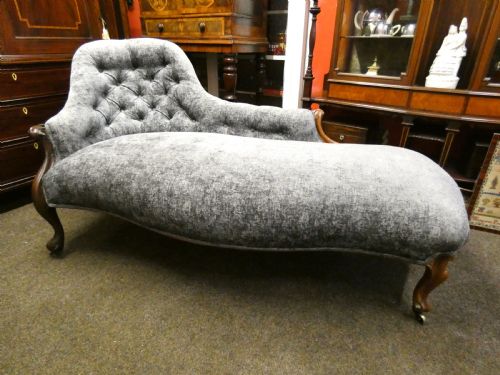
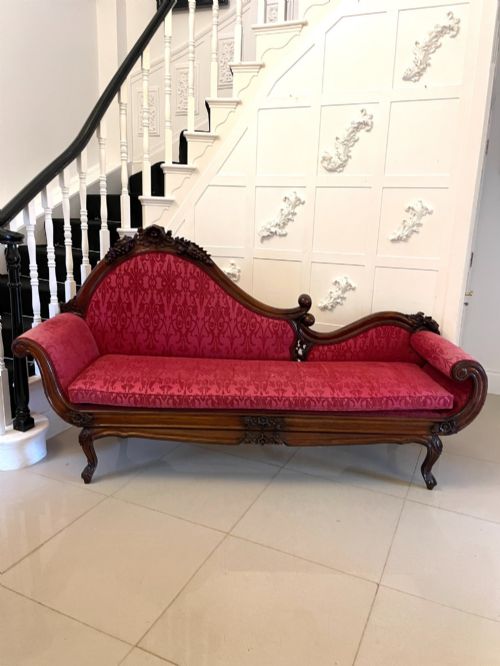
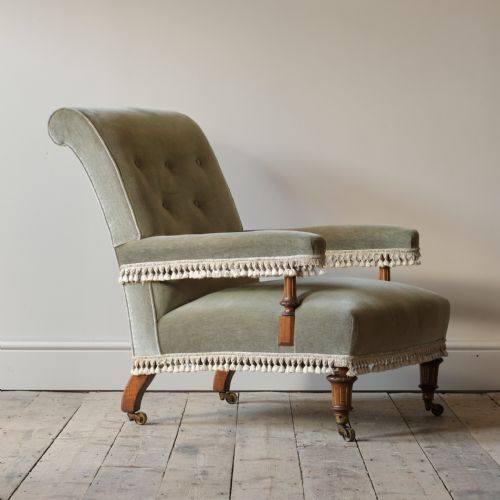
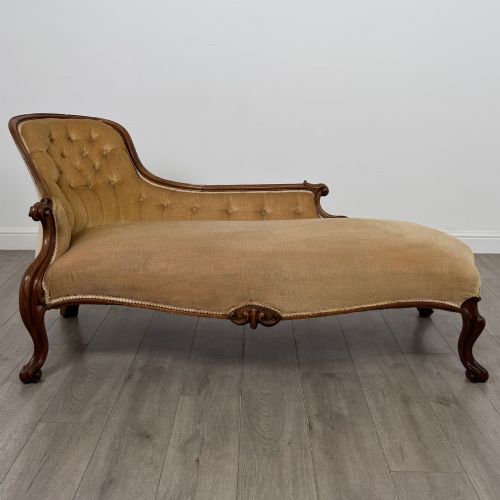
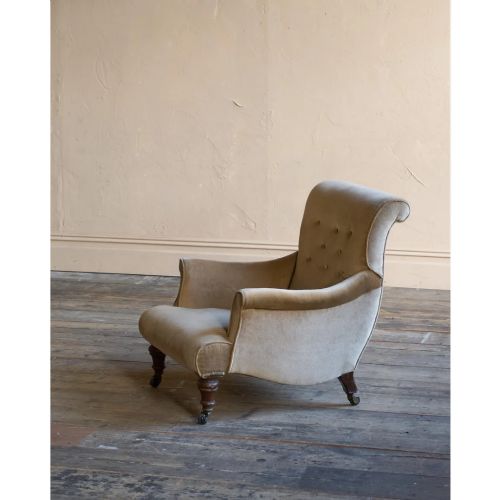
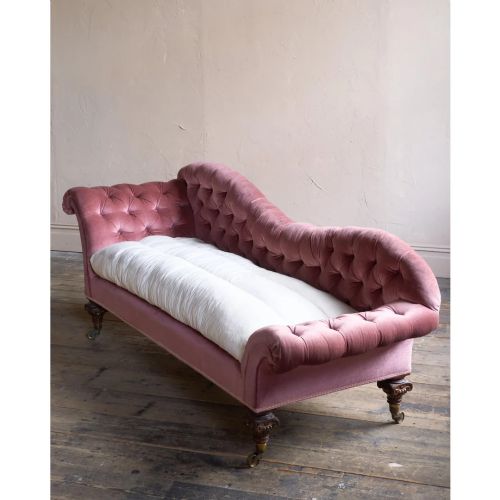
When you search for a victorian velvet lounge chair, you encounter a selection spanning armchairs, daybeds, and button-backed nursing chairs. These pieces date principally from the nineteenth century, including Victorian, Regency, and Edwardian periods, alongside revival styles and French Second Empire forms.
The dominant forms on this page include mahogany, rosewood, and walnut frames paired with deep pile velvet, brocade, or fabric upholstery. Makers such as Gillows, Howard and Sons, and Holland and Sons appear among the listings alongside English country house and Anglo-Indian variants.
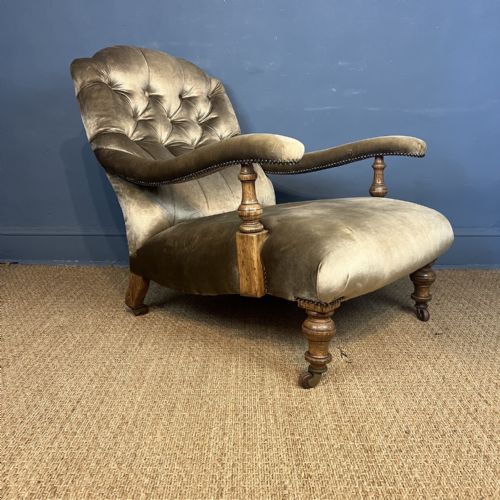
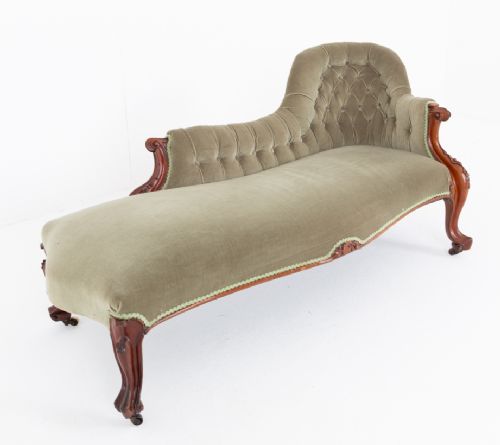
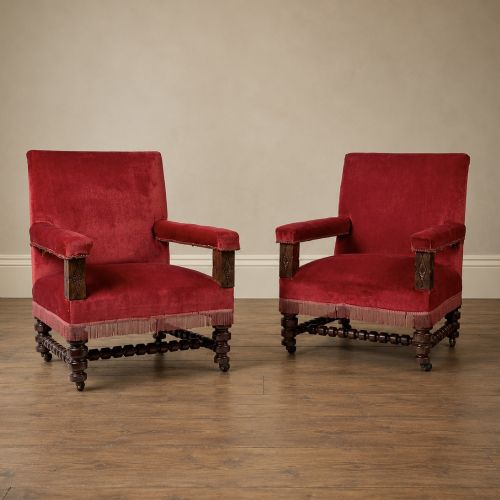
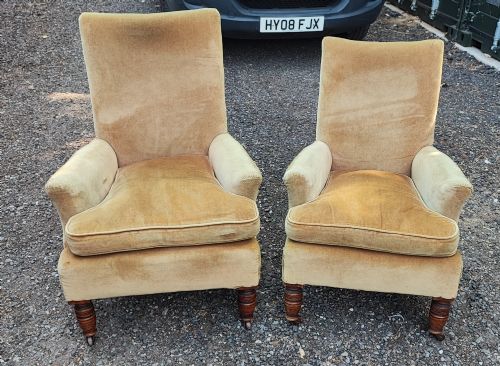
You will find low nursing chairs, library armchairs, and expansive double-ended sofas designed for reclining. The frames rely on hardwoods like oak and walnut, supporting sprung seats and elaborate carved woodwork.
Materials and construction
Frames rely on dense hardwoods including mahogany, walnut, rosewood, oak, and general hardwood. These timbers are carved into cabriole legs, ionic columns, and spoon backs, providing the structural skeleton for heavy upholstery.
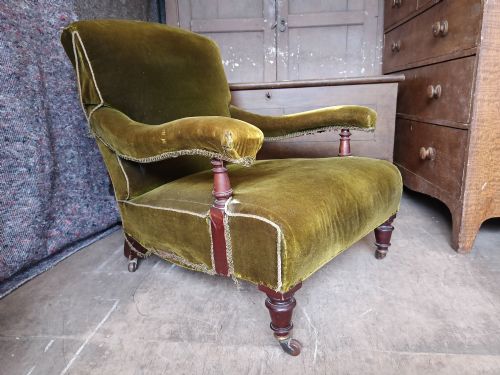
Upholstery employs velvet, brocade, and fabric stretched over sprung settees and deep-buttoned backs. Brass fittings and castors often complete the base of these nineteenth-century seats.
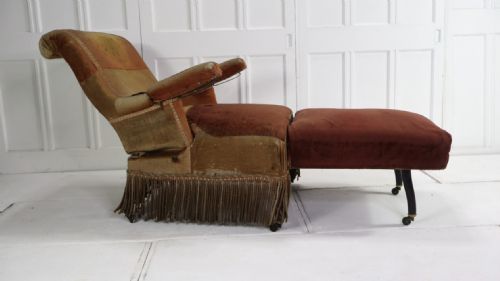
Several chairs rely on hidden mechanical adjustments devised during the nineteenth century to alter the recline.
Assessing quality and craftsmanship
Quality rests in the integrity of the hardwood timber frame and the precision of the carved details on cabriole legs or spoon backs. Superior examples display crisp joinery and robust structural foundations beneath the velvet.
The grade of the velvet upholstery and the execution of deep buttoning distinguish finer workshop productions. Pieces carrying attributions to notable makers demonstrate superior proportion and material selection.
Gillows·Howard and Sons·Holland and Sons·C. Hindley and Sons·Hampton and Sons
The Victorian Velvet Lounge Chair Glossary
- Chaise Longue
- An elongated chair or daybed designed for reclining, featuring a backrest and partial armrests. These pieces often exhibit carved mahogany or walnut frames.
- Button Back
- An upholstery technique where velvet or fabric is pulled deep into the padding and secured with fabric-covered buttons in a geometric diamond pattern.
- Spoon Back
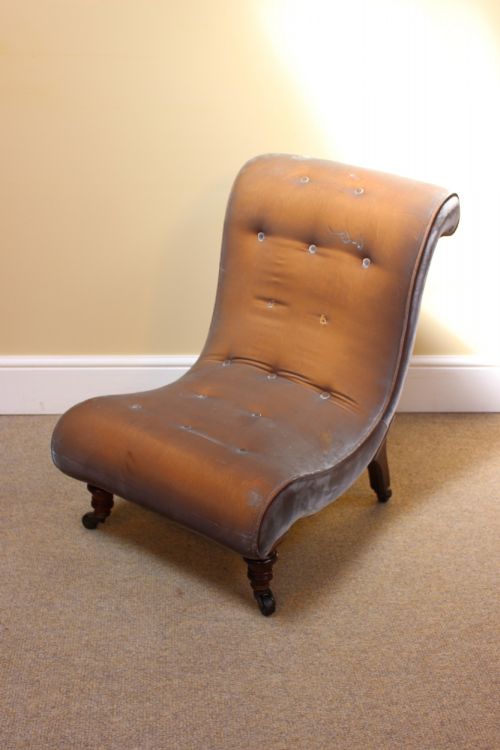
- A padded chair back shaped like the bowl of a spoon, contoured to fit the human spine. This style is frequently observed on Victorian and Regency nursing chairs.
- Nursing Chair
- A low-seated armchair designed in the nineteenth century to allow a person to sit comfortably near a nursery fire. They frequently feature sprung seats and velvet upholstery.
- Cabriole Leg
- A furniture leg that curves outward in a convex arc and then bends inward in a concave arc, terminating in a scroll or plain foot.
Victorian Velvet Lounge Chair: Frequently Asked Questions
How do I identify a Victorian velvet lounge chair?
Look for dense timber frames in mahogany, walnut, or rosewood paired with deep pile velvet upholstery. Nineteenth-century examples often feature button-backed padding, hand-carved details, and sprung bases.
Examine the legs and woodwork for period characteristics such as cabriole shapes or ionic columns. Maker attributions or stamps on the frame can further confirm the era.
Where were these chairs placed in a period home?
These lounge chairs and chaises longues found homes in private libraries, drawing rooms, and bedrooms. Low nursing chairs were kept near firesides for comfort.
Larger double-ended sofas and daybeds occupied prominent positions in formal reception rooms for resting and reading.
How should I care for antique velvet upholstery?
Protect antique velvet from direct sunlight to prevent the pile from fading over time. Gentle brushing with a soft-bristled brush helps maintain the nap and remove surface dust.
Avoid harsh chemical cleaners and consult a specialist restorer for deep cleaning or reupholstery work to preserve the underlying nineteenth-century frame.
What is the difference between a nursing chair and a library armchair?
Nursing chairs feature a notably lower seat and a high, supportive back designed for seated tasks near ground level. They frequently incorporate button-backed velvet.
Library armchairs are built taller and wider with substantial wooden armrests, providing a sturdier seat for prolonged reading in a study.