
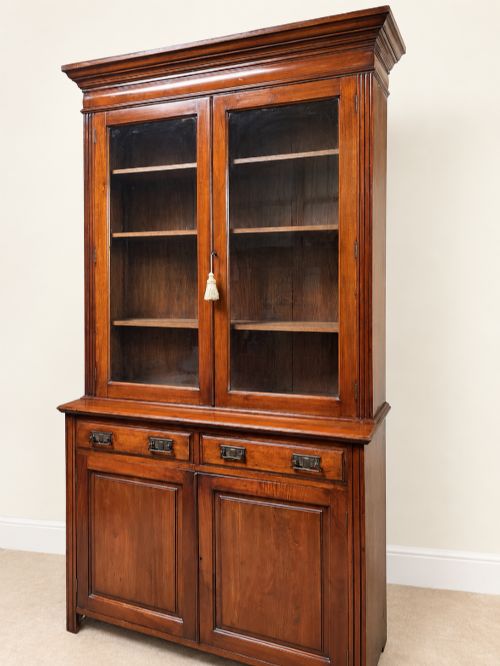
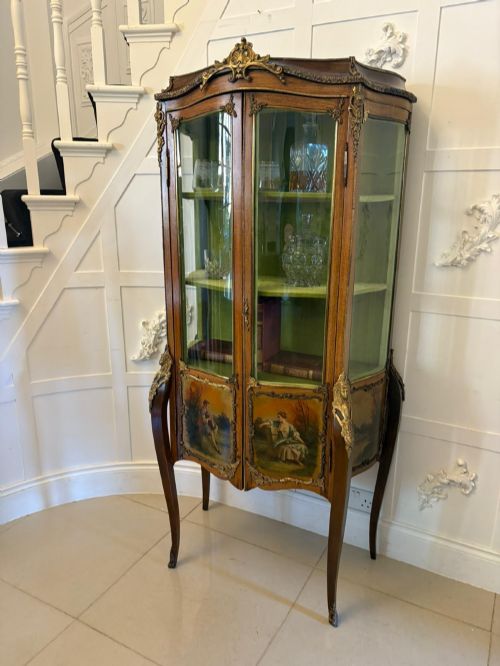
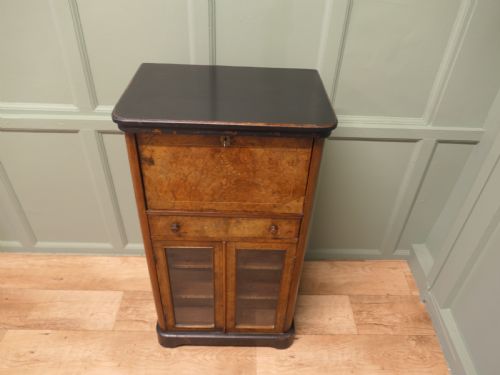
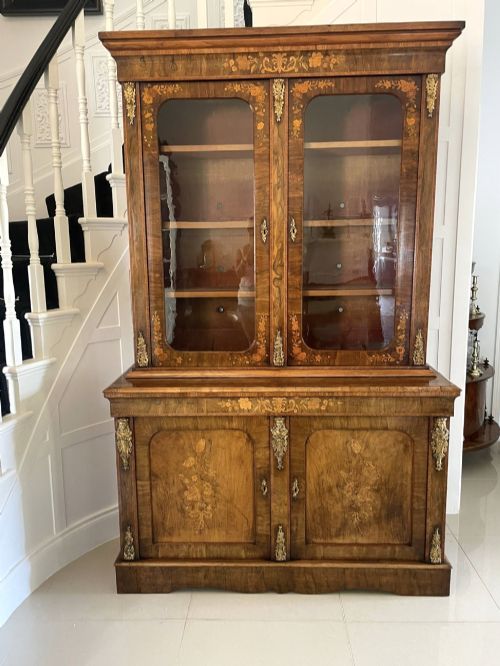
Victorian Glazed Front Cabinet
A victorian glazed front cabinet brings nineteenth-century craftsmanship into a modern room, offering visible storage for books or collections.
Victorian Glazed Front Cabinet
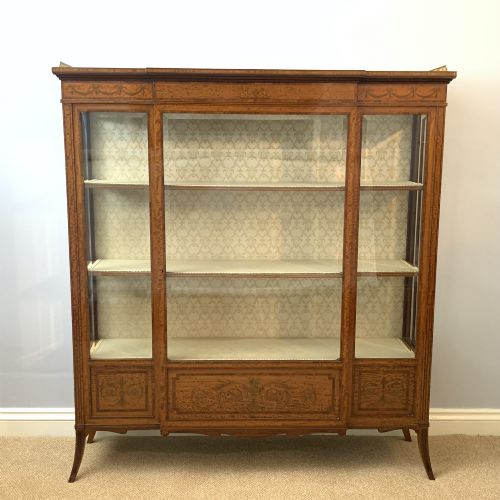
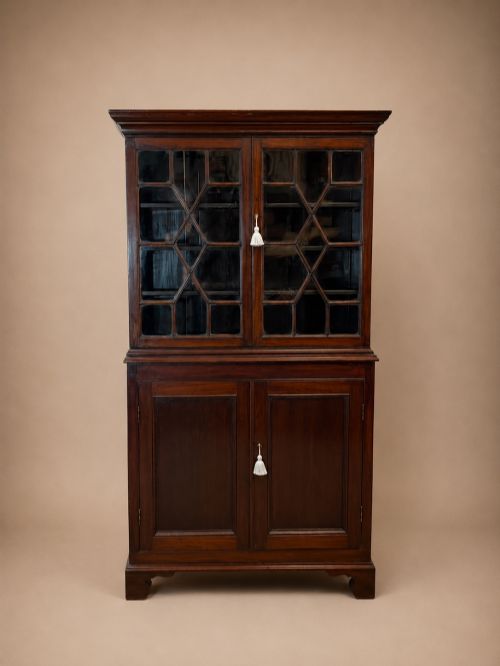
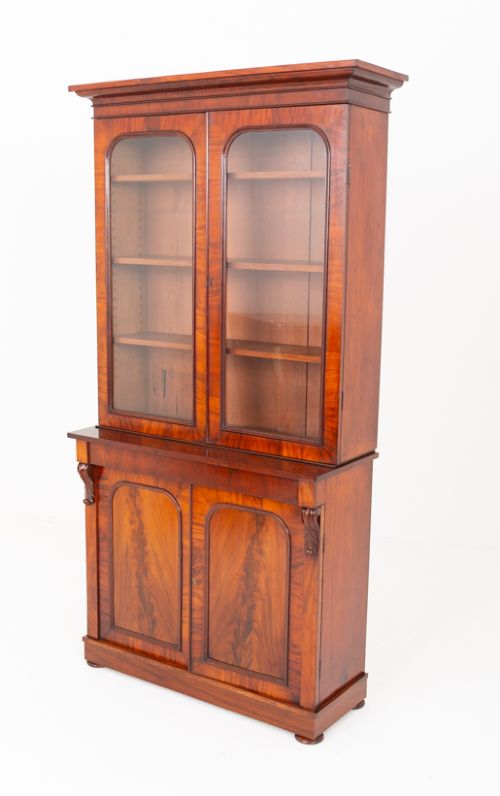
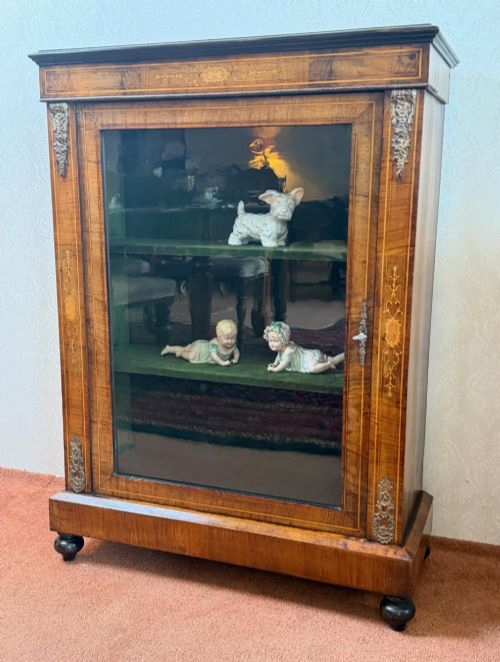
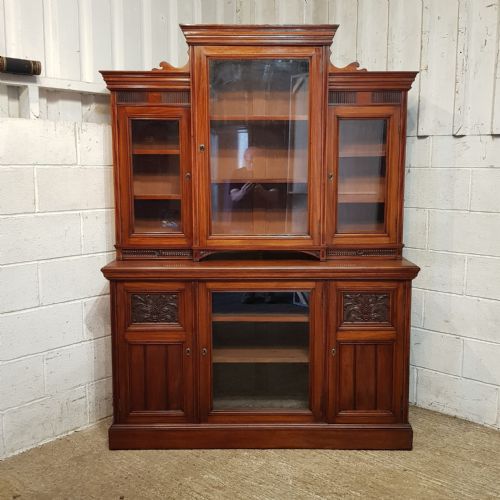
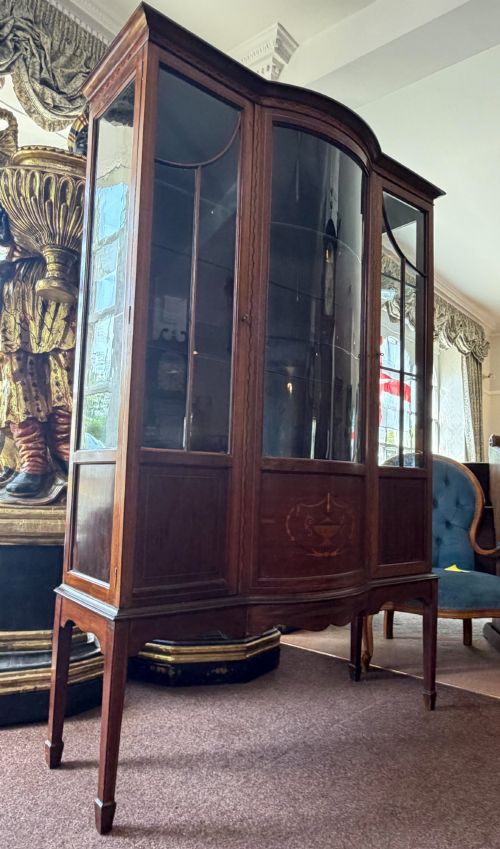
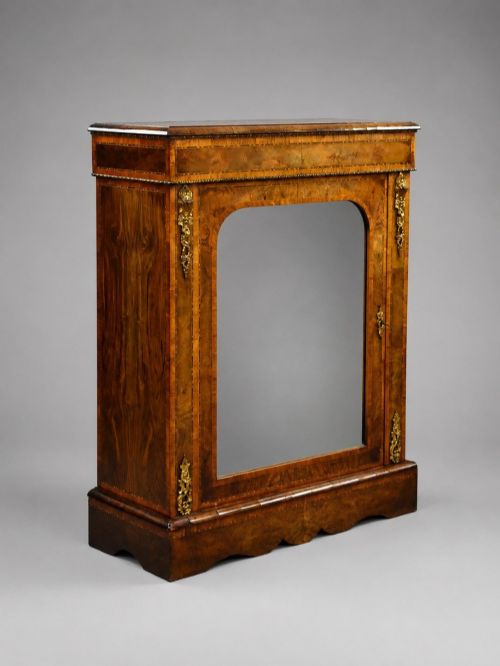
A victorian glazed front cabinet encompasses diverse nineteenth-century forms designed to display possessions through glass doors. The selection spans tall bookcases, credenzas, pier cabinets, and compact corner cupboards originating across the Victorian era.
Bookcases and secretaire variants dominate the larger pieces, while pier cabinets and small credenzas offer lower profiles suitable for domestic display. Pieces frequently date from the eighteen-fifties through the end of the century, reflecting shifting revival styles.
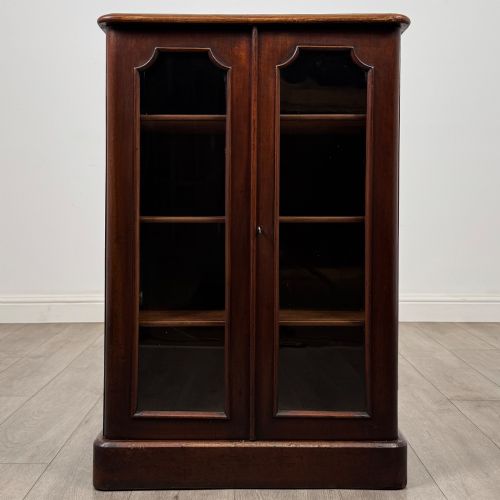
Makers utilised mahogany, walnut, and satinwood to construct these cabinets, often incorporating glazed panels to protect libraries and collections from dust. Surviving examples demonstrate how nineteenth-century households balanced utility with formal display.
Materials and Technique
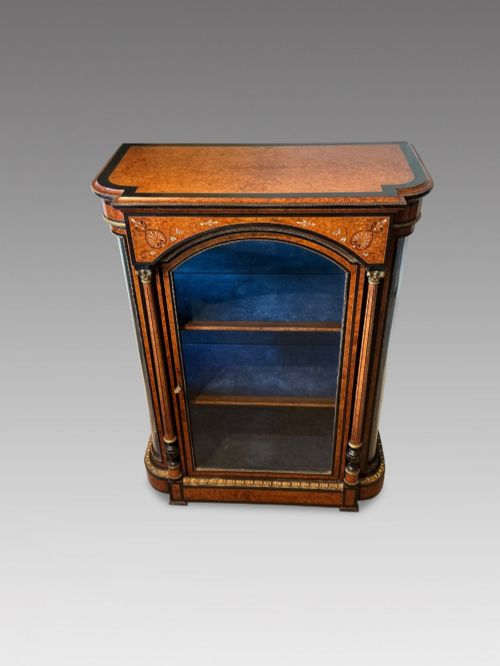
Cabinet makers built carcasses in solid timbers such as mahogany and pine, applying burr walnut or satinwood veneers to prominent exterior surfaces. These veneers created rich grain patterns on doors and friezes, supported by precise marquetry inlay and brass mounts.
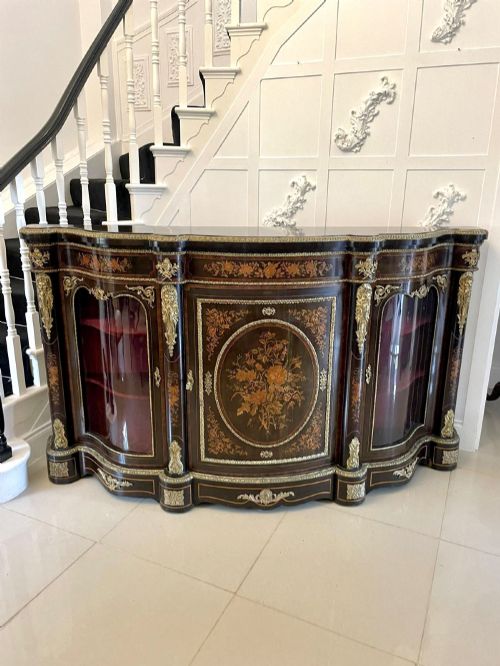
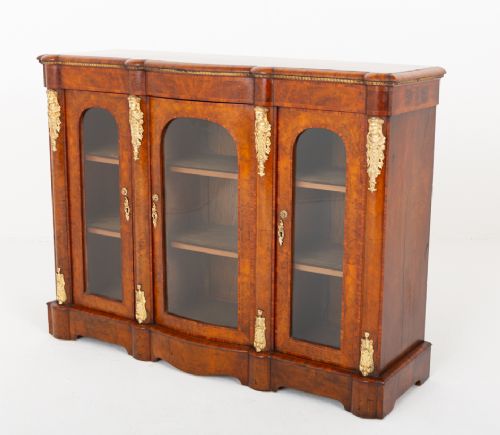
Glazing bars divided glass panes into geometric or curved arrangements, requiring precise joinery to support large apertures. Ormolu mounts and velvet linings added ornamental detail to high-status display pieces and credenzas.
Music filing cabinets disguised sheet music storage as elegant parlour furniture.
Distinctions in Quality
Quality rests in the selection of timber figures, such as highly figured burr walnut or carefully matched satinwood, and the crispness of inlaid marquetry. Finer cabinets display meticulous joinery in the framing of glass doors and the integration of ormolu mounts.
Makers such as Edwards & Roberts distinguished their output through refined proportions and detailed internal fittings like cylinder desks or velvet-lined shelves. Lesser pieces rely on simpler pine carcasses with straightforward mahogany veneers and minimal ornamentation.
Edwards & Roberts
The Victorian Glazed Front Cabinet Glossary
- Vitrine
- A glass-fronted display cabinet intended for porcelain and ornaments. It isolates delicate objects while offering all-round visibility.
- Pier cabinet
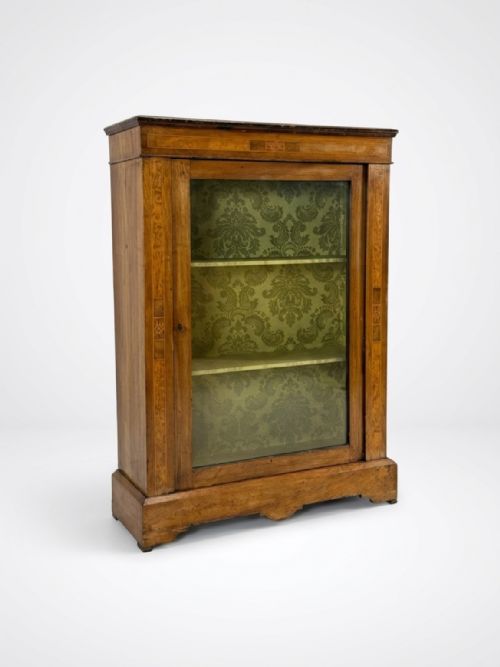
- A low freestanding cabinet designed to fit against the wall space between windows. These compact pieces often feature glazed doors and walnut veneers.
- Credenza
- A low sideboard or cabinet featuring central cupboards flanked by curved glass ends. They frequently display marquetry inlay and ormolu mounts.
- Marquetry
- Decorative veneer work forming pictorial or geometric patterns using various coloured woods. Craftsmen cut contrasting timbers to fit flush within the surface.
- Ormolu
- Gilt bronze mounts applied to cabinet furniture for decorative enrichment. This French technique provides metallic contrast against dark walnut and mahogany.
Victorian Glazed Front Cabinet: Frequently Asked Questions
What is a pier cabinet?
A pier cabinet is a low nineteenth-century display piece designed to sit against the narrow wall section between windows. They typically feature single glass doors and burr walnut veneers.
These cabinets served to display porcelain and small ornaments in formal reception rooms without obstructing natural light from the windows.
How do I identify a secretaire bookcase?
A secretaire bookcase incorporates a fitted drop-front writing drawer hidden within the upper section of shelving and glazing. Lower doors conceal further shelf storage.
This dual function allowed homeowners to combine a domestic library with a concealed writing desk in a single piece of furniture.
Where should I place a credenza?
A credenza suits dining rooms or large living spaces where its long, low profile and glass doors can house display collections. They anchor well against expansive blank walls.
Ensure the room maintains stable humidity to protect nineteenth-century veneers and delicate marquetry inlays from warping.
What woods were used in these cabinets?
Cabinet makers utilised mahogany, walnut, burr walnut, and satinwood for exterior surfaces, often using pine for internal framing. Ormolu mounts and brass details provided contrast.
Finer pieces relied on exotic veneers and intricate floral marquetry to signal high status within Victorian interiors.