


Victorian Glass Stemware
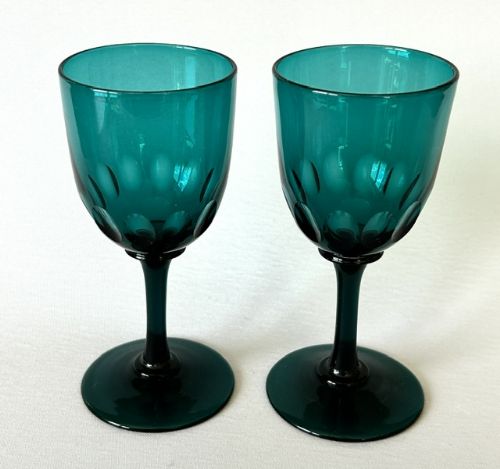
Victorian glass stemware brings tactile weight and rich colour to the table, spanning ruby cranberry, deep green and brilliant lead crystal.
Victorian Glass Stemware
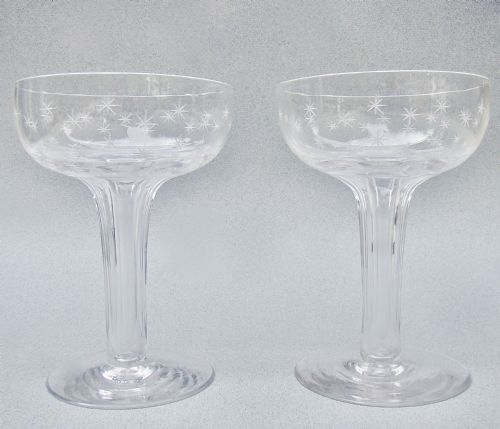
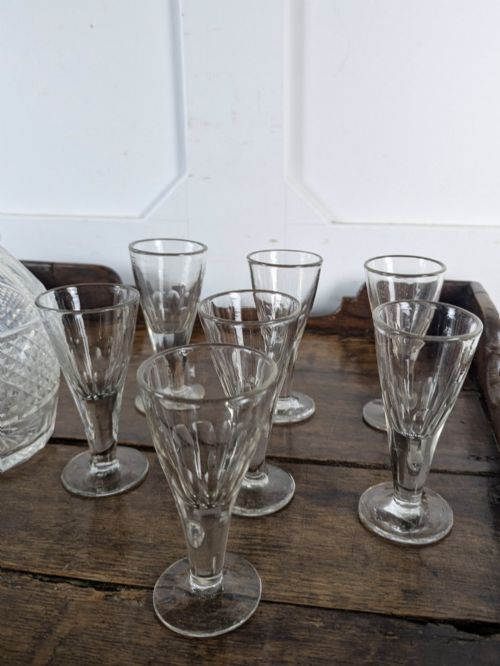
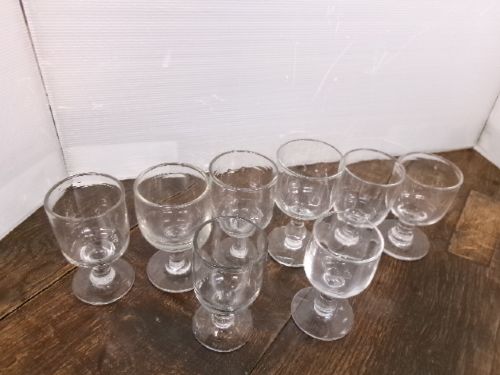
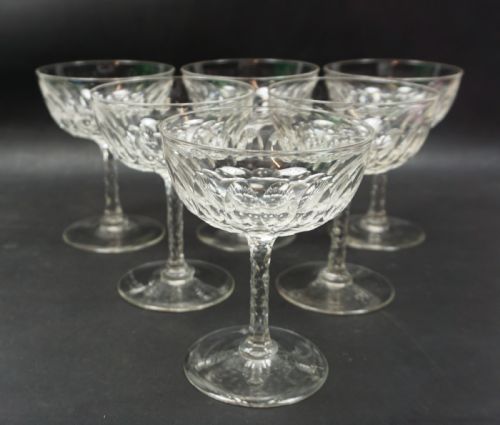
Victorian glass stemware encompasses functional drinking vessels and decorative table pieces produced during the nineteenth century, ranging from compact dessert wine glasses to substantial rummers and champagne coupes. The forms available reflect distinct dining habits of the period, including tall flutes for sherry, wide bowls for champagne and deep bowls for rich dessert wines.
Pieces frequently emerge in matched sets or assembled harlequin groupings, originating from English houses, Bohemian workshops and Italian glassmakers. Collectors encounter clear lead crystal alongside saturated hues such as cranberry, vaseline, aqua and Bristol green.
Materials and production
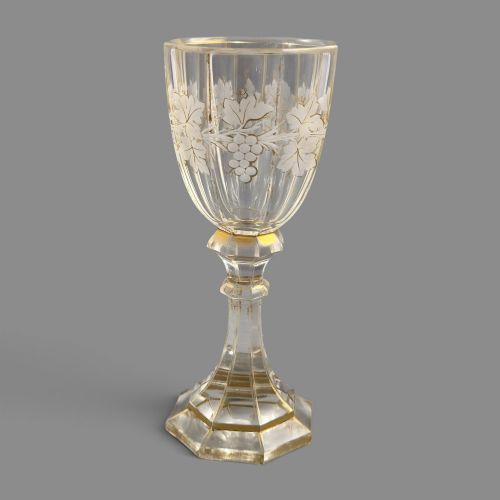
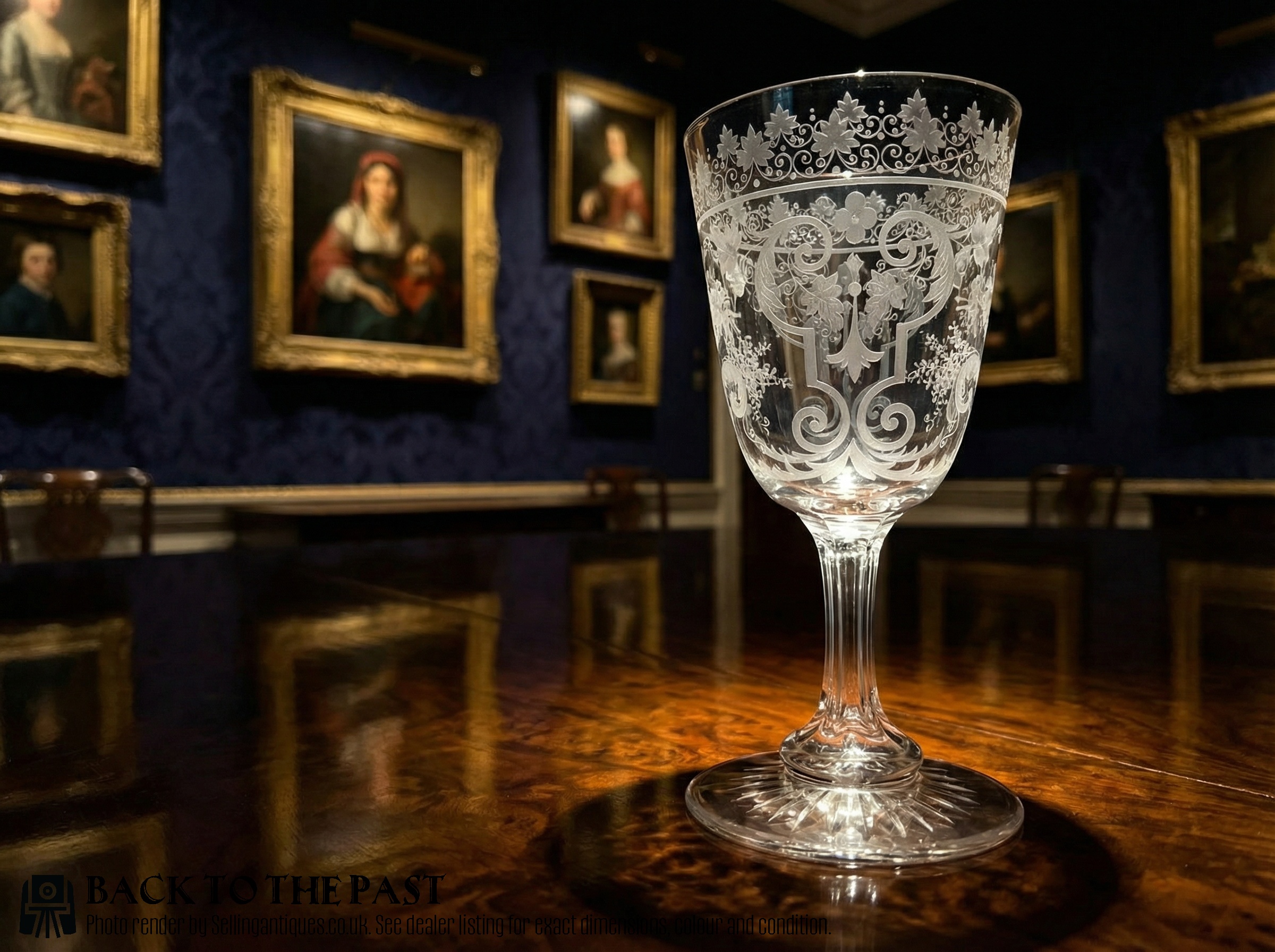
Makers utilised heavy lead crystal and coloured glass compositions, shaping vessels through hand-blowing into moulds or free-blowing by skilled gaffers. Surfaces were often enhanced through wheel-cutting, intaglio engraving, star-etching and acid cameo techniques.
Additional ornamentation involved applied gilding, enamel work and casing, where a layer of coloured glass was fused over clear crystal before being cut away to reveal contrast.
Materials represented include clear lead crystal alongside cranberry, vaseline, aqua and emerald green glass.
Craftsmanship and execution
Quality rests in the crispness of the wheel-cut facets, the depth of the intaglio engraving and the uniformity of hand-blown bowls and stems. Superior examples display precise symmetry, clear metal without distracting bubbles, and delicate, well-proportioned stems such as hollow or bobbin forms.
The sophistication of surface decoration separates standard production from exceptional work, particularly where gilding is hand-applied or cameo carving exposes exact layers of cased colour.
Moser·Fritz Heckert·Salviati·Stevens & Williams
The Victorian Glass Stemware Glossary
- Cranberry glass
- Transparent glass coloured with gold chloride, yielding a distinctive pinkish-red hue popular for Victorian dessert and wine services.
- Rummer
- A large, sturdy drinking glass originating in the Georgian era and continuing into the nineteenth century, used for ale, wine or punch.
- Intaglio
- A technique where designs are sunk into the surface of the glass using small rotating wheels, creating a carved, recessed motif.
- Vaseline glass
- Uranium glass that exhibits a distinct yellowish-green colour and fluoresces under ultraviolet light.
- Tazza
- An elevated, shallow cup or bowl mounted on a stem and foot, utilised for serving fruit or sweets on the Victorian table.
Victorian Glass Stemware: Frequently Asked Questions
Can I use these glasses daily?
These vessels suit careful everyday use if handled gently and washed by hand without harsh abrasives. Their sturdy lead crystal construction often provides more durability than modern thin-walled glassware.
Mind the thin rims and applied stems of antique champagne coupes and wine glasses when toasting or storing them in cupboards.
What is the difference between lead crystal and standard glass?
Lead crystal contains a high percentage of lead oxide, which increases the weight, refractive index and acoustic resonance of the material. This composition allows cutters to achieve sharper, more brilliant facets than ordinary glass permits.
Standard glass feels lighter in the hand and lacks the characteristic high-frequency ring produced when lead crystal is gently tapped.
How can I tell the period of a piece?
Dating relies on observing stylistic markers, pontil mark characteristics on the base, manufacturing techniques and colour palettes typical of specific decades. Mid-century pieces often feature heavier Georgian-influenced proportions, while later Victorian items embrace diverse revivals and vibrant saturated tones.
Consulting known maker signatures or specific decorative motifs like acid cameo or elaborate wheel-engraving helps narrow down the production era.