


Red Blown Glass Glasses
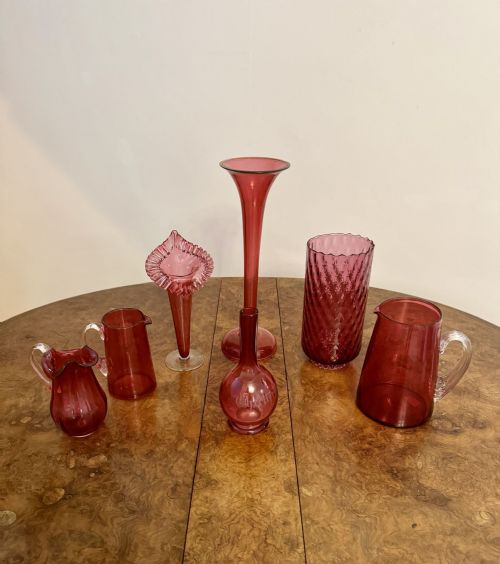
These red blown glass glasses bring a vibrant warmth to the table, combining rich cranberry tones with the unmistakable texture of Victorian hand-blown stemware.
Red Blown Glass Glasses
When you search for red blown glass glasses, you encounter distinctive nineteenth-century drinking vessels shaped by skilled hands. The pieces available focus primarily on Victorian wine glasses rendered in deep cranberry shades.
These items span several decades of production from the mid-nineteenth century through the Edwardian era. Alongside wine glasses, related forms such as decanters, jugs, and bowls frequently appear in the same characteristic red glass.
How they were made
The makers achieved the characteristic red coloration by introducing gold salt additives into the molten metal during the blowing process. Artisans shaped the vessels using traditional hand-blown techniques, sometimes layering cranberry glass over clear crystal to create depth.
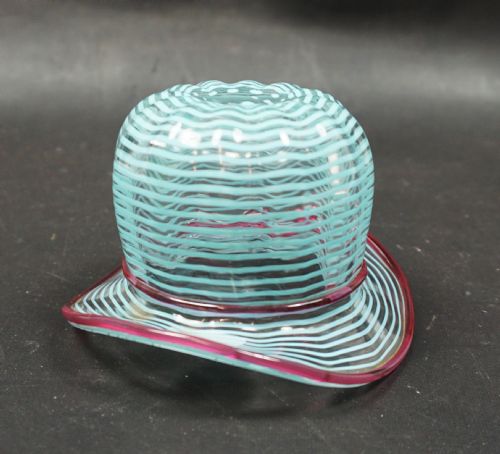
Certain pieces incorporate additional decorative elements such as enamel detailing or applied white piping. Nailsea examples display distinct red and blue cane decoration embedded directly within the clear or coloured glass body.
Victorian glass rolling pins in red and blue served as sailor's tokens of affection rather than kitchen tools, safely hung on cottage walls.
What varies in quality
The depth and consistency of the cranberry colour set finer examples apart from simpler work. The richness of the hue depends directly on the precise proportion of gold salt used in the molten batch.
Hand-blown stems and applied details reveal the proficiency of the individual maker through their symmetry and balance. Uniformity in wall thickness and the absence of heavy distortion distinguish superior table service sets.
The Red Blown Glass Glasses Glossary
- Cranberry Glass
- A type of transparent, red-pink glass produced by adding gold chloride or gold salt to the batch. It became widely popular during the Victorian period for tableware and decorative items.
- Hand-blown Glass
- Glassware formed by inflating molten glass gathered at the end of a blowpipe using human breath and hand tools. This method often leaves slight individual variations and pontil marks on the base.
- Cane Glass
- Glass incorporating thin rods or threads of coloured glass fused into the body during shaping. Nailsea pieces frequently utilise this technique for striped patterns.
- Enamel
- Opaque glass material applied to the surface of a finished vessel as decoration before firing. It sits slightly raised above the primary glass body.
Red Blown Glass Glasses: Frequently Asked Questions
How do I clean antique cranberry wine glasses?
Wash these delicate pieces by hand in warm water using a mild liquid detergent. Avoid abrasive sponges and harsh dishwashers to protect the historical surface.
Dry them immediately with a soft lint-free cloth to prevent water spots from forming on the hand-blown glass.
Can I use these glasses for daily dining?
While sturdy enough for careful handling, these nineteenth-century wine glasses suit special occasions better than heavy everyday use. Their historical nature and delicate hand-blown stems call for gentle treatment.
Store them securely in a dedicated cabinet rather than a crowded modern cupboard to prevent accidental chipping.
How do I date Victorian cranberry glass?
Examine the pontil mark on the base and the overall weight of the glass to gauge the period of manufacture. Earlier nineteenth-century examples often display rougher pontil scars where the blowpipe was detached.
Consult the stylistic details such as the shape of the bowl and the presence of any accompanying enamel or cane decoration for further context.
What makes cranberry glass red?
The distinct red colour originates from gold salt additives mixed into the molten glass batch. When subjected to specific reheating and cooling cycles, the gold particles produce the characteristic cranberry hue.
Variations in temperature and gold concentration result in shades ranging from pale pink to deep ruby red.