


Victorian Cranberry Wine Glasses
Victorian cranberry wine glasses bring rich colour to the table, combining deep pink hues with hand-blown glass forms that collectors prize for period dining.
Victorian Cranberry Wine Glasses
When you search for victorian cranberry wine glasses, you enter a sphere of nineteenth-century glassware defined by vibrant pink and red tones. These pieces appear primarily as matched sets of stemware, alongside complementary decanters and carafes.
The objects seen here date mainly from the Victorian and Edwardian eras, spanning the mid-nineteenth century through to the early twentieth century. Sets commonly arrive in groups of six or more, shaped for serving wine during formal dining.
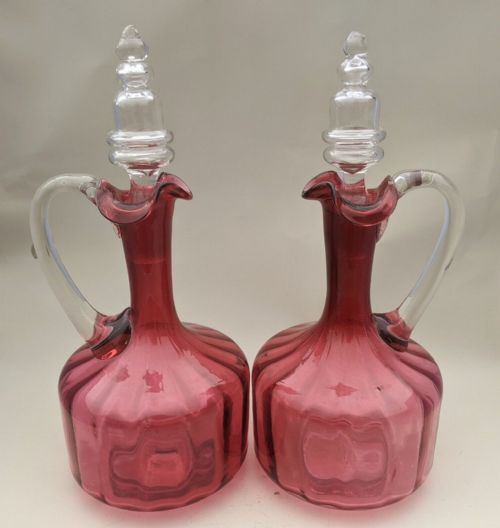
Makers utilised techniques such as glass blowing and overlay methods to create depth within the bowls. Alongside the wine glasses, the selection includes related serving bottles and hock decanters bearing engraved motifs.
Materials and methods
Glassmakers created the characteristic colour by adding gold to the molten glass batch during production. Artisans then formed the wine glasses using hand-blown techniques, resulting in individual stemware with subtle variations in shape and tone.
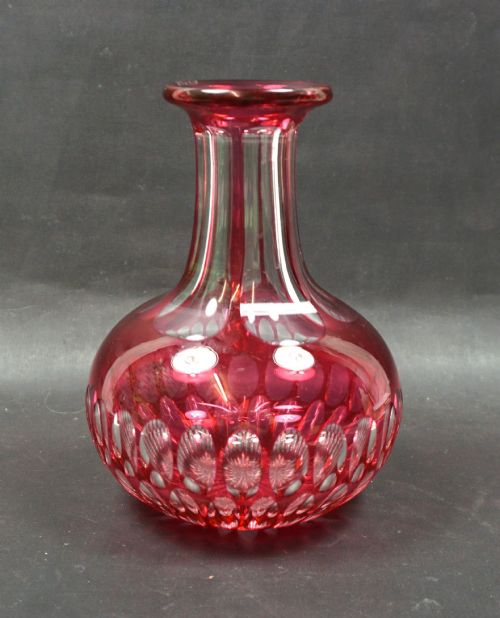
Overlay methods appear frequently, fusing layers of cranberry glass over clear crystal or ruby glass foundations. Craftsmen then cut or engraved these outer layers to reveal the contrasting clear glass beneath, often depicting birds and fruiting vines.
Listings feature items spanning the nineteenth century, including pieces dated to eighteen-sixty, eighteen-eighty, and the Edwardian era.
Judging the glass
Quality rests upon the depth and consistency of the cranberry colour across a set, together with the crispness of any engraved details on the bowl. Finer examples display precise wheel-engraving depicting natural motifs such as vines and birds.
The weight and balance of the hand-blown stemware distinguish superior examples from standard production pieces. Uniformity within a set of multiple glasses also elevates the piece, especially when the depth of the pink hue matches evenly across every vessel.
The Victorian Cranberry Wine Glasses Glossary
- Cranberry Glass
- A type of transparent glass coloured with gold chloride during the melting process. It yields rich pink to deep red shades typical of nineteenth-century tableware.
- Overlay Glass
- A technique involving two or more distinct layers of glass fused together while hot. Artisans cut through the outer layer to expose the contrasting colour underneath.
- Hock Decanter
- A tall serving bottle traditionally used for German white wines or hock. These vessels often feature colour-over-crystal construction and engraved botanical decoration.
- Champagne Coupe
- A broad, shallow bowl on a slender stem designed for sparkling wines. Victorian examples frequently incorporate cranberry bowls paired with clear crystal feet.
Victorian Cranberry Wine Glasses: Frequently Asked Questions
How do I clean antique cranberry glass?
Wash these pieces by hand in warm water using a mild detergent. Avoid abrasive sponges or harsh chemicals that might damage the surface.
Dry the stemware immediately with a soft cloth to prevent water spots on the clear and cranberry glass surfaces.
Can I use these wine glasses daily?
Hand-blown antique stemware requires careful handling during use and storage. Many collectors reserve them for special occasions rather than daily dining.
Store the glasses securely in a cabinet where stems remain free from knocks and sudden temperature shifts.
What is harlequin set?
A harlequin set consists of individual glasses that share a similar style or colour palette but were not originally manufactured together. Collectors assembled these groups over time from matching nineteenth-century components.
Such collections offer a varied display while maintaining a cohesive aesthetic on the dining table.
How do I date these glasses?
Examine the pontil mark on the base of the glass or decanter to check for signs of hand-blown manufacture. Pontil scars indicate production methods common in the nineteenth century.
Compare the depth of the cranberry colour and the style of engraving with documented pieces from the Victorian and Edwardian periods.