



Victorian Glass Panel
When you search for a victorian glass panel, you find architectural fragments and decorative windows made of leaded, stained, and painted glass from the nineteenth century.
Victorian Glass Panel
A victorian glass panel encompasses everything from church window fragments to domestic door inserts and shop window panels produced during the nineteenth century. These objects function primarily as architectural salvage, serving to bring coloured light and pictorial narrative into interior spaces.
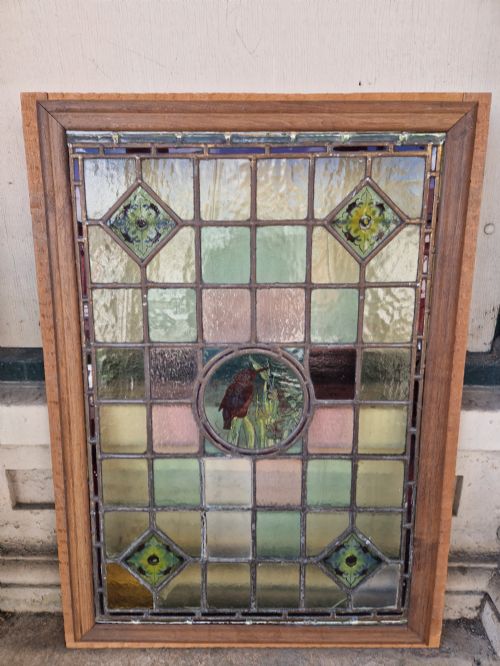
The versions most commonly met on this page include leaded windows featuring hand-painted countryside scenes, heraldic emblems, or botanical motifs. Many originate from residential doors, external sashes, or ecclesiastical buildings, retaining their original lead cames and timber frames.
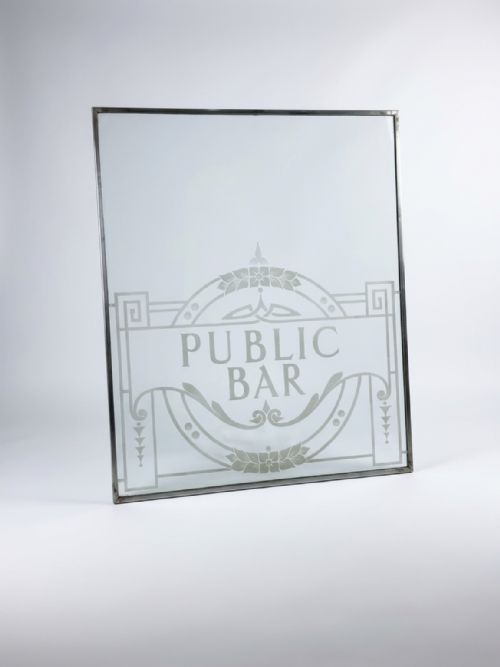
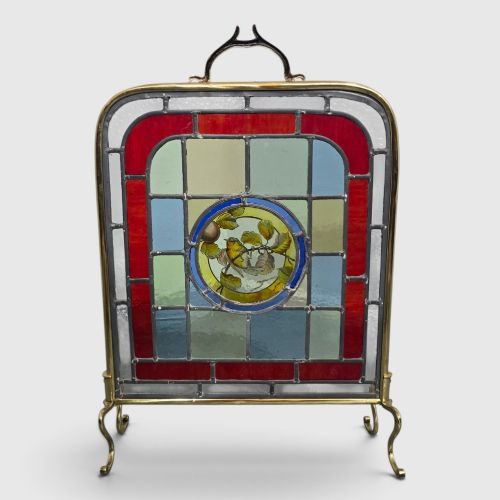
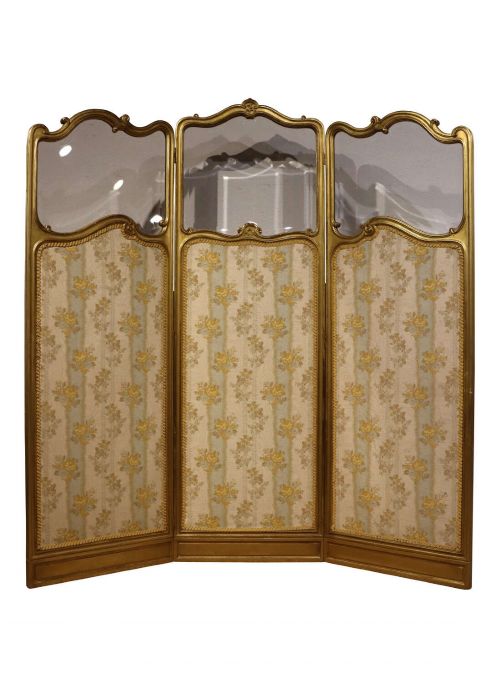
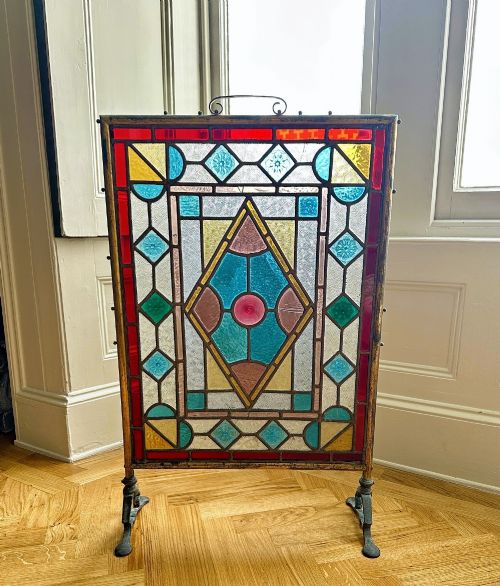
Beyond structural windows, the category extends to decorative display items such as reverse glass painted signs, fire screens, and cabinet door inserts. These smaller domestic forms adapt the heavy stained and etched techniques of larger architectural pieces for room dividers and wall hanging.
How they were made
Support structures typically involved wooden frames made from pine, oak, or pitch pine, sometimes complemented by iron stands or brass mounts for freestanding screens. The integration of bevelled edges, bullseyes, and cut glass components added texture and redirected light across the interior.
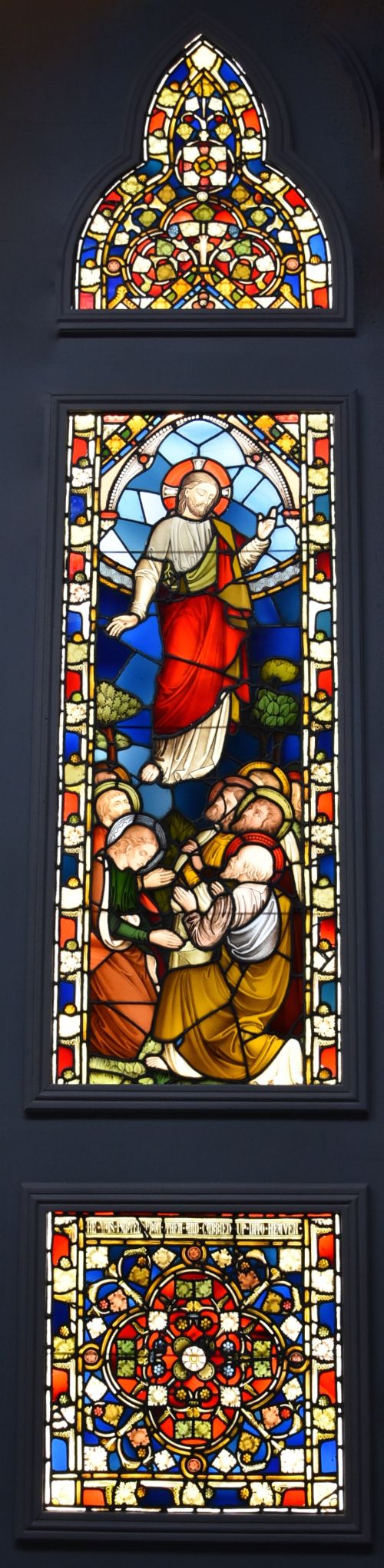
The archive records Victorian architectural salvage panels depicting musical instruments, religious figures, and rural landscapes.
What varies in quality
The artistic ambition of the painted or stained design dictates the upper tier of the range, separating simple geometric leaded glazing from complex figurative compositions depicting knights, birds, or ecclesiastical figures. Fine brushwork, detailed enamel firing, and pictorial depth indicate skilled workshop production rather than mass output.
The integrity of the leading and the original state of the glass also determine distinction, with intact historical frames and untouched lead matrices commanding greater interest. Salvage that retains its original context, such as a complete door or a signed ecclesiastical window, holds superior provenance.
Swaine Bourne
The Victorian Glass Panel Glossary
- Came
- A slender strip of cast lead with a grooved channel used to hold individual pieces of glass together in a window or panel. These strips form the geometric or pictorial grid of the design.
- Bullseye
- A small, circular disc of glass featuring a prominent central pontil scar, formed during traditional glassblowing. These are often incorporated into leaded panels to admit distorted light.
- Acid Etching
- A chemical technique utilising hydrofluoric acid to eat away the surface of glass and create frosted or opaque patterns. This method allowed makers to produce intricate repeatable designs without surface painting.
- Ecclesiastical
- Pertaining to the Christian church, describing panels salvaged from chapels or cathedrals. These items frequently depict saints, biblical scenes, or religious symbols.
- Architectural Salvage
- Building materials and decorative elements rescued from structures slated for demolition or renovation. This includes doors, windows, and partition panels removed from period properties.
Victorian Glass Panel: Frequently Asked Questions
Where were these panels originally installed?
Original locations included the interior doors, exterior sash windows, and transoms of Victorian homes, as well as churches and commercial shopfronts. Many served as room dividers or decorative screens within domestic halls.
Over time, architectural salvage practices removed these panels from their structural settings to preserve the decorative glass for interior display.
How do I hang a stained glass panel?
Heavy leaded panels require robust hanging systems attached directly to window frames or wall studs using steel brackets or chain supports. Because lead is malleable and sags under its own weight, the panel needs adequate structural backing.
Freestanding versions like firescreens or folding room dividers use integrated wooden feet, brass hinges, or iron stands to remain upright without wall attachment.
Are painted scenes on the glass fired?
Makers used vitreous enamel paints that were permanently fused to the glass surface through high-temperature kiln firing. This chemical bond prevents the pigment from flaking off over decades of exposure to light and moisture.
Hand-painted details on nineteenth-century panels rely on this traditional kiln-fired technique to maintain their clarity and colour depth.
How can I distinguish church glass from domestic glass?
Ecclesiastical panels typically feature religious iconography such as saints, biblical figures, or Latin inscriptions, often executed with heavier lead cames and rich, dense coloration. Domestic windows favour secular motifs like landscapes, birds, floral swags, or agricultural scenes.
Domestic pieces also appear more frequently in standard door and window dimensions suited to residential architecture rather than large lancet church openings.