
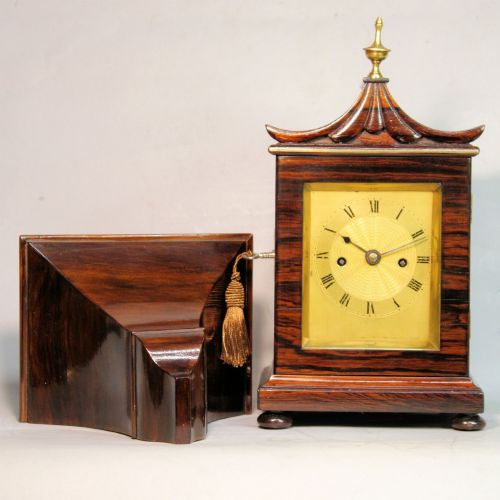

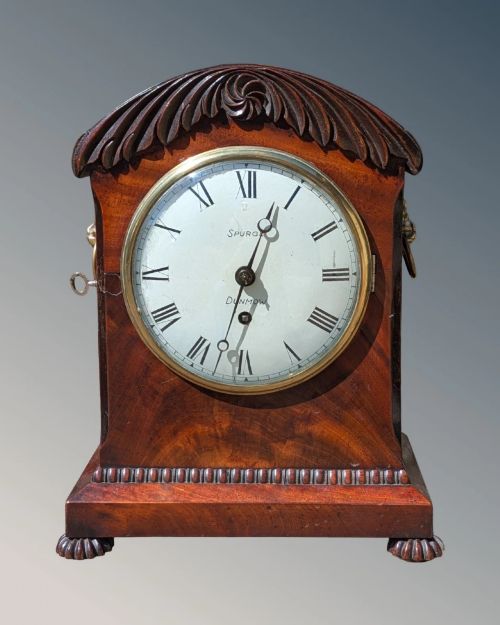


Victorian Fusee Mantel Clock
A victorian fusee mantel clock is a precision mechanical timepiece driven by a conical pulley and chain, housed in a substantial wooden or brass frame.
Victorian Fusee Mantel Clock
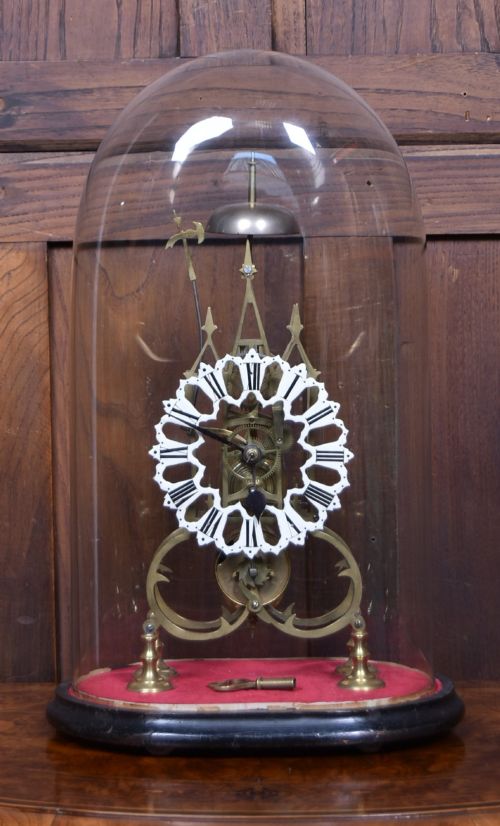
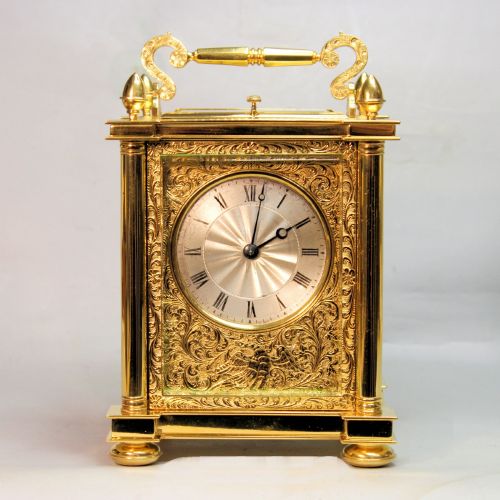
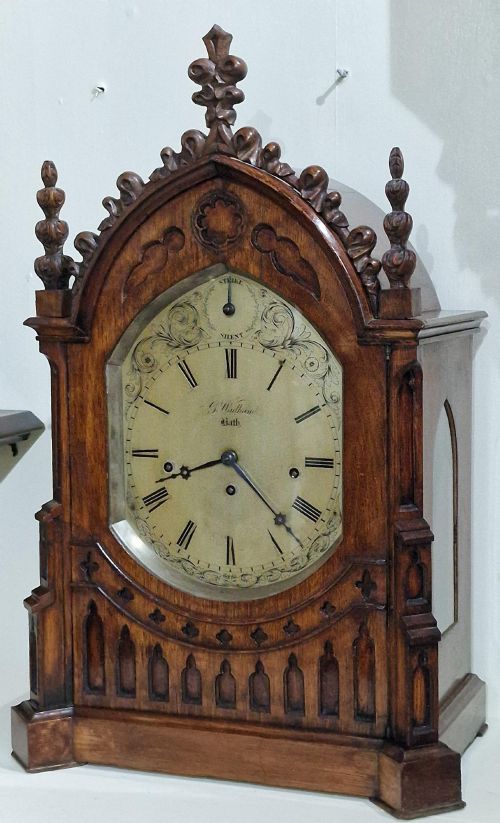
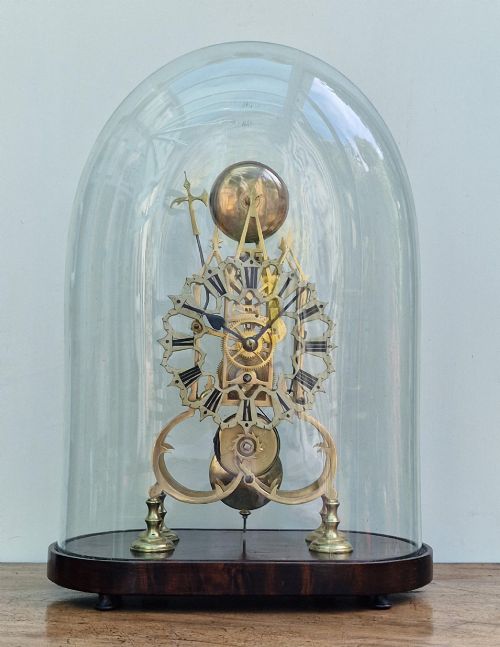
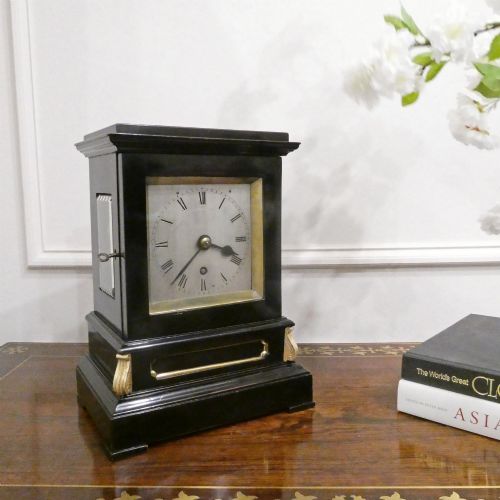
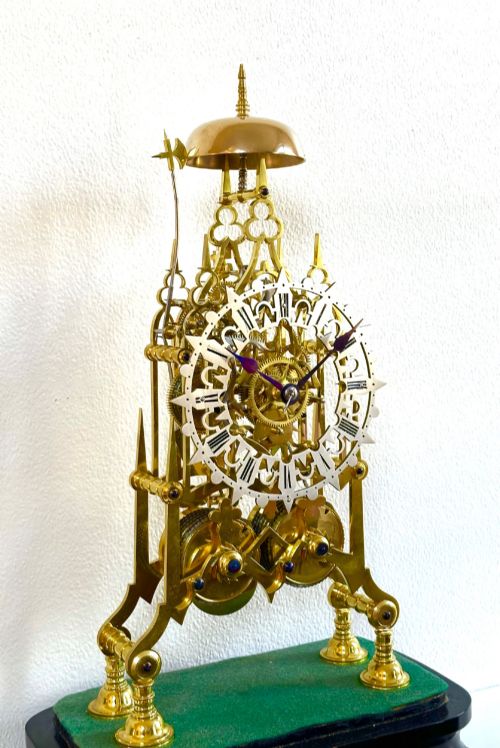
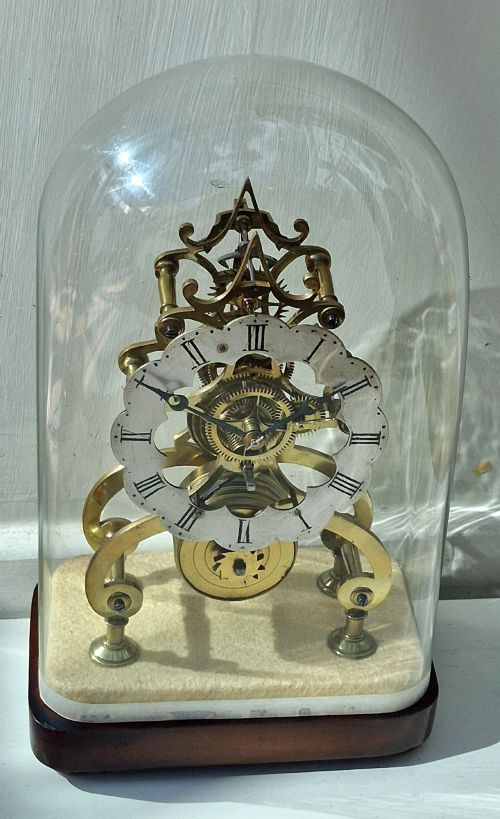
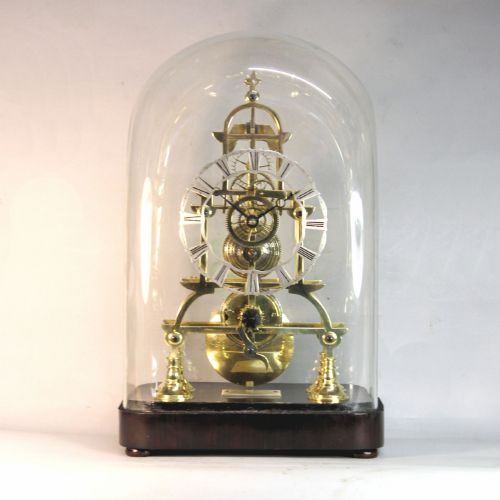
When you search for a victorian fusee mantel clock, you encounter wooden table clocks, brass skeleton models exposed under glass domes, and heavy library timepieces. The material ranges across mahogany, ebonised wood, oak, rosewood, and bronze, spanning periods from the early nineteenth century through to the eighteen nineties.
The most common formats on this page are mahogany bracket clocks and open skeleton designs that reveal the brass gear trains. These pieces originated primarily in English workshops, varying from architectural Gothic revivals to simple lancet and balloon shapes.
Materials and movement
The defining mechanical element is the fusee, a grooved cone that equalises the declining power of the mainspring as it unwinds. This mechanism connects via a fine chain or gut line to a brass wheel train, regulated by an anchor escapement and pendulum.
Casework relies heavily on solid mahogany, bronze, and ebonised wood, frequently enclosing silvered metal dials and protective glass domes. Makers mounted the complex brass movements securely into heavy wooden carcasses or built them as freestanding skeleton structures.
Listings feature nineteenth-century materials including mahogany, ebonised wood, marble, and brass, styled across Victorian Gothic, Regency, and Rococo revivals.
Distinctions in craftsmanship
Quality rests in the crispness of the brass wheel cutting, the hand-engraving on the backplate, and the structural integrity of the timber case. Finer examples display meticulous fire gilding, solid silvered dials, and fully signed movements from notable London workshops.
Cousens & Whiteside·Richard Winter·Thwaites of London·Mappin & Webb·William Payne·Phillips Brothers·Geo Carter·Thomas Cole·Joseph Jump·Budgen Croydon·Funnell of Brighton·James Moore
The Victorian Fusee Mantel Clock Glossary
- Fusee
- A conical pulley designed to counteract the uneven pull of a mainstream as it unwinds. This ingenious device ensures consistent force is delivered to the clock train for accurate timekeeping.
- Skeleton clock
- A timepiece stripped of its traditional enclosing case to expose the brass plates, gear wheels, and escapement. These open structures are typically displayed beneath a blown glass dome.
- Bracket clock
- A portable table clock originally designed to sit upon a matching wall bracket or shelf. They frequently feature robust carrying handles and locking doors.
- Library clock
- A compact, sturdy timepiece built for desk or study use. They often utilise heavy five-glass brass frames or simple wooden cases.
- Escapement
- The mechanical linkage that restrains the gear train, converting rotational force into controlled impulses. It produces the characteristic ticking sound of the clock.
Victorian Fusee Mantel Clock: Frequently Asked Questions
How does a fusee movement work?
A fusee uses a spirally grooved cone that regulates the pull of the mainspring. As the spring unwinds and loses tension, the chain moves to a wider part of the cone to maintain steady power.
This clever geometric compensation ensures the clock maintains a consistent driving force throughout its entire run, leading to superior timekeeping accuracy.
What is the difference between single and double fusee?
A single fusee powers only the time-keeping mechanism, meaning the clock simply displays the hours and minutes. These are usually straightforward timepieces.
A double fusee adds a second train to drive a striking mechanism, which sounds the hours or quarters on a bell or gong. Triple fusees add even more complexity for musical chimes.
Why do skeleton clocks have glass domes?
Glass domes were manufactured to protect the exposed, delicate brass gear trains from accumulating dust and ambient moisture in nineteenth-century homes. Because skeleton clocks lack traditional wooden cases, the dome acts as a transparent shield.
This display method allowed contemporary owners to admire the intricate gear work while keeping the running parts clean and functioning properly.
Where were these clocks placed historically?
These clocks were primarily designed for prominent rooms in nineteenth-century households, such as libraries, drawing rooms, and hallways. Bracket clocks sat securely on wooden wall shelves or heavy furniture.
Smaller carriage and library models were easily moved between rooms as needed, providing reliable timekeeping wherever the household gathered.