

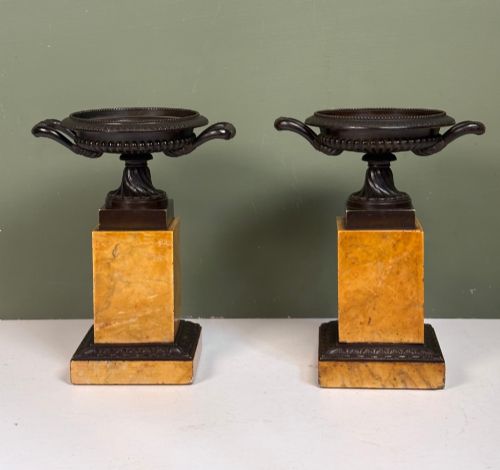
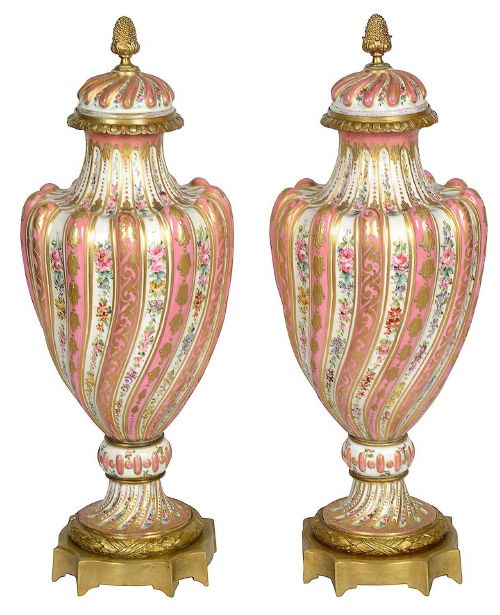


Victorian French Vase
These pieces combine the ornamental confidence of nineteenth-century craft with continental flair, giving a room instant historical weight.
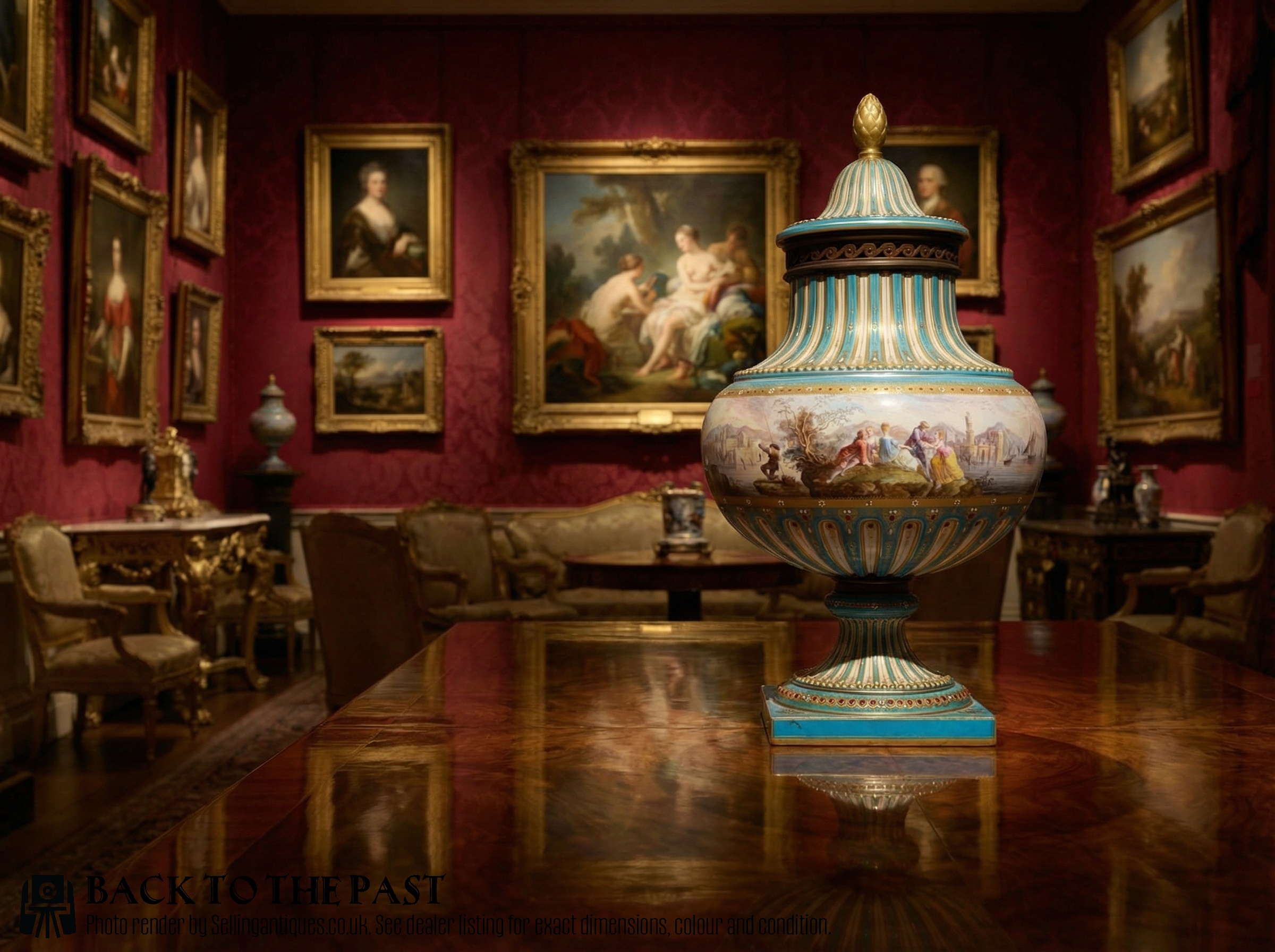
Victorian French Vase
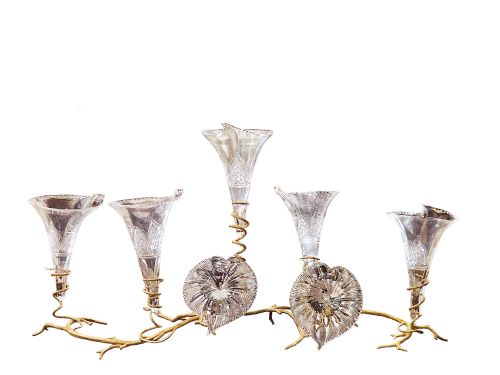
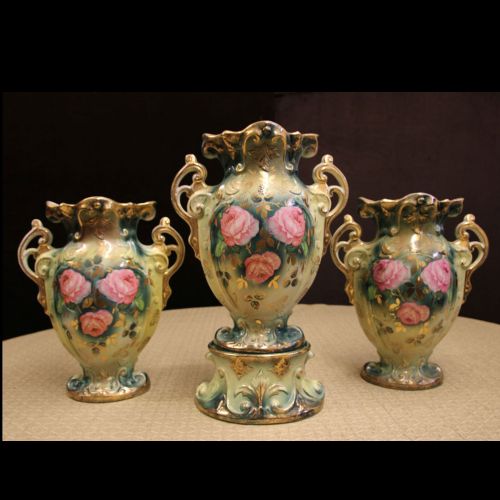
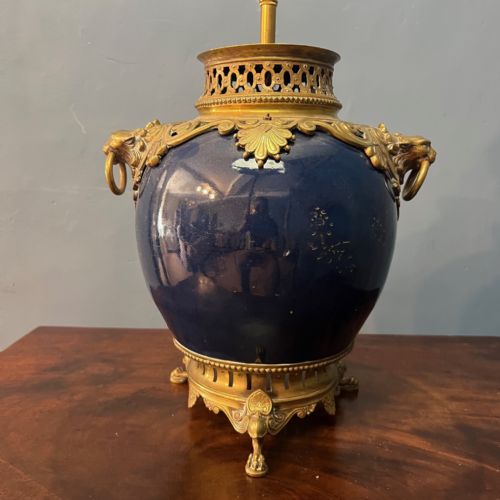
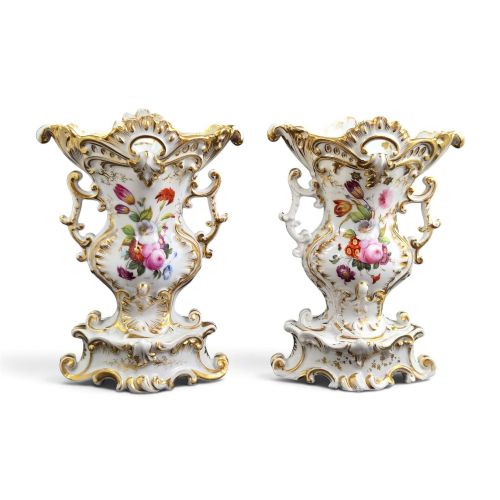
A victorian french vase serves primarily as a decorative focal point, drawing on styles such as Rococo Revival, Neoclassical, and Art Nouveau. Buyers encounter various forms on this page, ranging from lidded porcelain urns and trophy vases to glass epergnes and clock garnitures.
The selection reflects the diverse manufacturing output of nineteenth-century France, spanning decades from the eighteen-fifties to the turn of the twentieth century. Common materials include porcelain, opaline glass, and bronze mounts, often grouped in matching pairs for mantelpieces or centrepieces.
How they were made
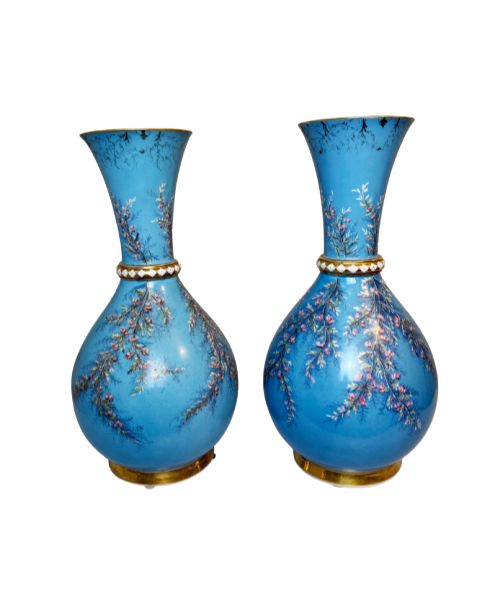
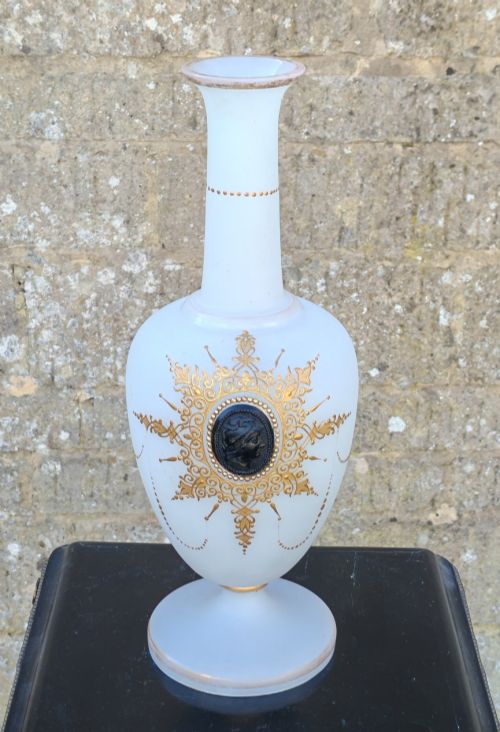
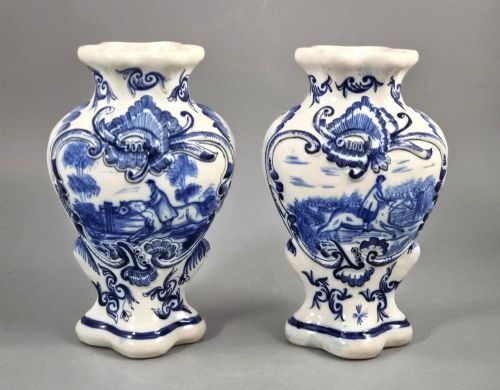
Ceramic bodies utilise hard-paste porcelain, faience, or pottery, frequently hand-painted with floral motifs and glazed in vibrant hues like pink, white, or bleu céleste. Glass examples incorporate hand-blown techniques, opaline methods, or cameo layering to achieve distinct textures.
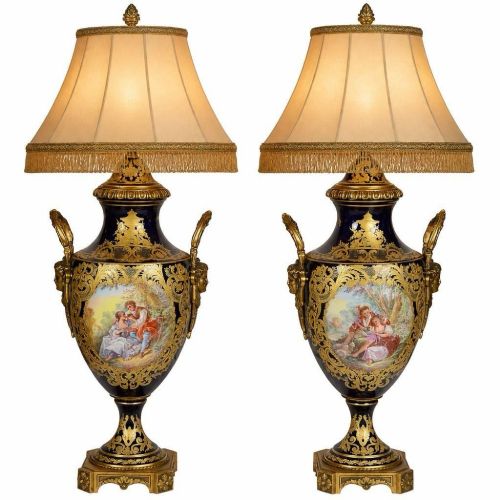
Metal components rely on bronze, brass, or gilt bronze, sometimes referred to as ormolu, cast with decorative masks, putti, and floral designs. Gold leaf and enamel additions provide surface enrichment, while marble plinths often support heavy bronze and spelter bodies.
Victorian French Vase Retail Price Guide 2026
Typical asking prices for victorian french vase among the pieces listed under this phrase on Sellingantiques today, from the lower quarter to the upper quarter. They describe what is for sale here now, not the wider market.
Listings feature nineteenth-century French pieces in porcelain, opaline glass, and gilt bronze.
What varies in quality
The precision of hand-painting on porcelain and the crispness of casting in bronze mounts dictate the upper tiers of quality. Finer examples display meticulous brushwork, deeply chased metalwork, and harmonious integration between the ceramic body and its metallic framework.
Subtlety in proportion and the weight of the materials used separate standard decorative ware from exceptional pieces. Superior items maintain integrity across matched pairs, with uniform gilding and balanced decorative elements such as handles or bacchic masks.
Sevres·Jacob Petit·Fourmaintraux Courquin·Baccarat·Vion et Baury
The Victorian French Vase Glossary
- Ormolu
- Gilded bronze applied to furniture and decorative objects. It involves treating brass or bronze with a gold amalgam.
- Garniture
- A set of matching ornamental vases or figures for a mantelpiece. These typically comprise a central vessel flanked by two smaller matching pieces.
- Opaline
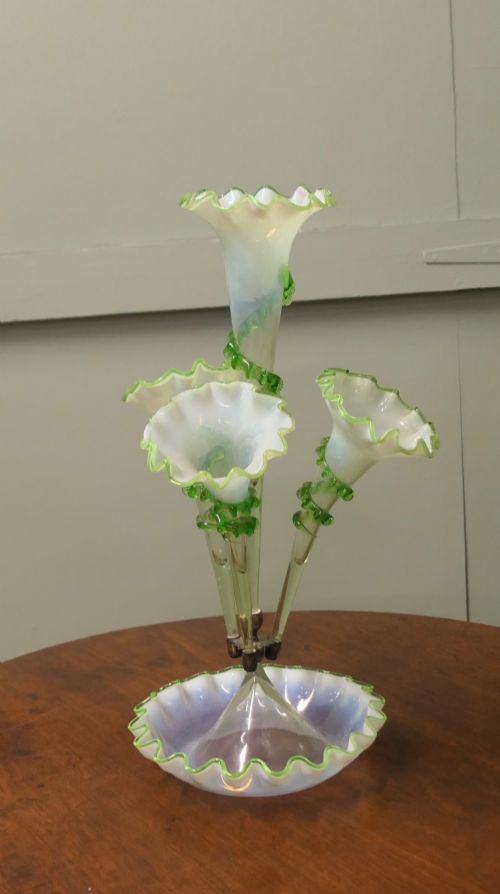
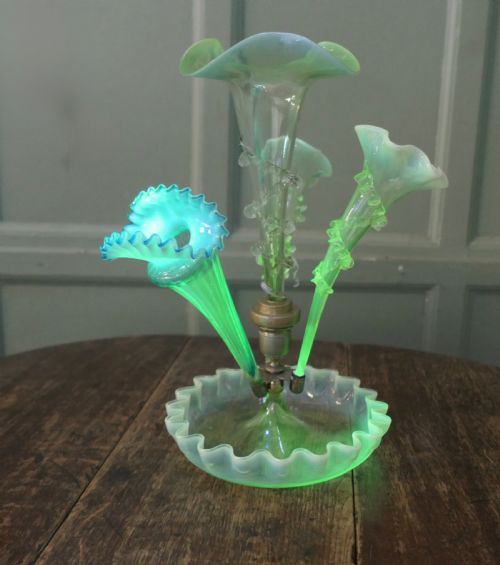
- An opaque or translucent glass popular during the nineteenth century. It often appears in shades of white, pale blue, or pink.
- Epergne
- An ornamental centrepiece table vessel featuring multiple branches or trumpets. They frequently combine glass, crystal, and gilt bronze elements.
- Spelter
- A zinc alloy used as a substitute for bronze. It is often bronzed or painted to imitate heavier metals.
Victorian French Vase: Frequently Asked Questions
What is a clock garniture?
A clock garniture is a matching set designed to sit together on a mantelpiece. It usually consists of a central clock accompanied by two matching vases or candelabra.
These sets were produced in great numbers during the nineteenth century, utilising porcelain, gilt bronze, and marble to create a unified decorative scheme for formal rooms.
How do I identify opaline glass?
Opaline glass is characterised by its distinctive opaque or semi-translucent appearance. It catches the light softly without being entirely clear.
Most pieces date to the mid-nineteenth century and appear in pastel shades like white, pale blue, and delicate pink, sometimes finished with enamel painting.
Were these vases made as pairs?
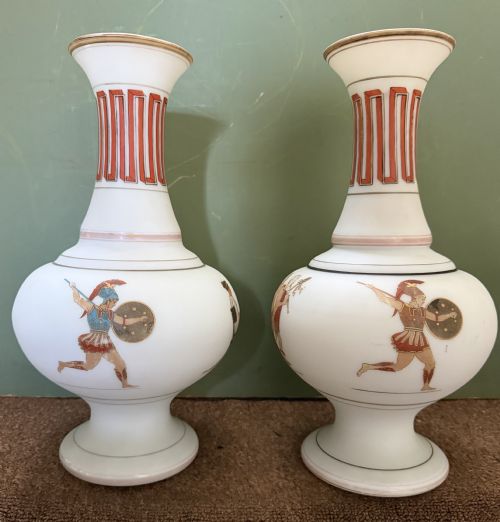
Many nineteenth-century decorative vessels were manufactured as matching pairs to frame a fireplace, sideboard, or table centrepiece. Symmetrical interior display was highly fashionable during this era.
Pairs often feature mirrored designs, ensuring that painted motifs or sculptural handles face inward or outward in a balanced arrangement.