




Bleu Celeste Vases
These bleu celeste vases bring vibrant sky-blue porcelain into a room, offering striking French decorative presence for collectors of nineteenth-century ceramics.
Bleu Celeste Vases
When you search for bleu celeste vases, you are looking at nineteenth-century French porcelain items often styled in the manner of Sèvres and influenced by Rococo Revival aesthetics. The pieces appearing here span lidded urns, pot pourri vessels, and occasional table lamp conversions.
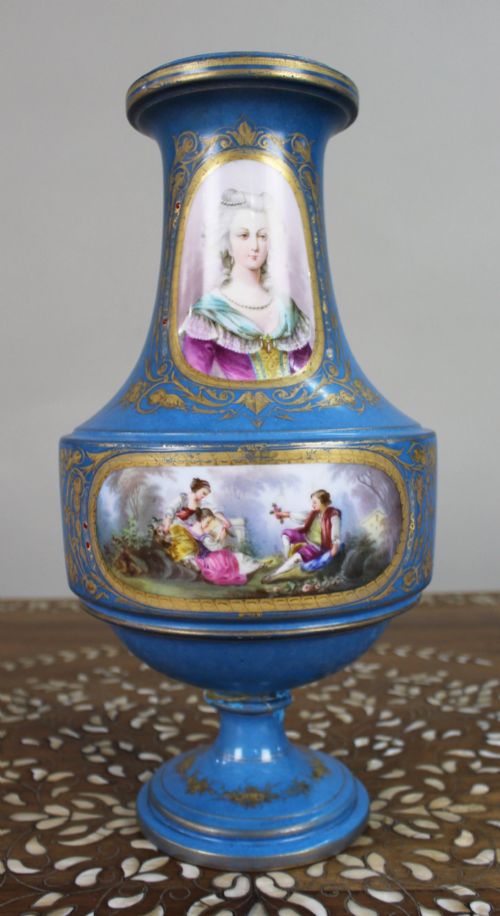
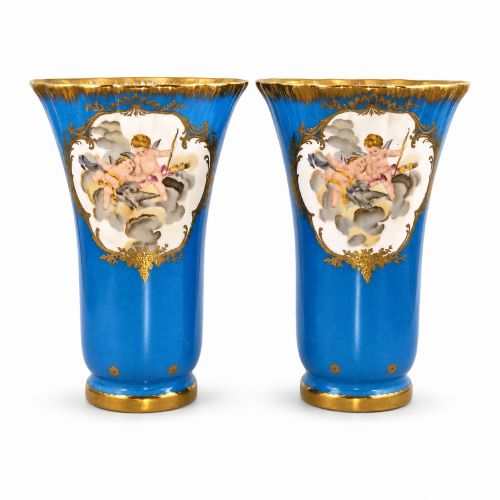
Most examples originate from the nineteenth century, including specific dates around eighteen eighty and eighteen seventy, alongside Samson Paris workshop interpretations. These objects frequently incorporate painted putti and floral motifs set against the characteristic pale turquoise ground.
Forms range from large decorative urns to matched pairs of vases, carrying strong French Chateau and Napoleon III stylistic associations. Buyers are most likely to encounter nineteenth-century production showcasing classical revival shapes and ornamental handles.
Materials and construction
Makers shaped these items primarily from porcelain, applying the distinct sky-blue enamel ground colour associated with the aesthetic. Artisans frequently painted figural scenes of putti and floral compositions directly onto the glazed ceramic surface.
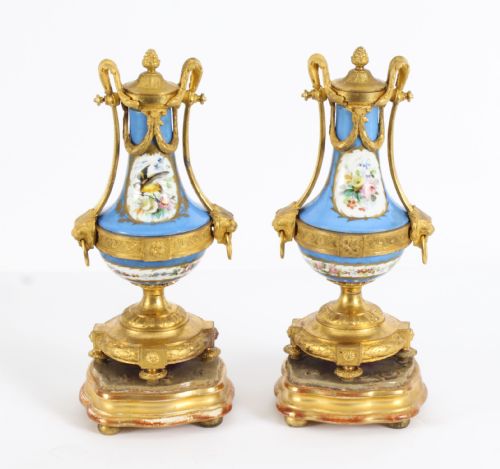
Mounts and embellishments typically involve ormolu, gilt bronze, gold leaf, and gilt metal, providing cast metallic collars, bases, and handles. Certain pieces integrate additional stone elements such as onyx alongside the primary porcelain body.
Listings feature porcelain, ormolu, gilt bronze, and onyx materials across nineteenth-century styles including Rococo Revival and Napoleon III.
Judging the quality
The standard of execution in the hand-painted putti and floral panels separates finer examples from standard decorative output. Detail in the brushwork determines the visual depth of the painted scenes.
The weight and precision of the ormolu mounts influence overall character, with finely chased gilt bronze outperforming simpler metal mountings. Integration between the ceramic body and the bronze hardware indicates the care taken during initial production.
Samson Paris
The Bleu Celeste Vases Glossary
- Bleu Celeste
- A bright sky-blue enamel colour used prominently on French porcelain, particularly associated with Sèvres. This distinctive ground shade defines the visual identity of these pieces.
- Ormolu
- Gilded bronze used for decorative mounts, handles, and bases on nineteenth-century ceramics. The technique involves applying a gold amalgam to a bronze base.
- Putti
- Depictions of chubby male infants, often winged, painted as decorative motifs on ceramic surfaces. They appear frequently in pastoral scenes on nineteenth-century French urns.
- Pot Pourri
- A vessel designed with a pierced lid to hold dried fragrant plant material, allowing scent to diffuse. These lidded vases often feature intricate perforations.
- Sèvres Style
- An aesthetic imitating the output of the famous French porcelain manufactory, encompassing specific forms, colours, and painting styles. Many nineteenth-century makers produced work in this taste.
Bleu Celeste Vases: Frequently Asked Questions
What is bleu celeste?
Bleu celeste translates to sky blue and refers to the vivid turquoise enamel ground colour developed by the Sèvres porcelain factory in the eighteenth century. Nineteenth-century makers adopted this specific hue to evoke high-status French royal porcelain.
The shade provides a bright backdrop for hand-painted panels depicting putti, birds, and flowers, usually framed by gilded scrollwork.
Are all these vases from Sèvres?
Most pieces on this page are nineteenth-century interpretations made in the Sèvres style or produced by other workshops such as Samson Paris. Actual eighteenth-century pieces are less common compared to the nineteenth-century revival outputs.
Makers across France produced these decorative urns and vases to satisfy Victorian demand for French Chateau aesthetics and Napoleon III opulence.
How were ormolu mounts used?
Ormolu mounts function as decorative and structural additions, including cast bronze collars, handles, bases, and finials finished with gold leaf or gilt. They frame the porcelain body and elevate the status of the vessel.
These mounts follow Rococo Revival designs, featuring scrollwork and acanthus leaves that complement the curves of the porcelain.
How do I live with them?
These large decorative vases and urns suit prominent placement on mantelpieces, pedestals, or large sideboards where their colour and ormolu mounts can be seen. Because many are substantial, they anchor a room with distinct nineteenth-century French character.
Some examples have been converted into table lamps, offering functional lighting while retaining their antique porcelain and gilt metal presence.
What motifs appear on the porcelain?
Painted decoration frequently includes putti, pastoral scenes, and floral arrangements framed within reserves against the sky-blue ground. These hand-painted elements are often highlighted with gilding.
Landscape scenes and botanical studies also appear on the body of larger lidded urns and vases.