



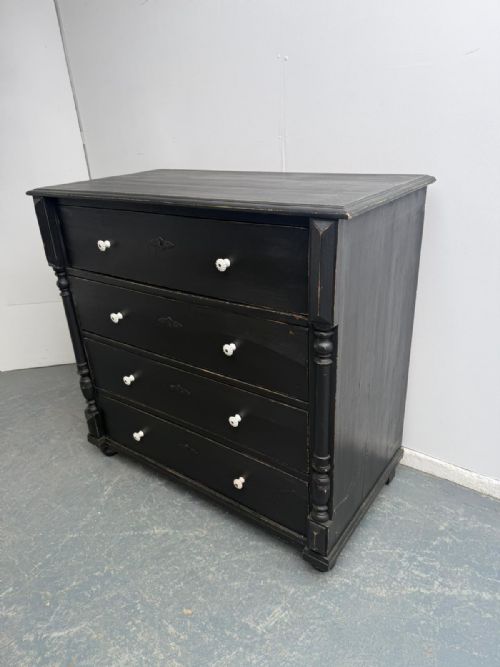
Victorian Four Drawer Chest
A victorian four drawer chest provides dependable bedroom storage, combining period timber work with practical capacity for daily use.
Victorian Four Drawer Chest
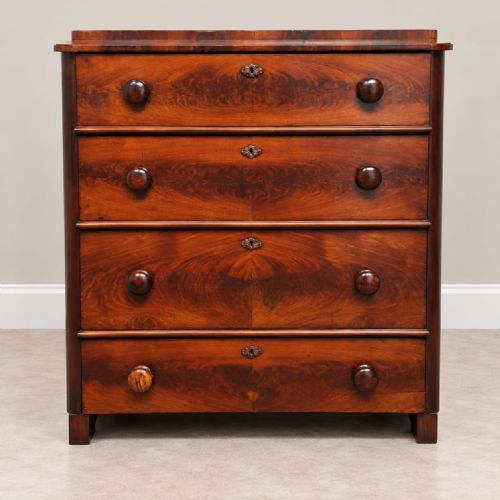
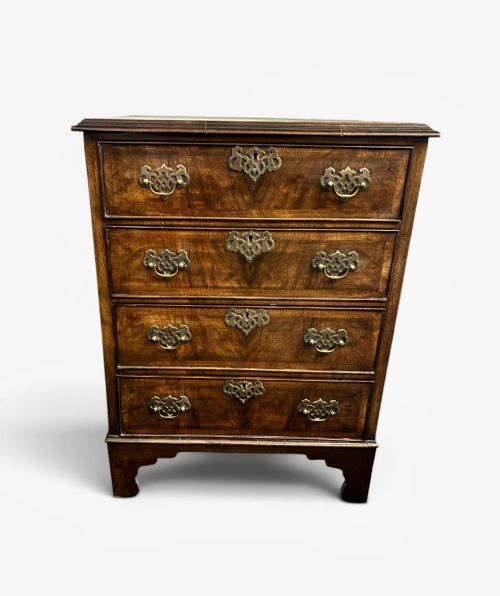
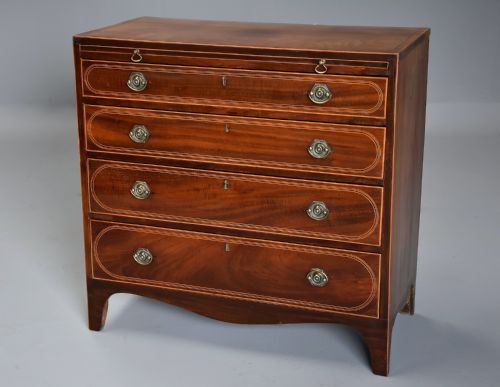
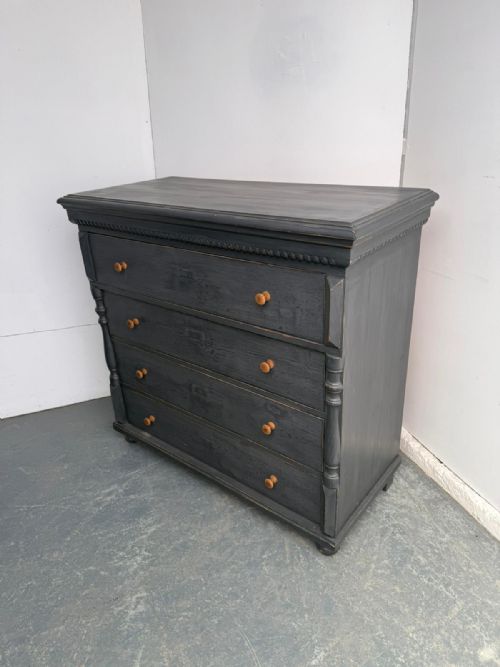
A victorian four drawer chest stands as a staple of nineteenth century bedroom furniture, offering four graduated horizontal drawers for clothing and household storage. The form appears across multiple regional interpretations, ranging from formal urban cabinet work in solid mahogany and walnut to robust country examples in pine and oak.
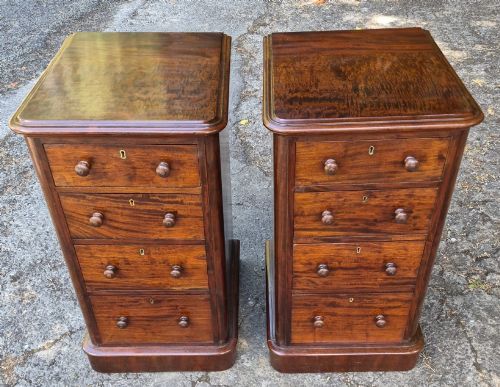
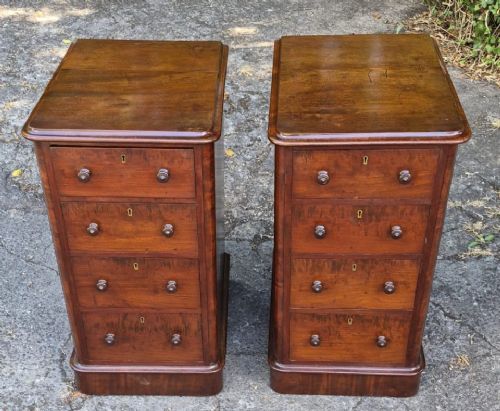
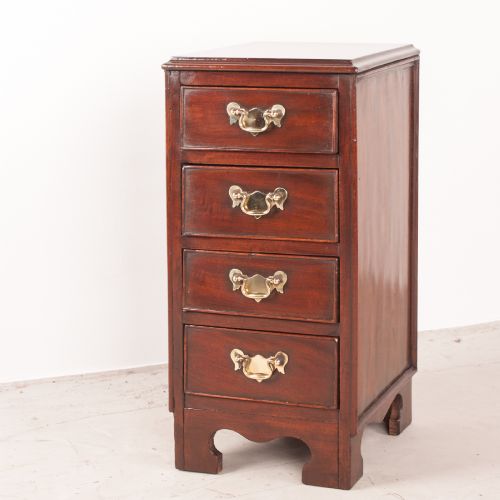
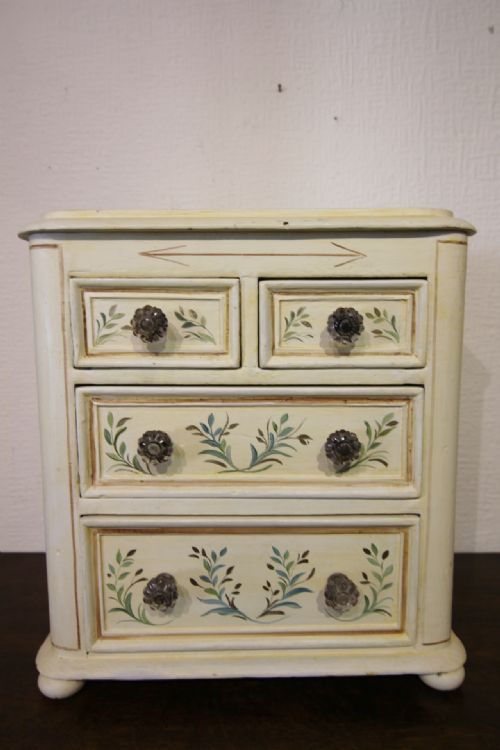
Buyers frequently encounter variations that scale down the traditional full size format, including compact bedside versions, bachelor chests, and miniature apprentices' pieces. Proportions remain largely functional, sitting squarely on bracket feet, plinth bases, or turned supports depending on the regional workshop and specific decade of production.
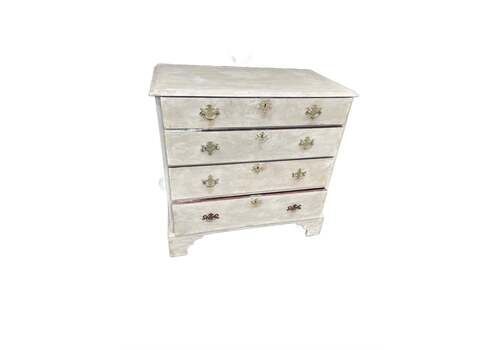
The material palette reflects the broader nineteenth century trade routes, utilising imported dense hardwoods alongside native softwoods. Walnut, flame mahogany, and burr walnut veneer dominate the smarter urban examples, whilst painted finishes and solid deal serve simpler domestic settings.
How they were made
Cabinet makers constructed the carcases using solid timber frames joined with dovetail connections at the drawer corners and internal structural joints. Drawer linings typically consist of secondary timbers such as oak or pine, shaped to run smoothly within side guides.
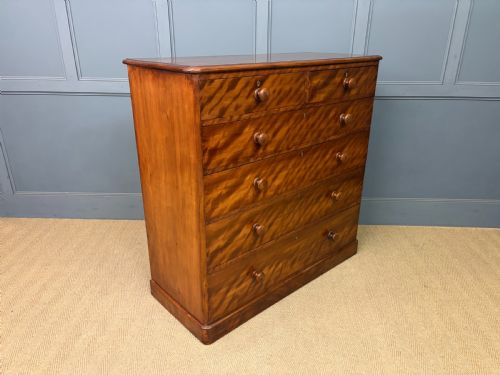
Surface decoration relied heavily on timber selection rather than applied ornament, employing book-matched flame mahogany veneers or burr walnut grains across primary drawer fronts. Hardware additions included turned timber pull knobs, brass drop handles, and brass escutcheons fitted into keyholes.
Some nineteenth century pine chests bear surviving agricultural merchant sign writing.
What varies in quality
Quality differences emerge in the choice of primary timber and the precision of the underlying joinery, particularly in how drawer linings fit the carcase opening. Superior pieces display matched timber grains flowing continuously across multiple drawer fronts.
Secondary construction details, such as hand-cut dovetails on drawer boxes and the thickness of back panels, distinguish high-workshop output from vernacular regional production. The application of decorative veneers and the integrity of the timber finish separate standard domestic furniture from select cabinet maker commissions.
Heal & Son·Druce & Co·Edwards and Roberts·James Shoolbred of London
The Victorian Four Drawer Chest Glossary
- Biedermeier
- A Central European style popular during the mid-nineteenth century, characterised by clean lines and domestic comfort without excessive ornamentation. Furniture from this tradition prioritises natural timber grains over carved decoration.
- Burr walnut
- A prized wood veneer harvested from the irregular growths or burls of the walnut tree. It yields intricate, swirling patterns frequently applied to the primary display surfaces of nineteenth century case furniture.
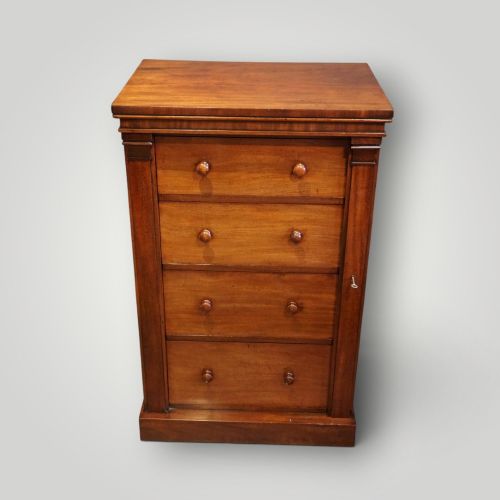
- Wellington chest
- A tall, narrow chest of drawers secured by a locking hinged side pilaster that fastens over the drawer edges. This form originated in the nineteenth century and provided secure storage for valuables.
- Bowfront
- A curved convex front profile on a chest of drawers that projects outward in an arc. This cabinet making technique required advanced joinery to shape both the solid timber carcase and the corresponding drawer fronts.
- Flame mahogany
- A veneer cut from the fork of a mahogany tree where the branch meets the trunk, producing a distinctive flickering flame pattern. Cabinet makers arranged these veneers symmetrically to create striking visual panels on drawer fronts.
Victorian Four Drawer Chest: Frequently Asked Questions
What is a four height chest?
A four height chest refers to a piece of case furniture containing four distinct horizontal rows of drawers stacked vertically from top to bottom. These units are traditionally proportioned for bedroom use.
This specific configuration provides ample vertical storage while maintaining a manageable height for accessing the top surface.
How do I identify a Victorian piece?
Nineteenth century furniture typically displays characteristic construction methods such as hand-cut dovetails, cedar or pine secondary drawer linings, and specific timber veneers. Stylistic cues often align with the broader decorative arts movements of the era.
Examination of the backboards, interior drawer construction, and fixings helps confirm the period of manufacture.
Where should I place a chest?
These chests function well in bedrooms, hallways, or living spaces where surface display area and concealed storage are both required. Their modest footprint allows them to fit against most standard wall spaces.
Care should be taken to keep wooden furniture away from direct heat sources and strong sunlight to protect the timber finishes.
What are bedside chests?
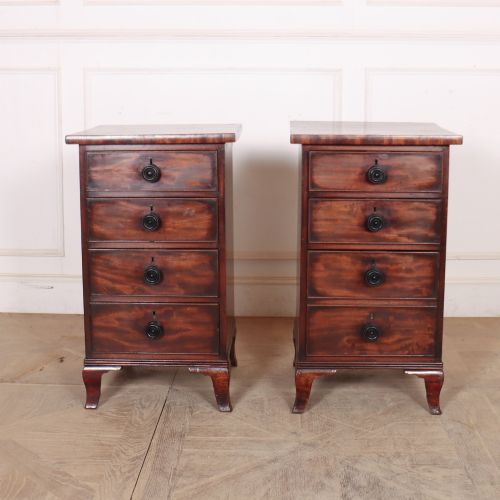
Bedside chests are scaled down versions of full-size drawer units, designed specifically to sit adjacent to a bed frame for immediate night-time storage. They retain the structural characteristics and timber choices of larger case furniture.
Pairs of these smaller units frequently match the primary aesthetic of larger nineteenth century bedroom suites.