



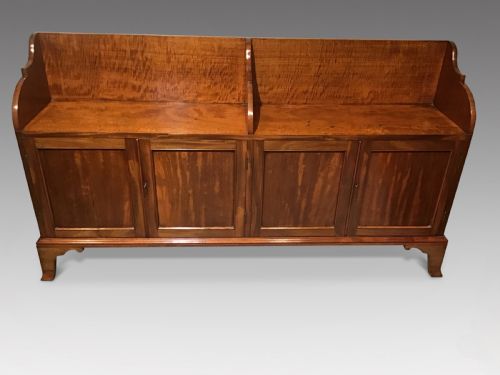


Victorian Four Door Sideboard
A victorian four door sideboard is a substantial dining room piece offering deep cupboards and heavy timber presence.
Victorian Four Door Sideboard
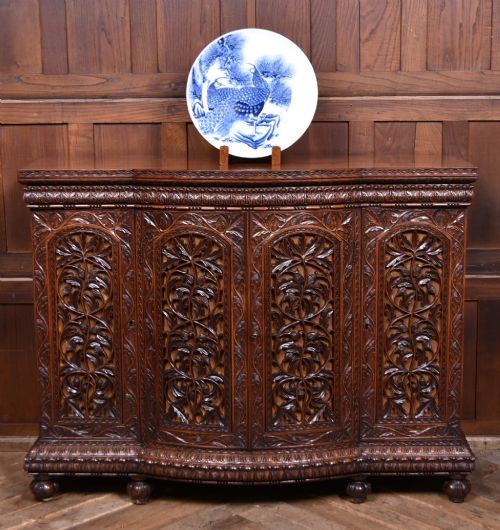
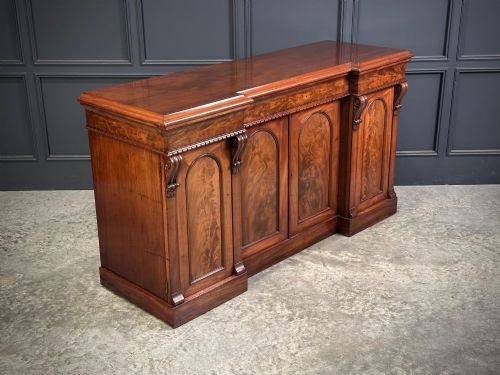
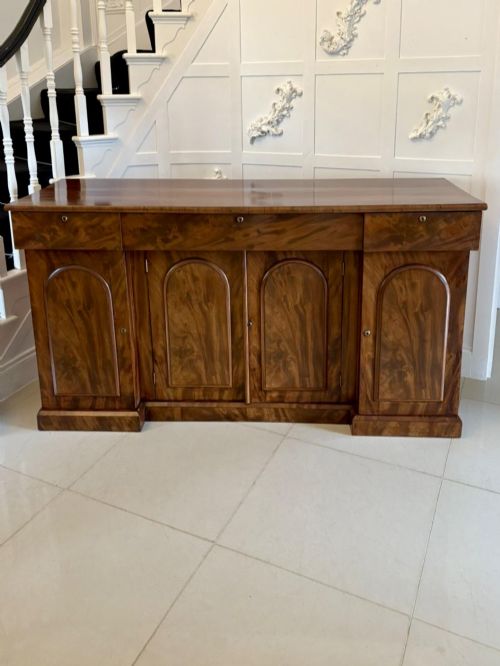
When you search for a victorian four door sideboard, you meet large storage furniture designed for nineteenth-century dining rooms. The pieces recorded here span the nineteenth century, including specific dates from eighteen forty through to nineteen hundred. Mahogany and flame mahogany dominate the forms, alongside burr walnut, rosewood, and pine.
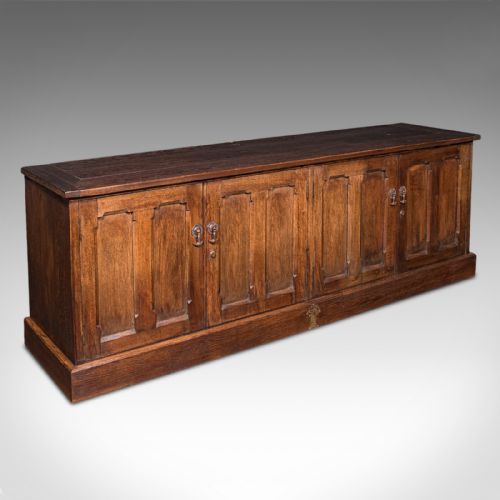
The layout typically involves a long base with four lower doors, sometimes arranged in breakfront or serpentine shapes. Alongside standard sideboards, the evidence includes credenzas, breakfront cabinets, dresser bases, and chiffoniers. These items served to hold dining china, linen, and glassware while anchoring the room's proportions.
What varies in quality
The standard of timber selection divides the stock. Pieces featuring matched flame mahogany or figured burr walnut veneers across all four doors sit above plain or simpler utility surfaces. Exhibition and superior grades show meticulous attention to grain alignment.
Ornamentation also separates the tiers. Simple panelled timber doors sit at the functional end, while pieces with detailed brass inlay, ormolu mounts, serpentine curves, and breakfront profiles represent the higher tier of nineteenth-century production.
Several sideboards include internal cellarettes, proving that nineteenth-century dining relied on keeping the wine close and locked away.
The Victorian Four Door Sideboard Glossary
- Breakfront
- A cabinet front where the central section projects forward from the flanking sides. This layout adds architectural depth to large dining pieces.
- Credenza
- A low cabinet form frequently associated with Victorian drawing rooms and formal display. These often incorporate glass doors and ormolu mounts.
- Chiffonier
- A compact sideboard fitted with cupboards below, sometimes carrying a raised shelf or carved back. They function as smaller serving surfaces.
- Cellarette
- A compartment built into the interior designed for holding wine bottles securely. These compartments sit within the lower cupboards.
- Marquetry
- The art of applying decorative pieces of veneer to a structure to form intricate designs. Floral or geometric patterns appear on select cabinets.
Victorian Four Door Sideboard: Frequently Asked Questions
Where did these sideboards stand?
These large pieces stood principally against the dining room wall, holding silver, glass, and heavy serving dishes.
In some houses, similar forms like credenzas served in drawing rooms for display rather than dining storage.
What timber was used most?
Mahogany is the primary timber recorded in the archive, particularly flame mahogany with figured grain.
Walnut, burr walnut, rosewood, and pine also appear across specific Victorian and nineteenth-century examples.
Are these pieces suitable for modern dining rooms?
Their substantial length and deep cupboards provide practical storage for modern crockery and table linen.
Measurement of wall space is essential before introduction due to the heavy proportions of nineteenth-century carcases.