
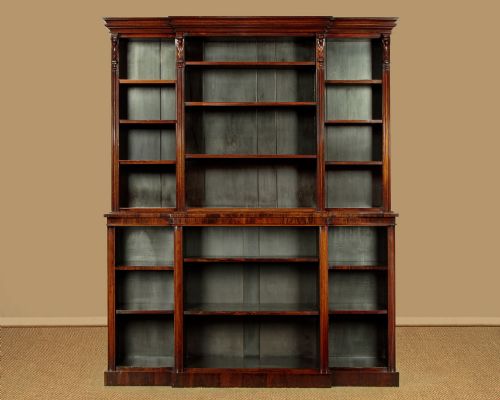
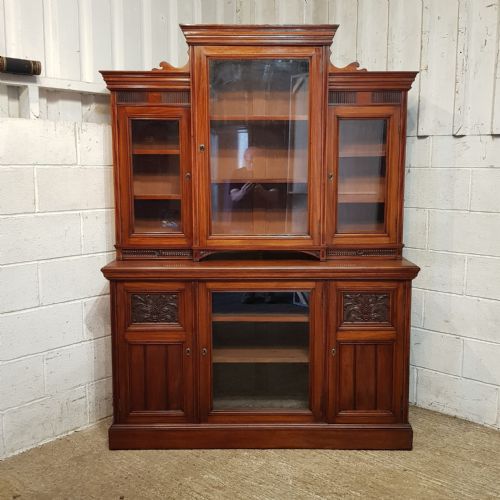
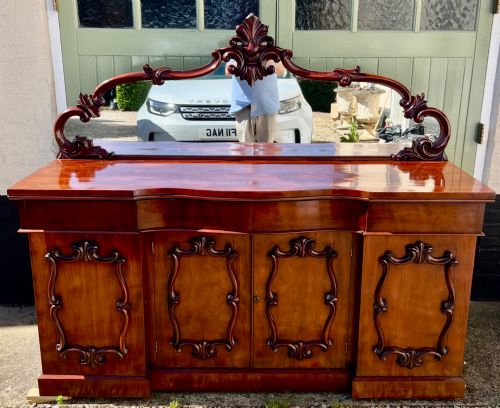
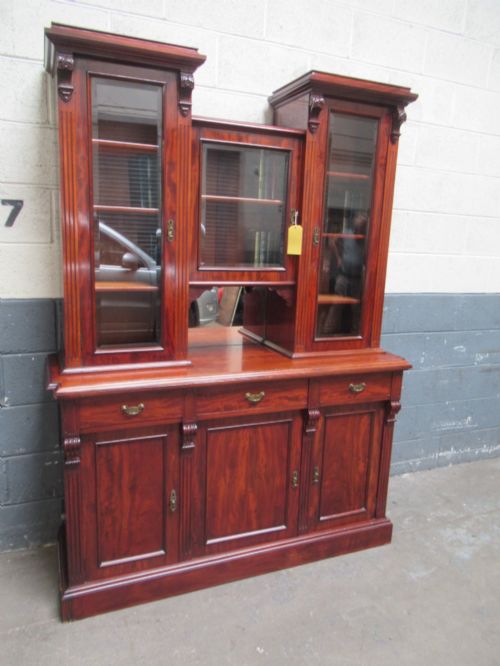


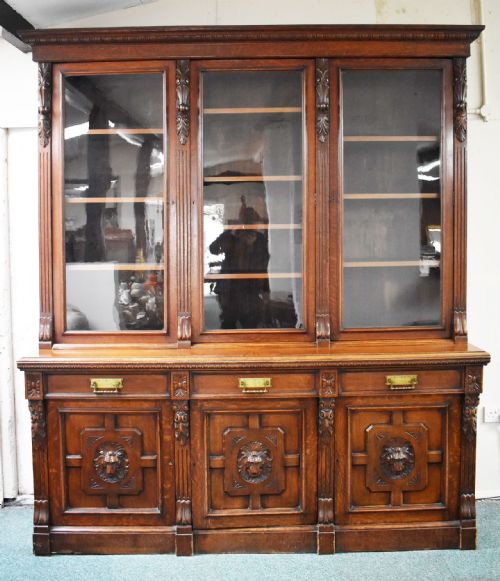


Carved Victorian Breakfront Cabinet
These carved victorian breakfront cabinet examples deliver grand presence and deep library storage, built to anchor principal rooms with architectural dignity.
Carved Victorian Breakfront Cabinet
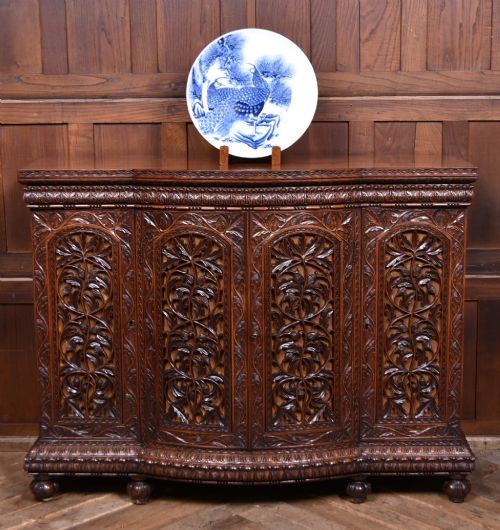
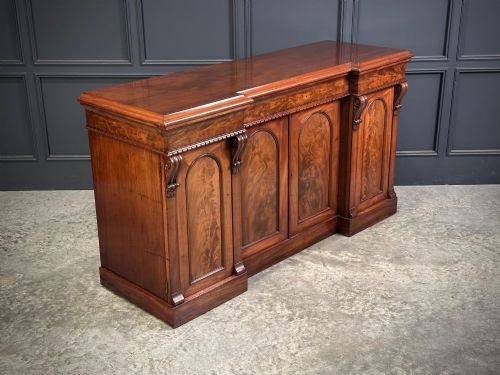
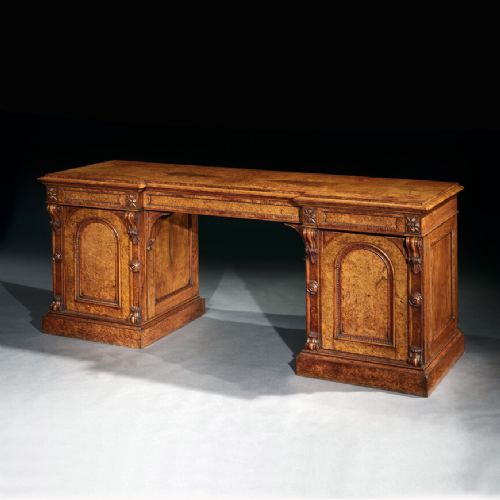
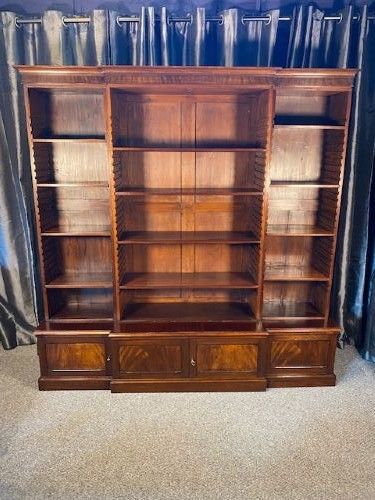
When you search for a carved victorian breakfront cabinet, you are looking at substantial 19th-century case furniture featuring a central section that projects forward from recessed flanking bays. These pieces typically take the form of large library bookcases, display cabinets, or sideboards produced across the Victorian period.
The versions most commonly met on this page combine architectural carved detail with timber grains like mahogany, walnut, or oak, often arranged in multi-door configurations. They serve as formal display and storage centres for books and collections in domestic interiors.
Materials and Construction
Cabinet makers utilised dense hardwoods including mahogany, pollard oak, rosewood, and burr walnut, frequently applied as figured veneers over solid carcass timbers to create rich surface patterns. Glazed doors and brass hardware complete the primary structural elements.
Carving was executed by hand directly into the solid timber or applied mouldings, ranging from geometric Gothic revival motifs to elaborate foliate scrolls. Carcasses were joined using traditional cabinet-making techniques suited to housing heavy volumes and display items.
Listings feature 19th-century pieces spanning from William IV eras through late Victorian Gothic revival and aesthetic periods.
Judging Quality
Quality rests upon the selection of timber veneers, where highly figured burr walnut, pollard oak, or flame mahogany demonstrates superior material choice. The depth, crispness, and continuity of the hand carving across the breakfront facade further separate standard production from exceptional examples.
Gillows·Robert Strahan·Holland & Sons
The Carved Victorian Breakfront Cabinet Glossary
- Breakfront
- A piece of furniture whose central section projects forward from the flanking outer sections. This architectural arrangement creates shadow and visual rhythm across the facade.
- Credenza
- A low cabinet, often with glass panels or doors, originating in Italy and adapted during the 19th century for display purposes. These pieces frequently incorporate ormolu and fine veneers.
- Pollard Oak
- Timber taken from trees that have been pollarded, producing a dense, knotty grain pattern highly prized by Victorian cabinet makers. It yields a distinctive, mottled surface appearance.
- Chiffonier
- A low sideboard or cabinet featuring shelves or a mirror back above the main storage base. They serve smaller scale display functions within Victorian reception rooms.
- Ormolu
- Gilded bronze mounts applied to furniture as decorative ornament. This material adds metallic contrast to dark cabinet woods.
Carved Victorian Breakfront Cabinet: Frequently Asked Questions
What rooms suit a breakfront cabinet?
These large cabinets require generous wall space and high ceilings, making them natural anchors for libraries, studies, or principal drawing rooms.
Their substantial depth and presence mean they function best against blank walls where their architectural breakfront proportions can be fully appreciated.
How do I distinguish oak from walnut pieces?
Oak items display a pronounced, open grain structure and are frequently associated with Gothic revival designs or heavy library bookcases. Walnut pieces present a smoother, darker surface often utilising burr figuring for rich visual depth.
Examining the tone and grain pattern under natural light reveals the specific hardwood utilised by the maker.
Were these always used for books?
While many breakfront examples served as library bookcases with adjustable shelving, others were built as sideboards, credenzas, or display cabinets for porcelain and silver.
Internal configurations of shelves, drawers, and cupboards indicate whether a specific piece was intended for literature or general display.
How should I care for timber veneers?
Maintain stable room humidity and avoid placing antique furniture in direct sunlight to protect delicate flame mahogany and burr walnut veneers from drying.
Regular dusting with a dry cloth and occasional application of appropriate conservation wax preserves the finish without harming the historic surface.