


Victorian Folding Leaf Table
A victorian folding leaf table offers flexible surface space and clever engineering, making it a practical centrepiece for compact rooms.
Victorian Folding Leaf Table
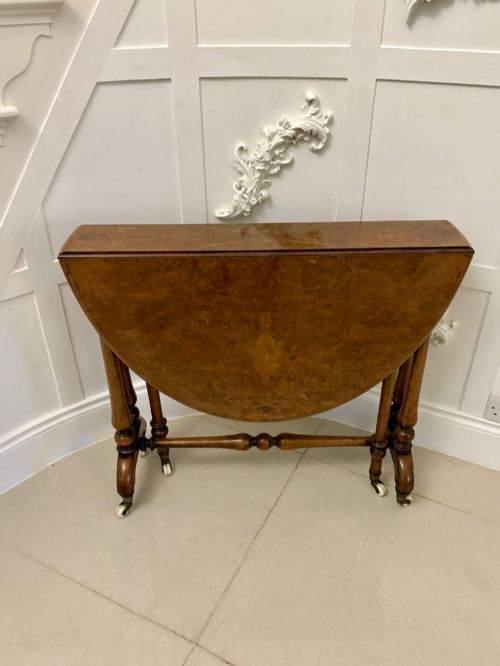
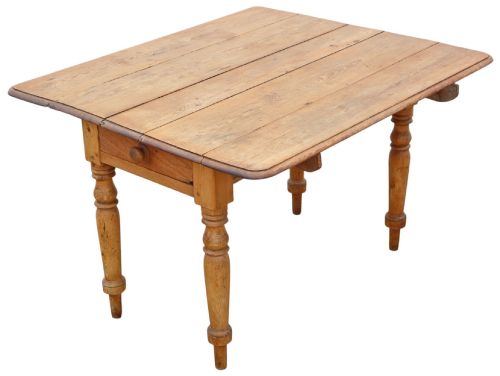
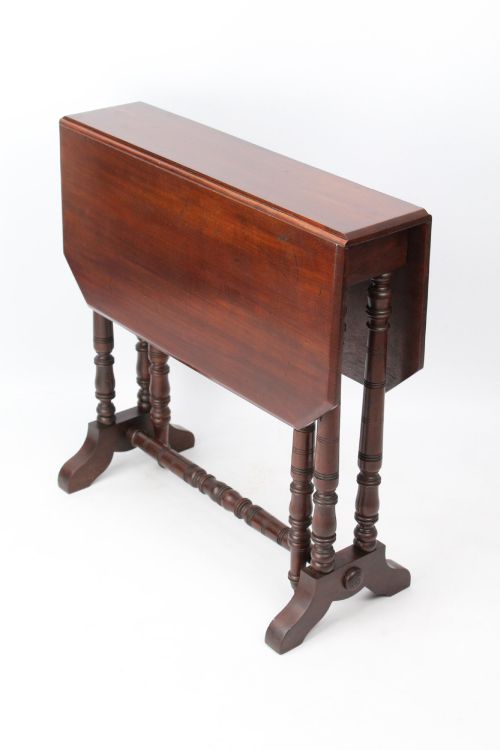
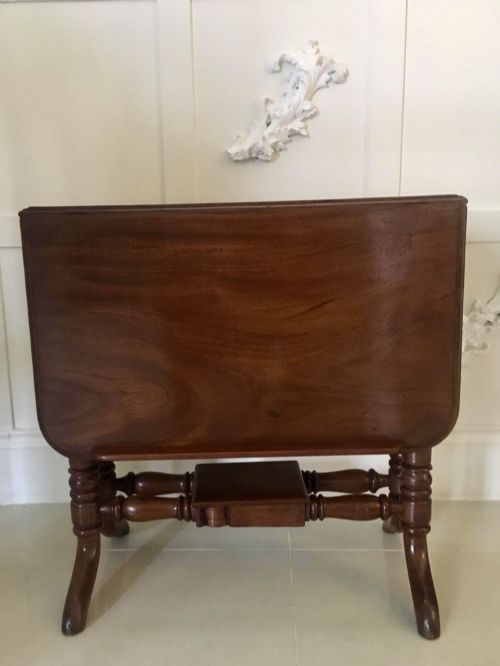
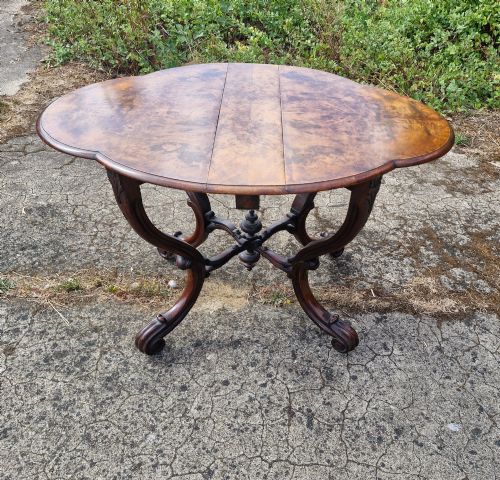
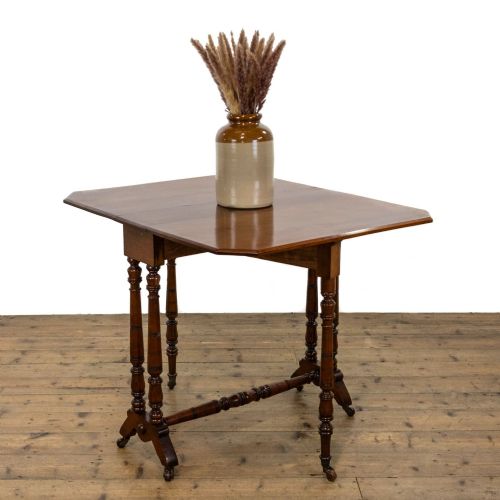
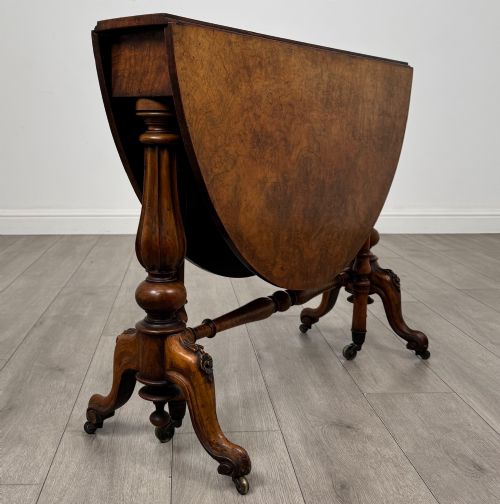
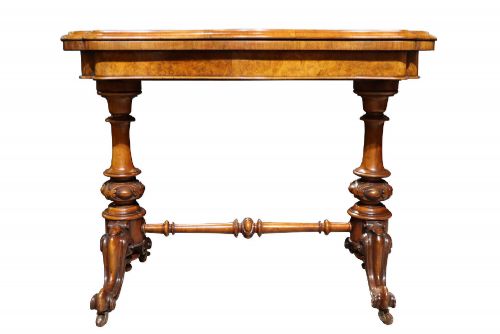
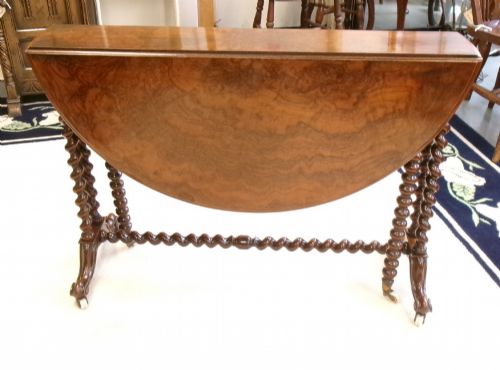
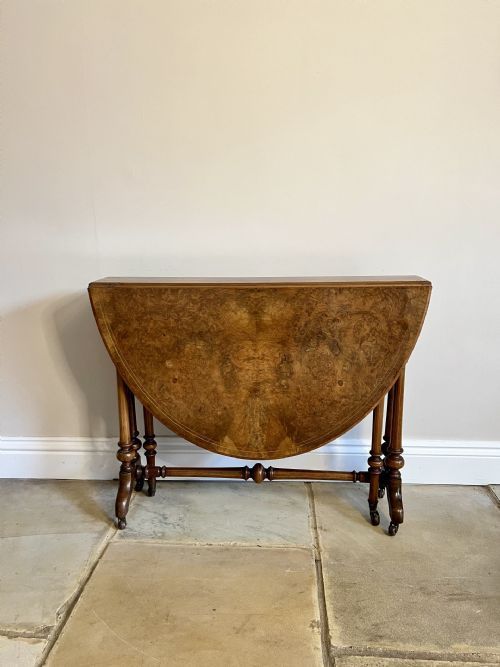
A victorian folding leaf table encompasses several distinct forms designed to expand when needed and fold away compactly for daily living. The selection on this page leans heavily towards Sutherland tables and Pembroke tables, alongside occasional pieces, drop leaf tables, and card and games tables.
The materials span mahogany, burr walnut, rosewood, oak, pine, and fruitwood, often decorated with satinwood inlay or floral marquetry. These tables originate primarily from the Victorian and Edwardian periods, stretching from the mid-nineteenth century into the early twentieth century.
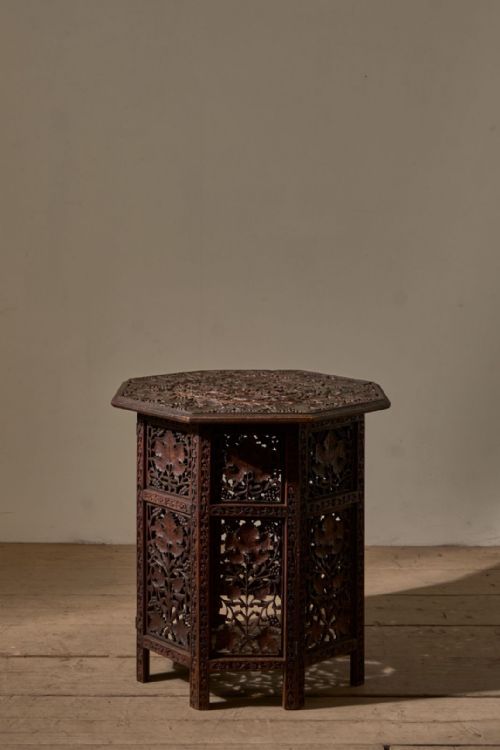
Buyers encounter variations such as small occasional coffee tables, reading tables, and larger kitchen tables featuring drawers or scissor actions. Styles stretch beyond standard Victorian to include Aesthetic Movement, William IV, Anglo-Indian Colonial, and Anglo-Moresque designs.
How they were made
Cabinet makers utilised dense hardwoods like mahogany, walnut, and rosewood for their stability and capacity to take fine finishes. Burr walnut veneer provided rich decorative grain patterns on table tops, frequently contrasted with satinwood inlay or delicate floral marquetry.
Structural ingenuity defined the folding mechanisms, from the gate legs supporting narrow Sutherland leaves to scissor actions and folding over tops on card tables. Brass hinges, ceramic castors, and carved supports added both mobility and decorative weight to the timber frames.
Some ingenious tables include built-in gaming wells for cards, ensuring your evening entertainment stays neatly contained beneath the folding top.
What varies in quality
Quality rests in the crispness of the timber carving, the selection of figured burr veneers, and the precision of the inlay work. Pieces displaying detailed floral marquetry or fine satinwood banding sit above plain utility examples.
The integrity of the folding mechanism dictates daily utility, where smooth gate leg action and sturdy pivot joints separate better workshop output from looser, more fragile construction.
Jenks & Woods·Liberty & Co.
The Victorian Folding Leaf Table Glossary
- Sutherland table
- A narrow-profile drop leaf table with exceptionally slender folding leaves supported by swing legs. This form allows the table to fold into a very flat footprint when not in use.
- Pembroke table
- A drop leaf table featuring two hinged flaps on opposite sides and usually incorporating one or two drawers. It was traditionally used as a breakfast or occasional table.
- Marquetry
- Decorative veneer work arranged in pictorial or geometric patterns using various coloured woods and other materials. It frequently adorns the top surfaces of Victorian walnut tables.
- Gate leg table
- A table with hinged legs that swing outward from the frame to support the drop leaves when raised. This design provides sturdy under-framing for an expanded surface.
- Aesthetic Movement
- A late nineteenth-century design style rejecting heavy Victorian ornamentation in favour of simplicity, ebonised finishes, and Japanese influences. Pieces from this movement often utilise oak or ebonised wood.
Victorian Folding Leaf Table: Frequently Asked Questions
What is a Sutherland table?
A Sutherland table is a narrow drop leaf table designed with exceptionally slim folding leaves supported by gate legs. When folded down flat, the table occupies minimal floor space.
Cabinet makers developed this form in the nineteenth century as an adaptable occasional table that could easily expand for tea or reading.
How do you use a folding leaf table?
These tables provide flexible surface space by allowing one or both leaves to drop down when not in use. They function as card tables, side tables, or occasional dining surfaces.
Lifting the leaves engages the swing legs or gate supports underneath, providing a stable platform for everyday tasks.
How do I tell Victorian from Edwardian pieces?
Victorian pieces typically date from the mid-nineteenth century up to nineteen hundred, often featuring rich burr walnut, heavy carved supports, and darker timber finishes. Edwardian examples often display lighter woods and simpler inlaid decoration.
Construction details, timber selection, and secondary woods inside drawers help establish the manufacturing period.
Can I use an antique folding table daily?
Most surviving folding tables remain robust enough for regular daily use provided the hinges and gate leg mechanisms are handled with care. Placing them away from direct heat sources protects the timber and veneer.
Regular polishing with appropriate wax maintains the finish and guards the wood against everyday wear.