

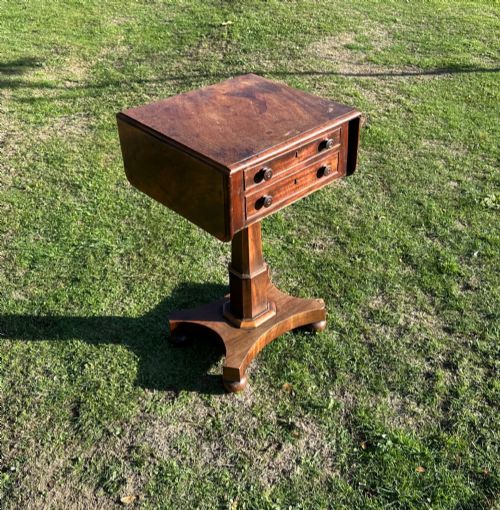
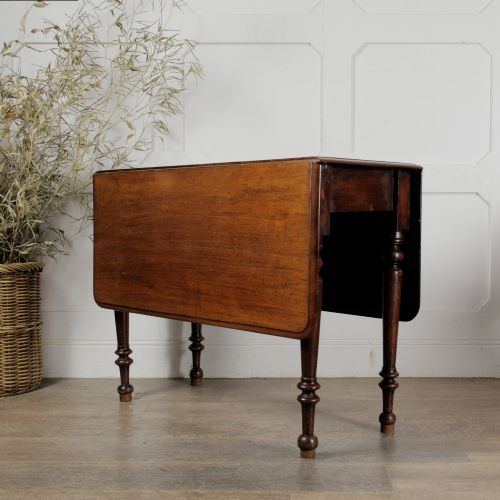
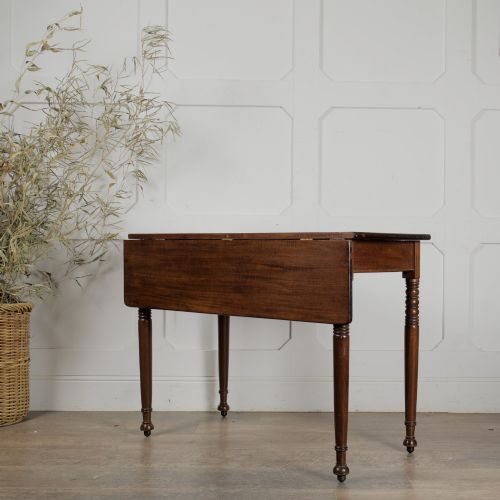
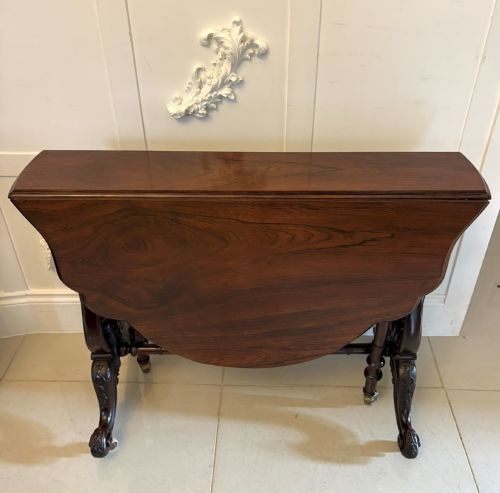
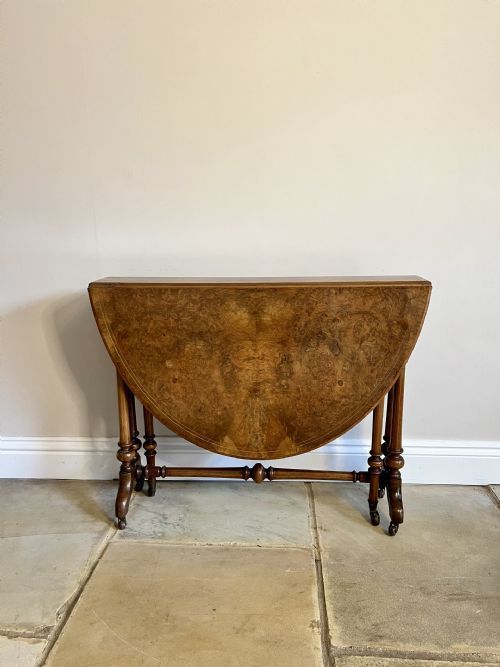
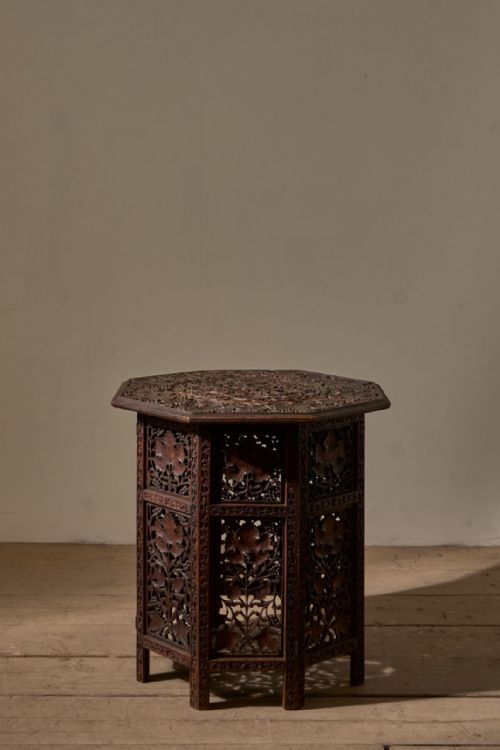
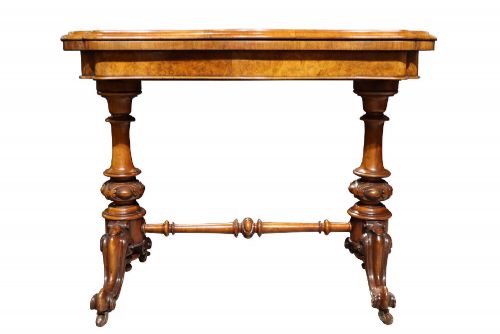


Victorian Folded Leaf Table
A victorian folded leaf table brings ingenious space-saving design to any room, offering expandable surfaces crafted from rich timbers like burr walnut and mahogany.
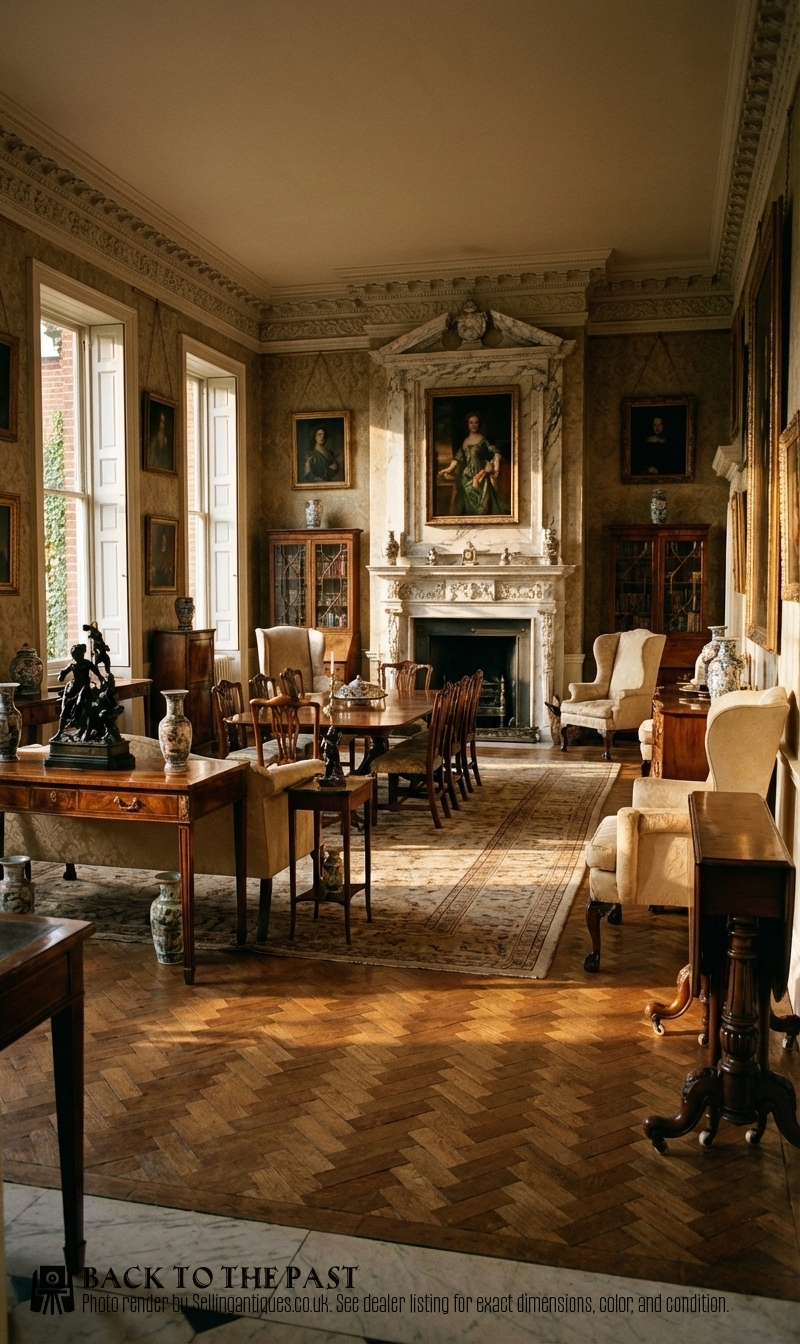
Victorian Folded Leaf Table
A victorian folded leaf table is a clever item of nineteenth-century furniture designed to expand when needed and fold away compactly for daily life. The pieces on this page span occasional tables, card and games tables, Pembroke tables, drop leaf tables, Sutherland tables, and dining tables.
The most common form you will meet on this page is the Sutherland table, alongside various drop leaf and Pembroke formats. These pieces date predominantly from the Victorian period, with examples stretching from the mid-nineteenth century into the Edwardian era.
Origins range widely, from standard English domestic workshops to Anglo-Indian colonial makers and Aesthetic Movement designs in oak and ebonised finishes. Buyers look to these tables for their versatile dual-purpose nature, which combines decorative presence with practical folding mechanisms.
How They Were Made
Cabinetmakers utilised dense and figured hardwoods including mahogany, walnut, burr walnut, rosewood, oak, and padauk. These timbers were selected for both their structural strength and their capacity for high-polish finishing.
Decoration relied on fine craftsmanship techniques such as floral marquetry inlay, satinwood detailing, and ebony accents. Folding and scissor-action mechanisms were engineered using brass hardware and clever gate leg supports to allow smooth movement of the leaves.
Victorian Folded Leaf Table Retail Price Guide 2026
Typical asking prices for victorian folded leaf table among the pieces listed under this phrase on Sellingantiques today, from the lower quarter to the upper quarter. They describe what is for sale here now, not the wider market.
Materials recorded across the inventory include walnut, burr walnut, mahogany, rosewood, oak, pine, fruitwood, padauk, brass, ceramic, and metal.
What Varies in Quality
The distinction between standard and superior examples lies in the selection of timber veneers and the intricacy of the decorative inlay. Burr walnut with rich grain patterns or elaborate floral marquetry elevates a piece well above plain utility furniture.
Constructional finesse also separates the range, visible in the stability of the folding mechanism and the carving on the supports. Pieces by documented makers or those featuring unusual trifold and scissor actions demonstrate a higher tier of nineteenth-century craftsmanship.
Jenks & Woods·Liberty & Co.
The Victorian Folded Leaf Table Glossary
- Sutherland table
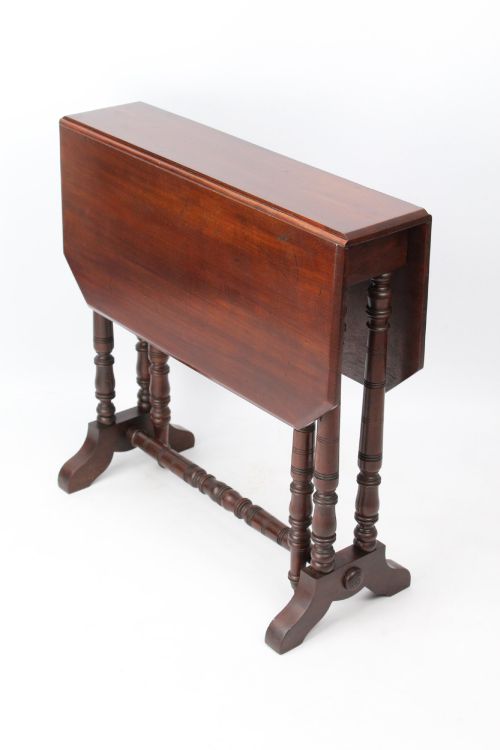
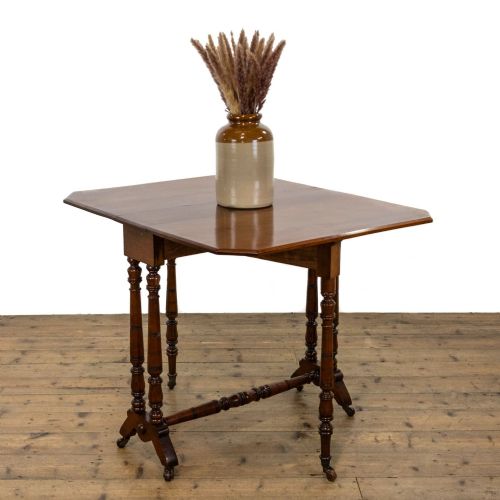
- A slender drop-leaf table with exceptionally narrow flaps and wide gate legs, popular for occasional use during the Victorian era. It folds down flat enough to stand neatly against a wall when not in use.
- Pembroke table
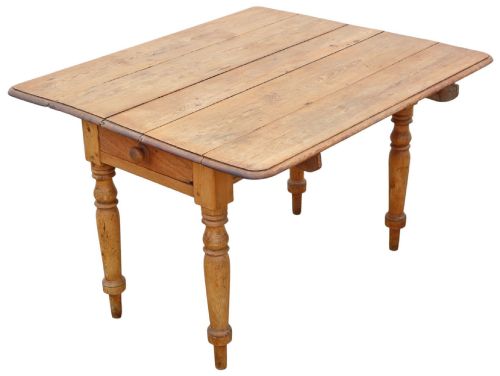
- A small occasional table featuring two hinged flaps on opposite sides and usually one or two drawers. It was traditionally used for writing or breakfasting in smaller rooms.
- Marquetry
- The art of forming decorative patterns by fitting together thin slices of wood veneer of different colours and grains. This technique frequently appears on the tops of Victorian walnut tables.
- Gate leg table
- A table with hinged legs that swing out like a gate to support the drop leaves when raised. This mechanism provides sturdy support without taking up permanent floor space.
- Scissor action
- A pivoting framework of intersecting wooden members that opens and closes X-fashion to support folding table leaves. It represents a particularly inventive mechanical variation found in nineteenth-century tables.
Victorian Folded Leaf Table: Frequently Asked Questions
What is a Sutherland table?
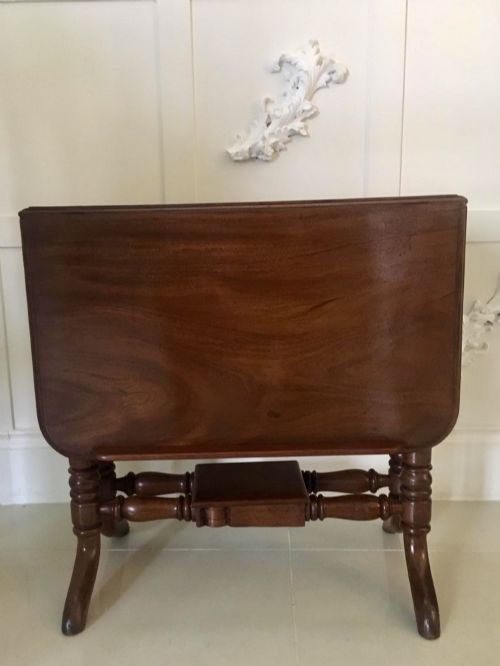
A Sutherland table is a specific type of drop leaf table characterised by very narrow hinged flaps supported by pivoting gate legs. When folded completely, the top is barely wider than the underframe, allowing it to tuck away easily.
Victorian makers produced these tables in great numbers using burr walnut and mahogany for parlours and drawing rooms where space was at a premium.
How do you use a folded leaf table?
These tables are designed to adapt to the room by remaining closed as slim console or side tables until extra surface area is required. Raising the hinged leaves transforms them into dining, card, or occasional writing tables.
In modern homes, they work exceptionally well behind sofas, in hallways, or as compact dining solutions that expand only for guests.
How do I tell a Victorian table apart?
Victorian tables generally show distinctive timber choices like burr walnut, rosewood, or solid mahogany, often combined with hand-cut dovetails in drawers and traditional brass fittings. Stylistic clues include floral marquetry, satinwood inlay, or Aesthetic Movement ebonised finishes.
Comparing the turning on the legs and the heft of the timber helps distinguish mid-nineteenth-century work from later reproductions or Edwardian lightweight pieces.
Are these tables sturdy when opened?
Solidly built nineteenth-century folding tables rely on sturdy gate legs, scissor actions, or wooden rule joints to support the raised leaves safely. When properly maintained, the hinges and pivoting supports lock the flaps firmly in place.
They are engineered for daily household use, though care should be taken not to place excessive weight on the unsupported outer edges of the leaves.