


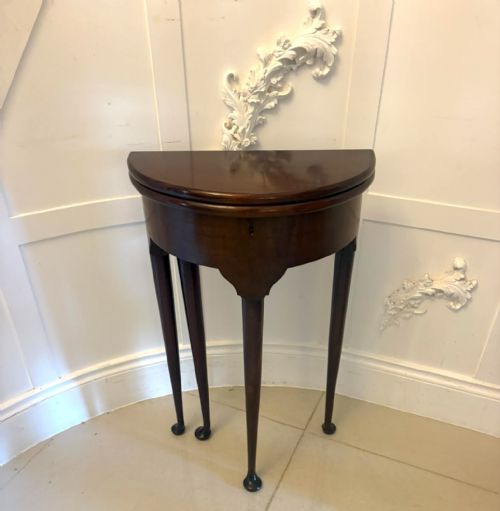
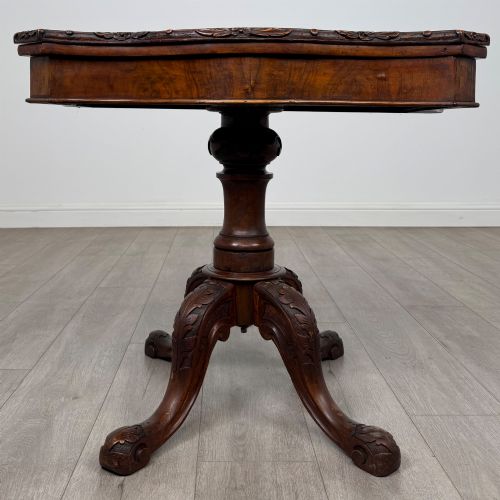
Victorian Fold Over Games Table
When you search for a victorian fold over games table, you find pieces designed for parlour pastimes that double as console or tea tables when closed.
Victorian Fold Over Games Table
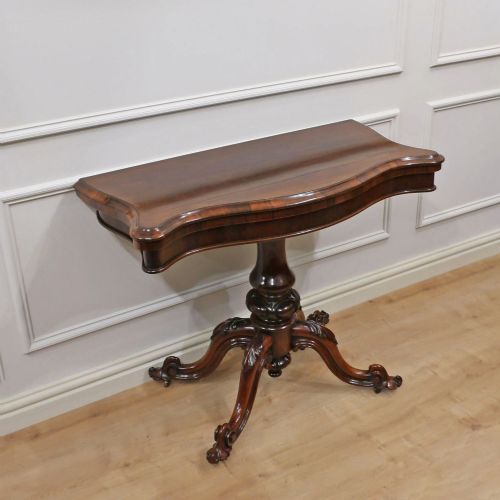
Makers often incorporated swivel actions or pivoting mechanisms to support the opened leaf safely over a concealed compartment or a pedestal base. These items served a social function in the drawing room, shifting from a compact wall-side silhouette to a central playing area as required.
How They Were Made
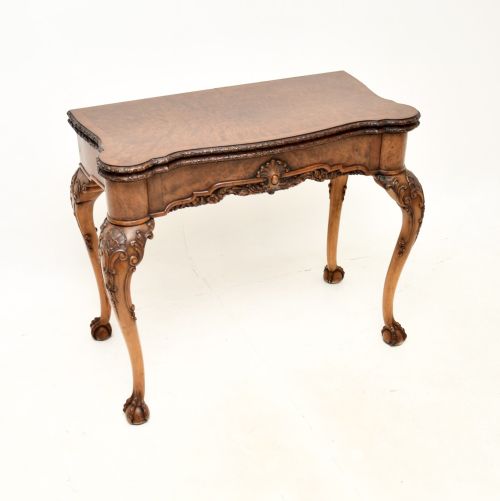
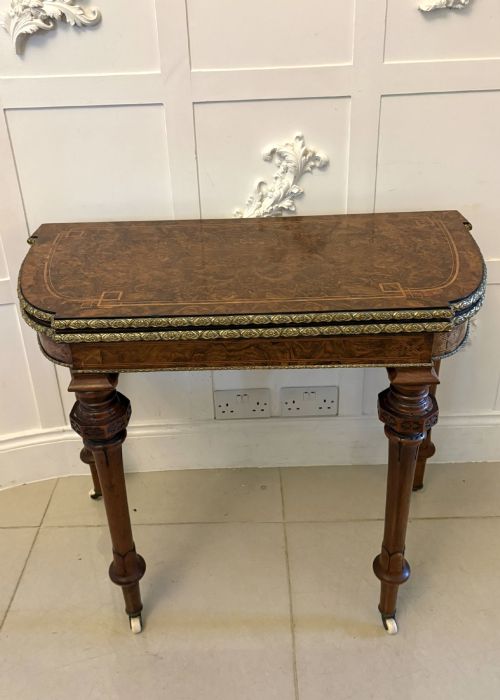
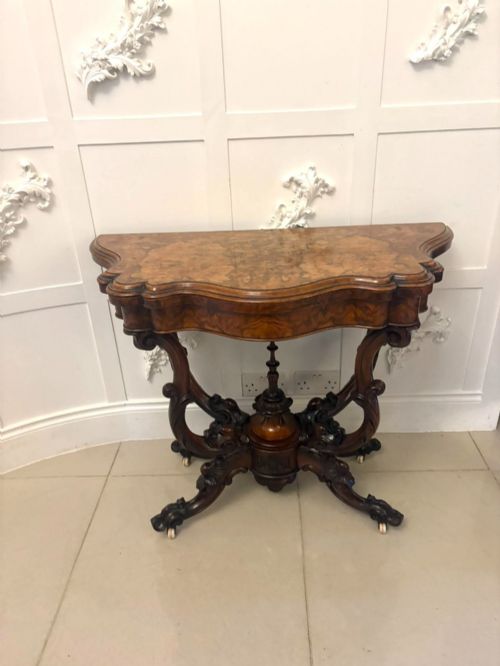
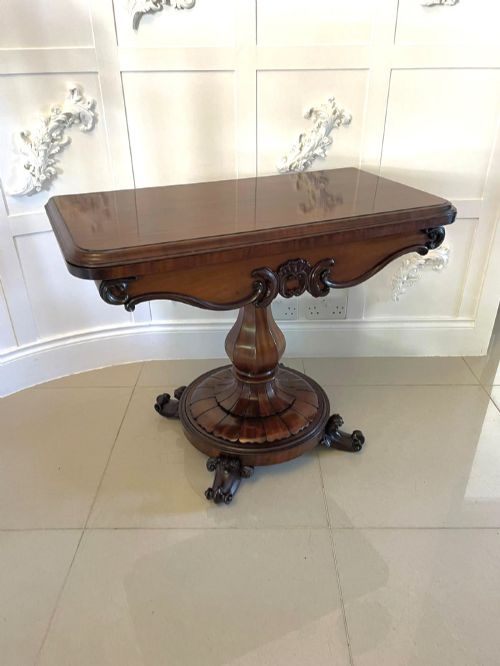
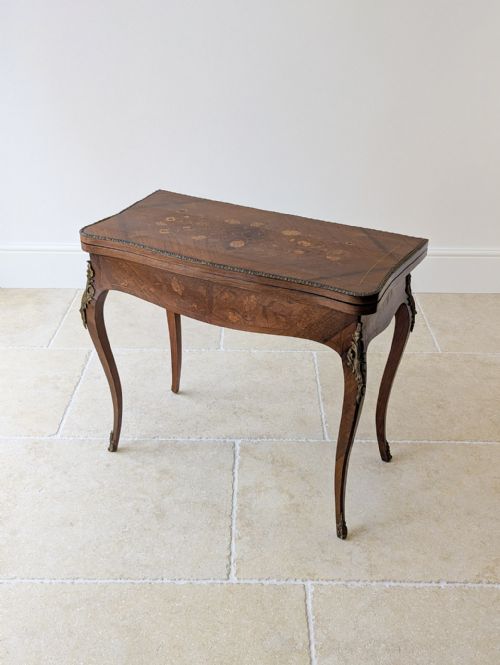
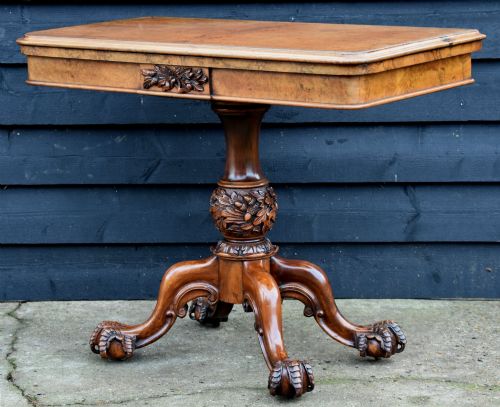
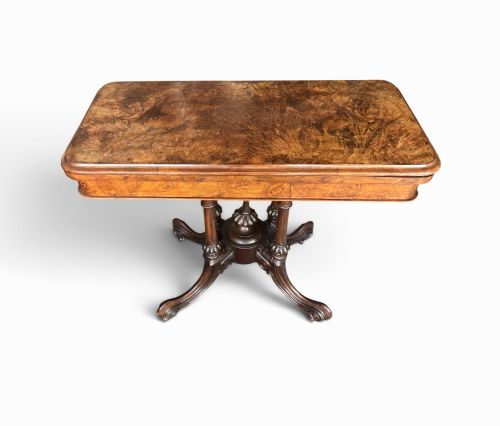
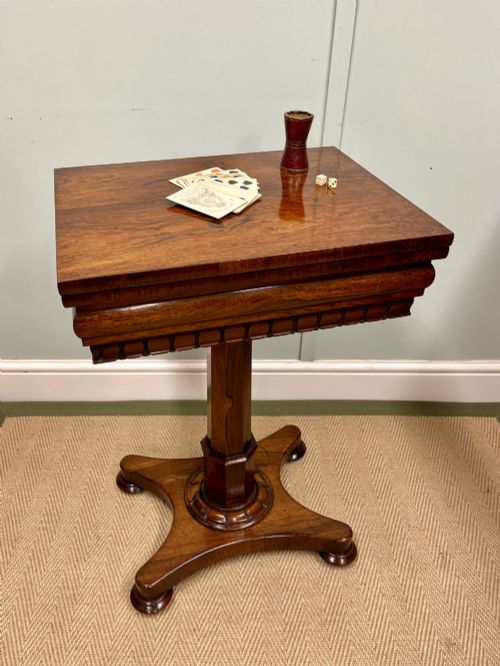
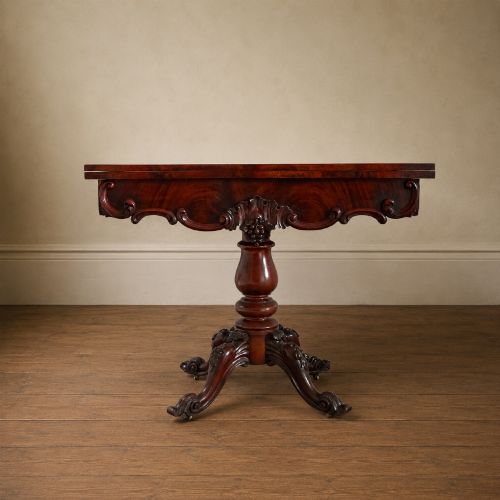
Cabinet makers utilised dense timber carcases faced with figured veneers, notably burr walnut, rosewood, and mahogany, to create rich patterned surfaces on the folding top. Marquetry inlay, brass mounts, and ormolu details frequently embellished the frieze and legs of higher-status examples.
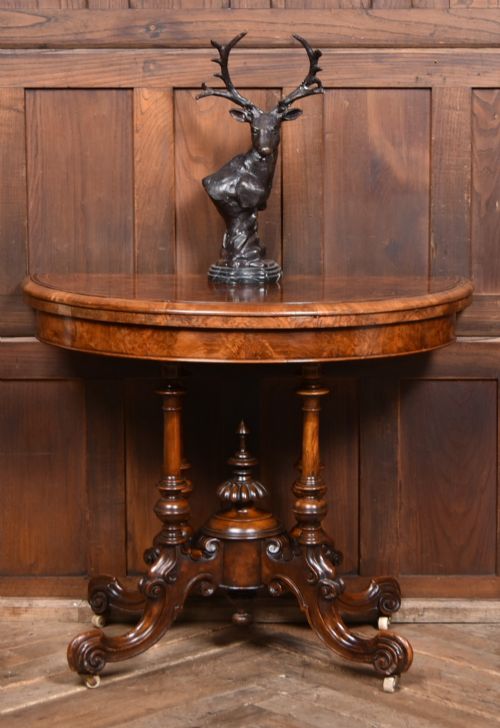
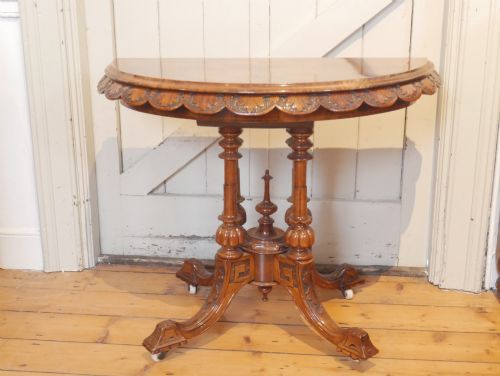
Structural integrity relied on robust pivot hinges, shaped pedestal columns, and carved pillar supports or stretcher bases that bore the weight of the cantilevered leaf when open.
Listings feature walnut, mahogany, rosewood, and satinwood across Victorian, Regency, and Aesthetic Movement styles.
What Varies in Quality
The standard of a victorian fold over games table rests on the depth of the timber figuring, the crispness of any carved supports, and the precision of the marquetry inlay. Simpler mahogany versions rely on proportion and clean joinery, whereas elaborately mounted pieces demonstrate finer metalwork and secondary woods like satinwood or kingwood.
Mechanisms also distinguish workshop standards, with superior examples offering smooth pivoting action, well-fitted internal storage spaces, and stable alignment when the top rests in the closed position.
G T Morant·Edwards & Roberts·Wylie & Lochheed·Gillows Of Lancaster
The Victorian Fold Over Games Table Glossary
- Burr walnut
- A prized timber harvested from the wart-like growths on walnut trees, yielding highly swirled and circular grain patterns used for decorative veneer.
- Marquetry
- The art of forming decorative patterns on a wooden carcase by fitting together small pieces of tinted woods, shell, or ivory.
- Ormolu
- Gilded bronze ornamentation applied to furniture mounts, feet, and friezes during various revival periods.
- Baize
- A coarse woollen fabric, traditionally green, used to line the playing surface of card and gaming tables.
- Turnover top
- A table design where the leaf hinges along the centre line to rotate and double its surface area when opened.
Victorian Fold Over Games Table: Frequently Asked Questions
How do you open the top safely?
Most models use a swivel pivot where the upper leaf lifts and rotates ninety degrees to rest on the frame or a concealed frieze compartment.
Lifting the leaf requires guiding it gently past the internal hinge mechanism without forcing the wooden joints.
Were they used only for cards?
While primarily built for card playing, many functioned as tea tables, work tables with sewing compartments, or general occasional tables.
The enclosed wells beneath the folding top often stored counters, dice, and small sewing implements.
How do walnut and mahogany pieces differ?
Walnut versions frequently feature complex burr veneers, marquetry inlay, and serpentine or shaped edges typical of later decades.
Mahogany examples tend to display deeper reddish tones, simpler turned pillar supports, and cleaner lines associated with mid-century production.
How do you maintain the baize surface?
The woollen baize lining benefits from gentle brushing to remove dust and protection from direct sunlight to prevent fading of the traditional green colour.
Avoiding moisture on the fabric preserves the original texture during regular domestic use.