
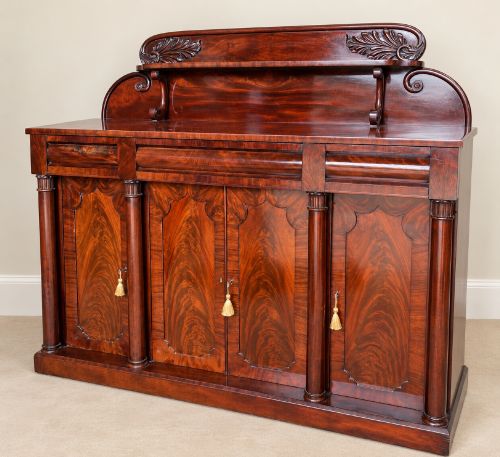
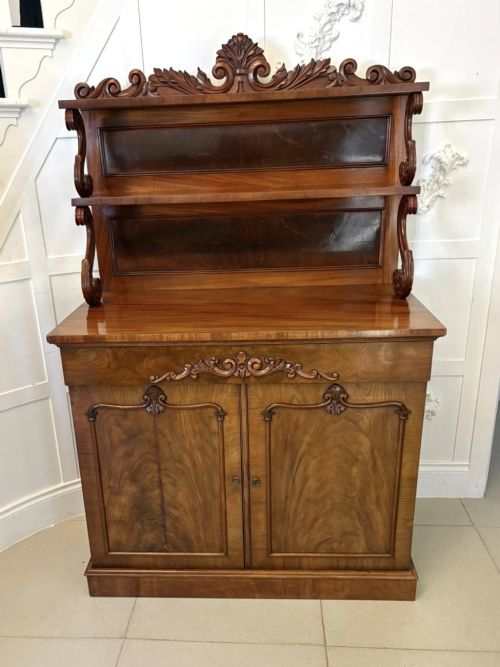
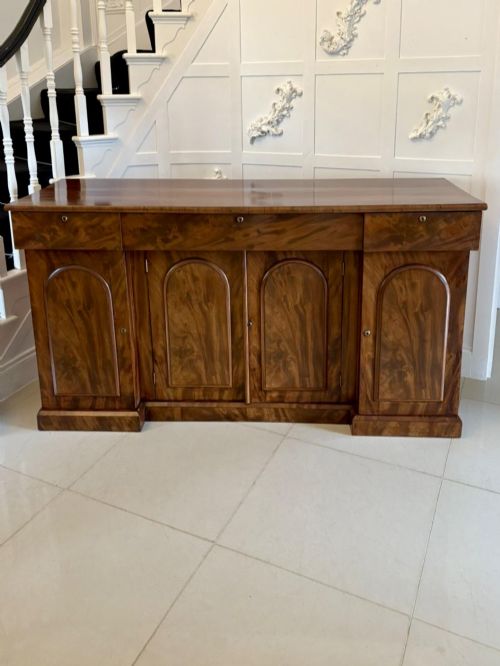
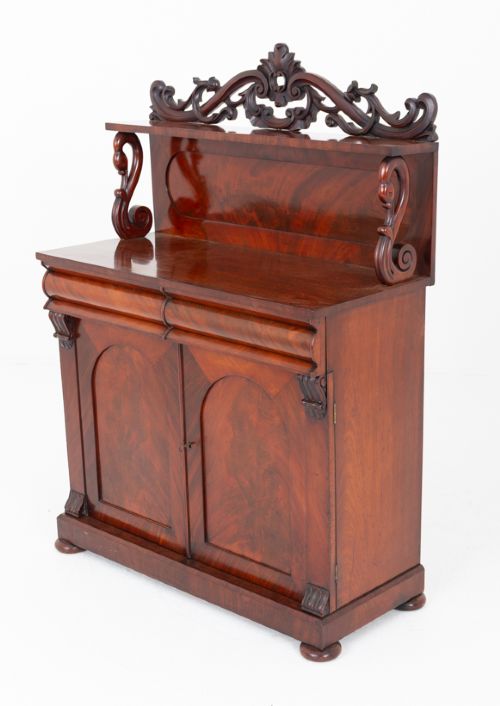


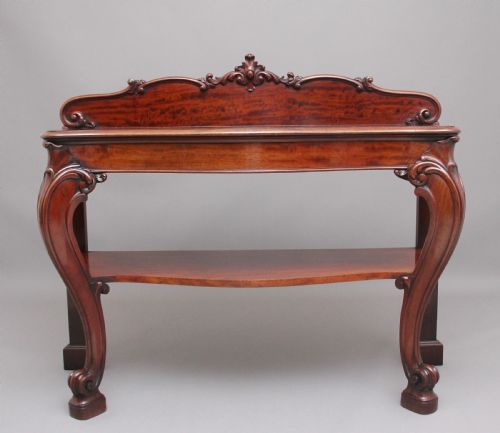

Victorian Flame Mahogany Server
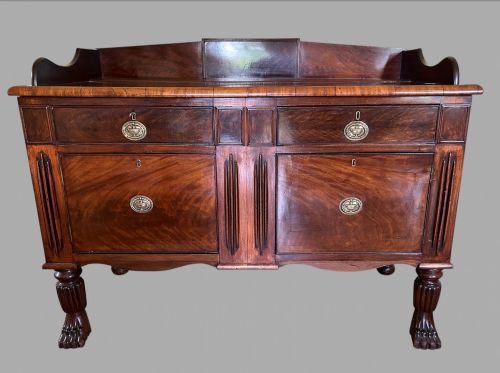
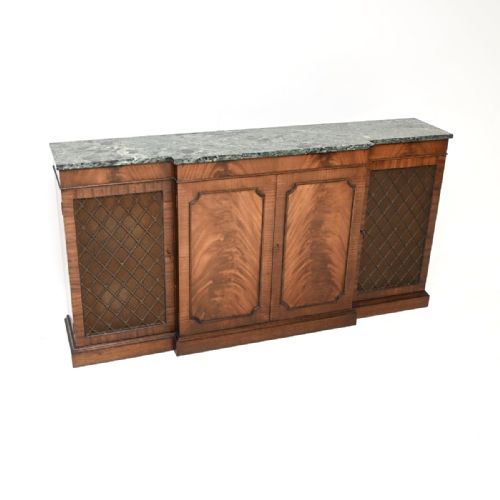
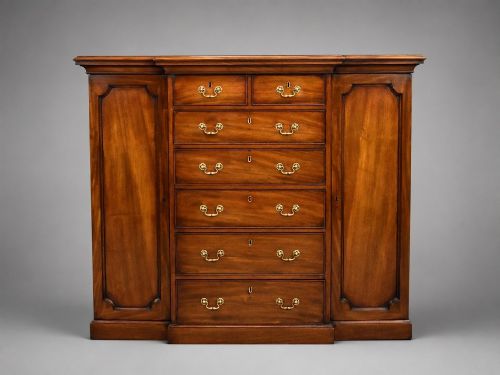
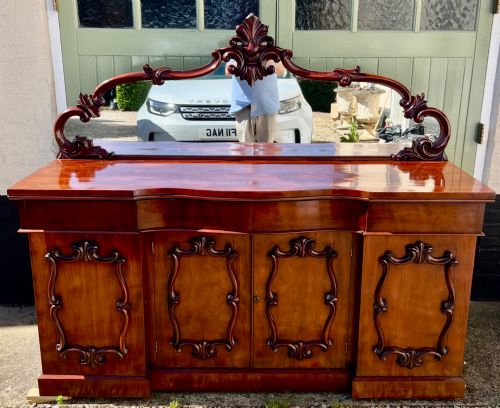
A victorian flame mahogany server brings dramatic grain and substantial storage to a dining room, combining functional sideboards with striking visual presence.
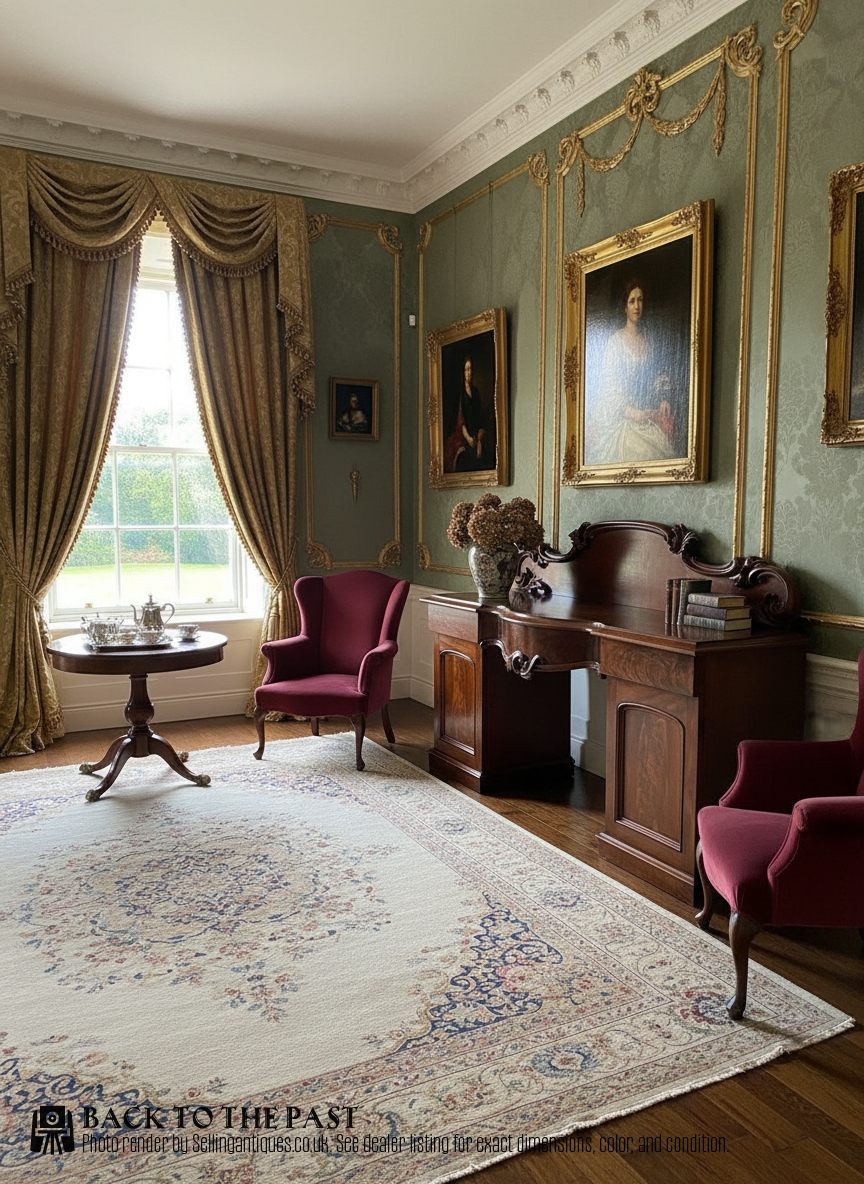
Victorian Flame Mahogany Server
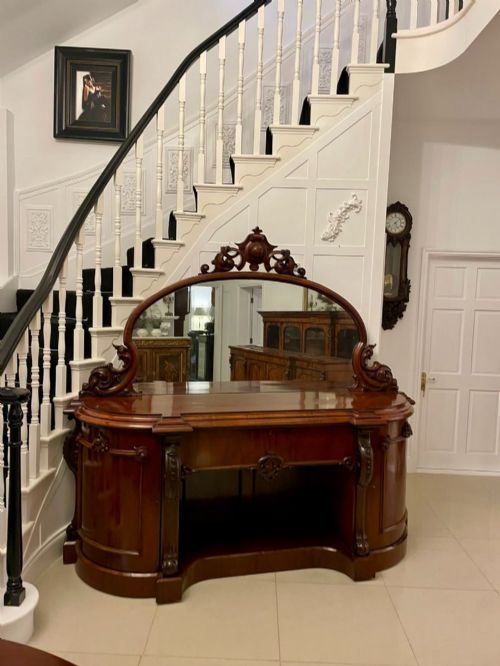
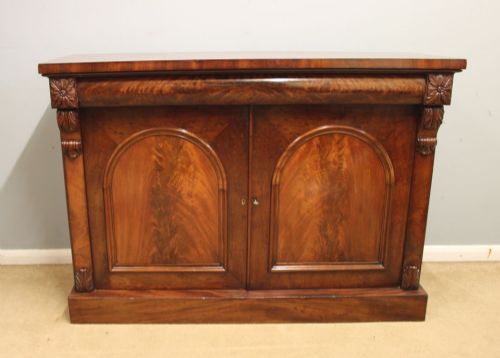
A victorian flame mahogany server encompasses large dining room sideboards, chiffoniers, and serving tables produced across the nineteenth century. These forms provide deep storage capacity through multiple doors and drawers, often incorporating display surfaces or mirrors above the base.
The pieces appearing on this page lean heavily toward the Victorian period, supplemented by related nineteenth-century examples and revival styles. Sideboards with two, three, or four doors dominate the selections, alongside smaller chiffoniers and breakfront configurations.
Form follows function in these dining room items, designed to hold serving dishes, cutlery, and glassware. Makers deployed pedestals, cupboards, and mirror backs to suit formal nineteenth-century dining habits, creating heavy, grounded furniture.
What varies in quality
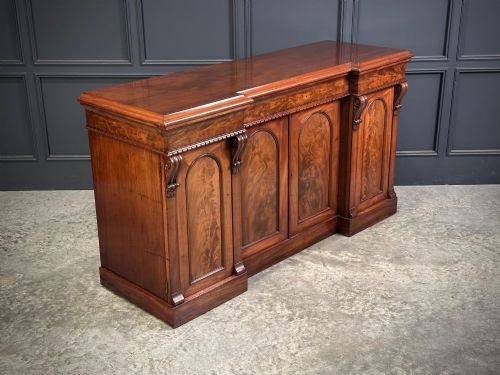
The intensity and bookmatching of the flame mahogany veneer dictate visual impact, separating standard cabinet work from exceptional showpieces. Superior examples exhibit continuous, symmetrical grain patterns across multiple doors and drawers.
Carving depth and execution differentiate the work of skilled workshops from routine production. Crisp, hand-carved ornamentation on mirror frames and console bases points to higher-tier commissions.
Listings span the nineteenth century, featuring Victorian, William IV, and Regency styles alongside Chippendale revival pieces.
Robson & Sons
The Victorian Flame Mahogany Server Glossary
- Flame mahogany
- A veneer cut from the fork of the mahogany tree where branches join the trunk, producing a rippling, flame-like grain pattern. This highly decorative wood defines the visual appeal of many nineteenth-century servers.
- Chiffonier
- A low cabinet derived from the sideboard, typically featuring a shelf or mirror back above enclosed storage cupboards. These pieces served similar functions in dining rooms and parlours.
- Breakfront
- A cabinet or sideboard whose central section projects forward from the flanking outer sections. This architectural arrangement creates shadow lines and varied depths across the front elevation.
- Pedestal sideboard
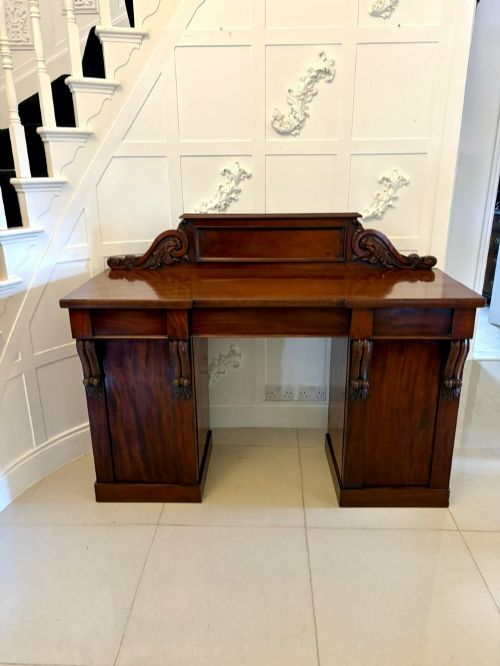
- A heavy dining room form featuring two large pedestal cupboards flanking a central recess or drawers. Such pieces dominate larger nineteenth-century dining spaces.
- Mirror back
- An upright wooden frame holding a glass mirror, attached to the rear surface of a sideboard or chiffonier. It reflects light and displays porcelain or silver standing on the surface below.
Victorian Flame Mahogany Server: Frequently Asked Questions
How do I style a server in a modern dining room?
A large nineteenth-century server anchors a contemporary dining space by providing a heavy, textured focal point against plain walls. Pair the polished timber with simple ceramics or glassware to balance the rich grain.
The deep proportions also make these pieces effective in large hallways or living rooms for general storage. Their substantial presence works best when given enough surrounding floor space to breathe.
What is the difference between a sideboard and a chiffonier?
Sideboards generally measure larger and sit lower, designed primarily for dining room service and heavy storage. Chiffoniers often include a raised back with a shelf or mirror, functioning as slightly lighter storage units.
Both forms utilise mahogany and veneer construction methods typical of the period. Selection depends on the height and vertical wall space available in the room.
How do I care for flame mahogany veneer?
Protect the polished surface from direct sunlight and excessive heat fluctuations to prevent the veneer from lifting or fading. Regular dusting with a dry cloth maintains the finish without building up wax residues.
Avoid placing damp items directly on the timber top to prevent water staining the polish. Use mats beneath serving dishes or lamps.
Did these pieces always have mirror backs?
Mirror backs became popular during the Victorian era, particularly on chiffoniers and breakfront sideboards. Many serving tables and pedestals remained open above the top surface.
The inclusion of a mirror depended on the specific cabinet maker's design and the intended room setting. Both mirror-backed and plain versions date from the same nineteenth-century decades.